
Epigraph
“Some of the Pharisees in the crowd said to him, ‘Teacher, order your disciples to stop.’ He answered, ‘I tell you, if these were silent, the stones would shout out’” (Luke 19:39-40)
3rd Century
A church near the ancient city of Megiddo, in the settlement of Legio (c. 230)
In ancient Christian churches the altar was often placed in the center. This church is a clear example.
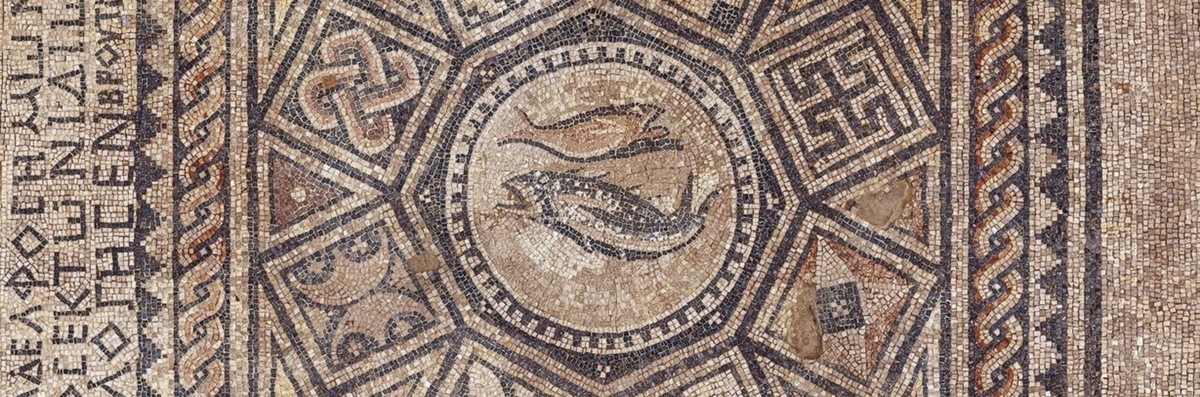
Not far from the city of Megiddo (in antiquity there was a settlement called Legio there, because a Roman legion was stationed there). On high ground in the settlement stood a building that was dated to 230 by its coins, pottery and style of writing. One of its rooms was a Christian church. On the floor there are several large mosaics with inscriptions (one of them calls Christ God), and in the center stands the altar. Nearby is an inscription saying who donated this table.

[larger]


[larger]


[larger] [extra photo 2] [extra photo 3]


[larger]


[larger]

Inscriptions:
All the inscriptions on the floor of the church are a kind of commemoration lists. From the earliest times to this day the Orthodox Church has kept the tradition of always adding to the prayers of the services the names of those who built the church or donated something important to it. So here too, with a call to remember them, the names are recorded of those who donated the mosaic floor (the centurion Gaianus Porphyrius), who laid it (Brutius), who donated the altar (Akeptous), and some other names, perhaps relatives of the donors: Primilla, Cyriaca, Dorothea, Chreste. In the same way church vessels were offered in memory of the living and the dead: Eucharistic chalices and censers (see more).
Translation: Akeptous, the God-loving, offered this table to God Jesus Christ as a memorial.
EN: Akeptous, the God-loving, offered the table to God Jesus Christ as a memorial.
Transcription: Prosēniken Akeptous, ē philotheos, tēn trapezan Th(e)ō Ι(ēso)u Ch(rist)ō mnēmosunon.
Orig: ΠΡΟСΗΝΙΚΕΝ ΑΚΕΠΤΟΥС, Η ΦΙΛΟΘΕΟС, ΤΗΝ ΤΡΑΠΕΖΑΝ Θ(Ε)Ω Ι(ΗСΟ)Υ Χ(ΡΙСΤ)Ω ΜΝΗΜΟСΥΝΟΝ
ΠΡΟϹΗΝΙΚΕΝ
ΑΚΕΠΤΟΥϹ,
Η ΦΙΛΟΘΕΟϹ,
ΤΗΝ ΤΡΑΠΕ-
ZΑΝ {ΘW} {ΙΥ} {ΧW}*
ΜΝΗΜΟϹΥΝΟΝ
*Nomina sacra: ΘW ΙΥ ΧW = θεῷ Ἰησοῦ Χριστῷ = God Jesus Christ

[larger]

ΕΝ: Remember Primilla and Cyriaca and Dorothea, and moreover also Chreste.
Translation: Remember Primilla and Cyriaca and Dorothea, and also Chreste.
Orig: ΜΝΗΜΟΝΕΥСΑΤΕ ΠΡΙΜΙΛΛΗС ΚΑΙ ΚΥΡΙΑΚΗС ΚΑΙ ΔWΡΟΘΕΑС ΕΤΙ ΔΕ ΚΑΙ ΧΡΗСΤΗ
Fixed: ΜΝΗΜΟΝΕΥСΑΤΕ ΠΡΙΜΙΛΛΗС ΚΑΙ ΚΥΡΙΑΚΗΣ ΚΑΙ ΔΩΡΟΘΕΑΣ ΕΤΙ ΔΕ ΚΑΙ ΧΡΗΣΤΗ

[larger]

Translation: Gaianus, also called Porphyrius, centurion, our brother, at his own expense and with great generosity paved this floor. Brutius carried out the work.
EN: Gaianus, also called Porphyrius, centurion (xp), our brother, has made the pavement at his own expense as an act of liberality. Brutius has carried out the work.
Orig: ΓΑΙΑΝΟС Ο ΚΑ ΠΟΡΦΥΡΙС ΧΡ* ΑΔΕΛΦΟС ΗΜWΝ ΕΚ ΦΙΛΟΤΕ ΙΜΙС ΑΜΕΝ ΟСΕΚΤW ΝΙΔΙWΝ ΕΨΙ ΦΟΛΟΓΗСΕΝ. ΒΡΟVΤΙС ΗΡΓΑСΑΤΟ.
Fixed: ΓΑΙΑΝΟΣ Ο ΚΑ ΠΟΡΦΥΡΙΣ ΧΡ* ΑΔΕΛΦΟΣ ΗΜΩΝ ΕΚ ΦΙΛΟΤΕ ΙΜΙΣ ΑΜΕΝ ΟΣΕΚΤΩ ΝΙΔΙΩΝ ΕΨΙ ΦΟΛΟΓΗΣΕΝ. ΒΡΟΥΤΙΣ ΗΡΓΑΣΑΤΟ.
*ΧΡ — hekatontarches — centurio

[larger]

The Church at Dura-Europos (Syria)
244: the Christian church at Dura-Europos

[larger]


[larger]


[larger]


[larger]


[larger]


[larger]


[larger]


[larger]


[larger]

The church has wall frescoes with scenes from the New Testament: the rescue of the apostle Peter from drowning and the healing of the paralytic at the Sheep Pool (of the row of Christ’s miracles only these two frescoes survive), and the Good Shepherd.
The rescue of the apostle Peter from drowning


The healing of the paralytic at the Sheep Pool


The image by the baptismal font (room #6): the Good Shepherd returns the lost sheep to the flock

[larger]

Eusebius of Caesarea (Pamphili), bishop, church historian (c. 258–339)
He writes about the building of Christian churches in every city in the period before the reign of the Roman emperor Diocletian (reigned 284–305). In 303 Diocletian issued an edict ordering Christian churches to be destroyed. Eusebius was about 45 at the time of this edict, so he must have witnessed both the building of these churches and their destruction:
5. With what goodwill did the procurators and governors treat the heads of the churches! How could one describe those gatherings of many thousands in every city, those remarkable crowds flocking to the houses of prayer! The old buildings were not enough; in every city they raised new and spacious churches from the foundations (εὐρείας εἰς πλάτος ἀνὰ πάσας τὰς πόλεις ἐκ θεμελίων ἀνίστων ἐκκλησίας).
<…>
4. It was the nineteenth year of the reign of Diocletian, in the month Dystrus (which the Romans call March), as the feast of the Lord’s Passion was approaching, when imperial edicts were posted everywhere, ordering the churches to be razed to the ground (βασιλικὰ γράμματα, τὰς μὲν ἐκκλησίας εἰς ἔδαφος φέρειν), the Scriptures to be burned, and those who held to Christianity to be deprived of their honors;
(Church History, Book 8, 1.5 and 2.4; translated from the Greek)
Disputed Finds
A house in Herculaneum (1st century)

[larger] [version 2] [version 3] [version 4] [version 5] [version 6]


[larger]

In 79 the volcano Vesuvius erupted and buried cities such as Pompeii, Stabiae and Herculaneum under its ash. In Herculaneum a house (in Russian) was found (named the House of the Bicentenary after the anniversary of the excavations); on its upper floor, in one of the rooms, there is a cross-shaped recess (in Russian) in the wall, right in the center above a wooden cabinet. Some suppose that a wooden cross for prayer hung there and that the room was used for Christian services or for prayer at home. However, there are serious arguments against this. In the same city a shelf was found that might have left a similar mark on a wall.

[larger]


The shelf is not quite the same: it has a rather large projection to the left and right and a smaller one downward. Besides, in the House of the Bicentenary there were probably two doors closing over this place in the wall. Still, it is quite likely that the House of the Bicentenary had an ordinary shelf here, not a cross. The reader must decide how far to trust one conclusion or another. Here we have only gathered what is known about this find.