1st century
St Ignatius the God-bearer, hieromartyr (c. 35–107)
“For them there is only one Physician who is possessed both of flesh and spirit; both made and not made; God existing in flesh, true life in death, both of Mary and of God; first possible and then impossible, even Jesus Christ our Lord” (To the Ephesians, ch. 7)
“For our God, Jesus Christ, was, according to the appointment of God, conceived in the womb by Mary, of the seed of David, but by the Holy Ghost” (To the Ephesians, ch. 18)
“Hence every kind of magic was destroyed, and every bond of wickedness disappeared; ignorance was removed, and the old kingdom abolished, God Himself being manifested in human form for the renewal of eternal life” (To the Ephesians, ch. 19)
“(“For the things which are seen are temporary, … the things which are not seen are eternal” (2 Cor. 4:18).) Our God Jesus Christ appears in greater glory when He is in the Father” (To the Romans)
“I glorify God, even Jesus Christ, who has given you such wisdom. For I have observed that ye are perfected in an immoveable faith, as if ye were nailed to the cross of our Lord Jesus Christ, both in the flesh and in the spirit, and are established in love through the blood of Christ, being fully persuaded with respect to our Lord, that He was truly of the seed of David according to the flesh” (To the Smyrnaeans, ch. 1)
“I salute him who shall be deemed worthy to go into Syria. Grace shall be with him for ever, and with Polycarp that sends him. I pray for your happiness for ever in our God, Jesus Christ” (To Polycarp, ch. 8)
2nd century
St Aristides of Athens (1st c.–134)
4. No, the robber recognized in the Crucified One undoubtedly God, and for his appeal of faith was called into paradise, and did not himself seize it from the Lord. Therefore depart now, you who recognize the Crucified as an ordinary man, poor, divided (divisum), and sinful. For if a pure man of mortal nature can by no means grant immortality to another man also mortal by nature, is it likely and plausible that he who, by his constitution, is born and created with a nature damaged and corrupted, could give incorruption to another being equally damaged and corrupted? Could a man likewise open paradise, which God closed to the very first of men, commanding the cherub with the flaming sword to guard its entrance (Gen. 3:24).
5. Therefore: what do you believe about Jesus Christ, who opens paradise, you, blind, looking with the eyes of the Jews upon the incarnation of Emmanuel? If Christ seems to you only the most excellent of men, then this very Christ, in your opinion only a man and moreover crucified, opens paradise, becomes higher than God Himself, who closed paradise — one and the same, and yet at the same time contrary to himself. Is this not a foolish fable and a false teaching, worthy of laughter and comic songs — or rather of weeping! We, however, confess that the Crucified is the true God in the flesh, we worship Him, the Lord who opened paradise.
(On the Prudent Thief / Dubia)
St Justin Martyr, philosopher (c. 100–165)
He is witnessed to by Him who established these things, as deserving to be worshipped, as God and as Christ.
<…>
being Christ, as God strong and to be worshipped.
<…>
For the statement in the law, “Cursed is every one that hangeth on a tree,” confirms our hope which depends on the crucified Christ, not because He who has been crucified is cursed by God, but because God foretold that which would be done by you all, and by those like to you, who do not know that this is He who existed before all, who is the eternal Priest of God, and King, and Christ
<…>
and since we call Him the Son, we have understood that He proceeded before all creatures from the Father by His power and will
<…>
Now I have proved at length that Christ is called God
<…>
Christ would act so when He became man was foretold by the mystery of Jacob’s wrestling with Him who appeared to him, in that He ministered to the will of the Father, yet nevertheless is God, in that He is the first-begotten of all creatures.
<…>
But if you knew, Trypho, who He is that is called at one time the Angel of great counsel, by Ezekiel — a Man, by Daniel — like the Son of man, by Isaiah — a Child, by David — Christ and God to be worshipped, by many Christ and a Stone, by Solomon — Wisdom, by Moses — Joseph, Judah and a Star, by Zechariah — the East, and again by Isaiah — the Suffering One, Jacob, Israel, a Rod, Flower, Corner-Stone and Son of God, you would not have blasphemed Him who has now come, and been born, and suffered, and ascended to heaven; who shall also come again, and then your twelve tribes shall mourn. For if you had understood what has been written by the prophets, you would not have denied that He was God, Son of the only, unbegotten, unutterable God.
<…>
saw Him who was according to His will His Son, being God, and the Angel because He ministered to His will; whom also it pleased Him to be born man by the Virgin; who also was fire when He conversed with Moses from the bush.
<…>
And that Christ being Lord, and God the Son of God, appearing formerly in power as Man, and Angel, and in the glory of fire as at the bush, so also was manifested at the judgment executed on Sodom, has been demonstrated fully by what has been said.
<…>
Christ is called both God and Lord of hosts, and Jacob, in parable by the Holy Spirit
the first power after God the Father and Lord of all is the Word, who is also the Son; and of Him we will, in what follows, relate how He took flesh and became man
<…>
the Father of the universe has a Son; who also, being the first-begotten Word of God, is even God. And of old He appeared in the shape of fire and in the likeness of an angel to Moses and to the other prophets; but now in the times of your reign, as we before said, become Man by a virgin, according to the counsel of the Father, for the salvation of those who believe on Him, He endured both to be set at nought and to suffer, that by dying and rising again He might conquer death.
Melito of Sardis, bishop (c. 100–180)
For as a Son He was born,
as a lamb He was led,
and as a sheep He was slain,
and as a man He was buried,
He rose from the dead as God,
being by nature God and Man,
(On the Passover, 8)
He that hung up the earth was Himself hanged up;
He that fixed the heavens was fixed with nails;
He that bore up the earth was borne up on a tree;
the Lord of all was subjected to ignominy in a naked body —
God put to death!
(Fragments, On the Passover, 96)
St Irenaeus of Lyons, hieromartyr (c. 130–202)
This is the mystery which he says was made known to him by revelation, that He who suffered under Pontius Pilate, the same is Lord of all, and King, and God, and Judge, receiving power from Him who is the God of all, because He became “obedient unto death, even the death of the cross” (Phil. 2:8).
(Against Heresies, Book III, 12.9)
3rd century
A church near the ancient city of Megiddo, in the settlement of Legio (c. 230)
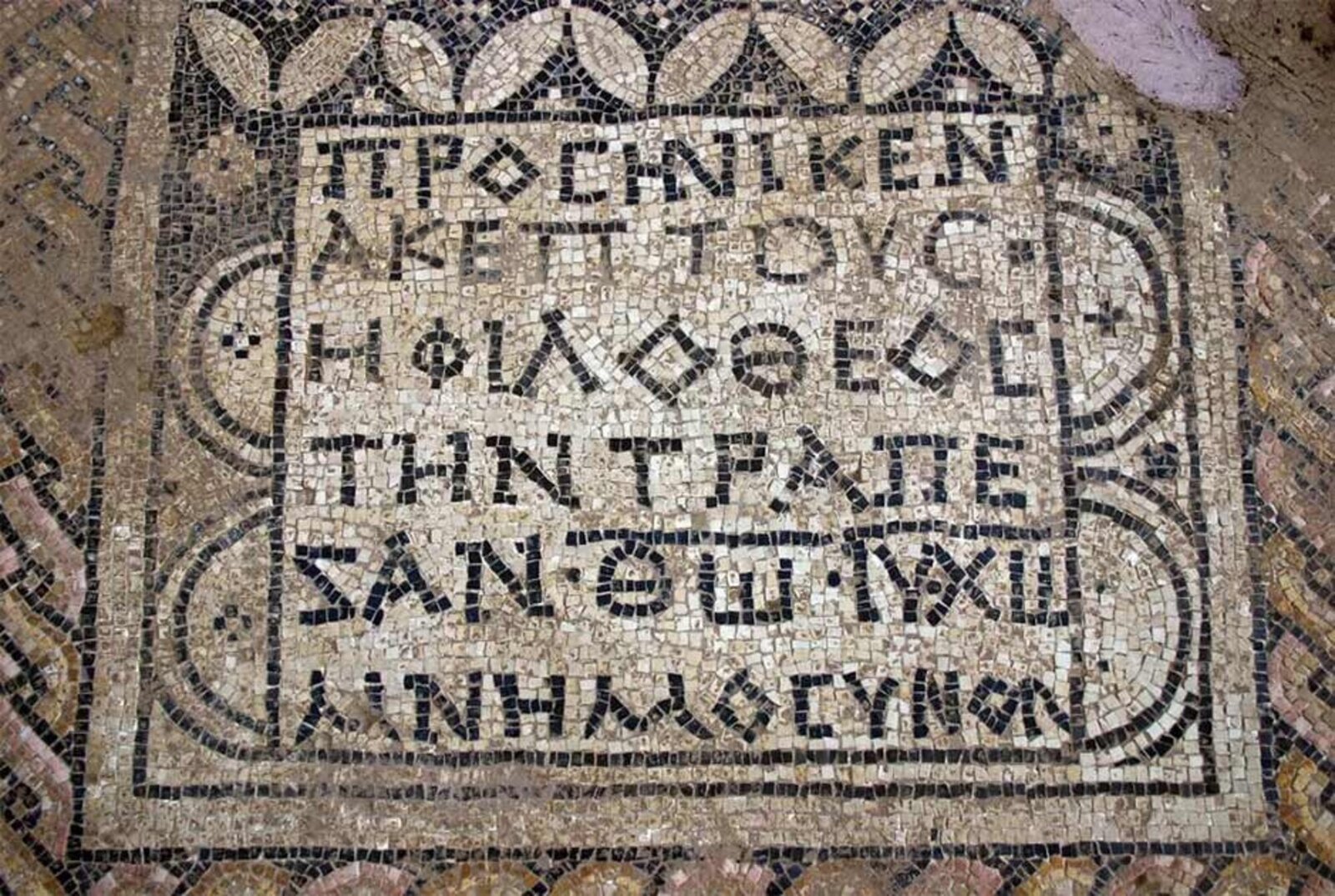
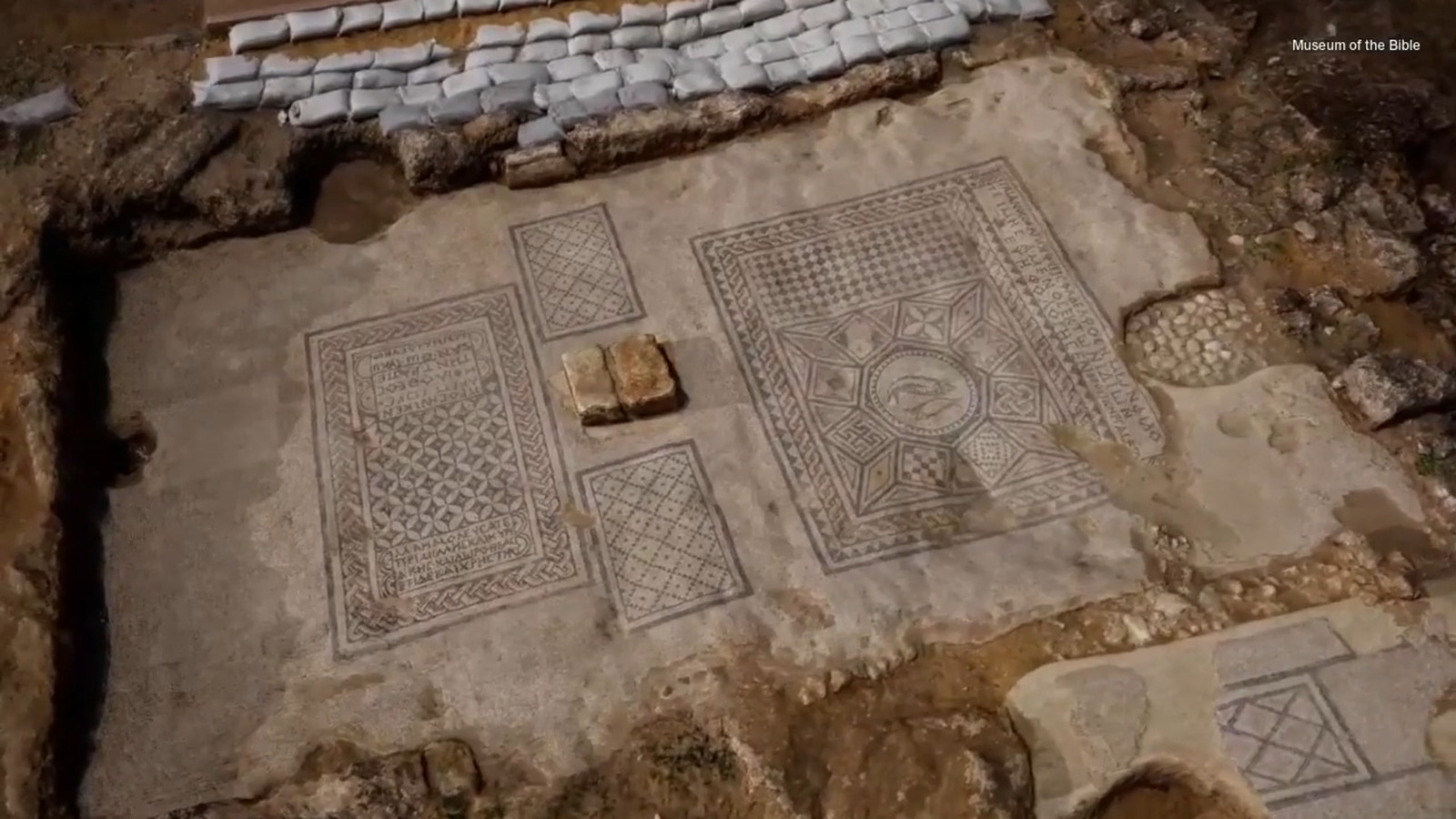
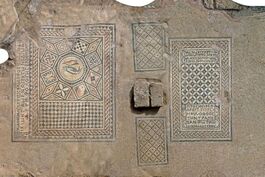
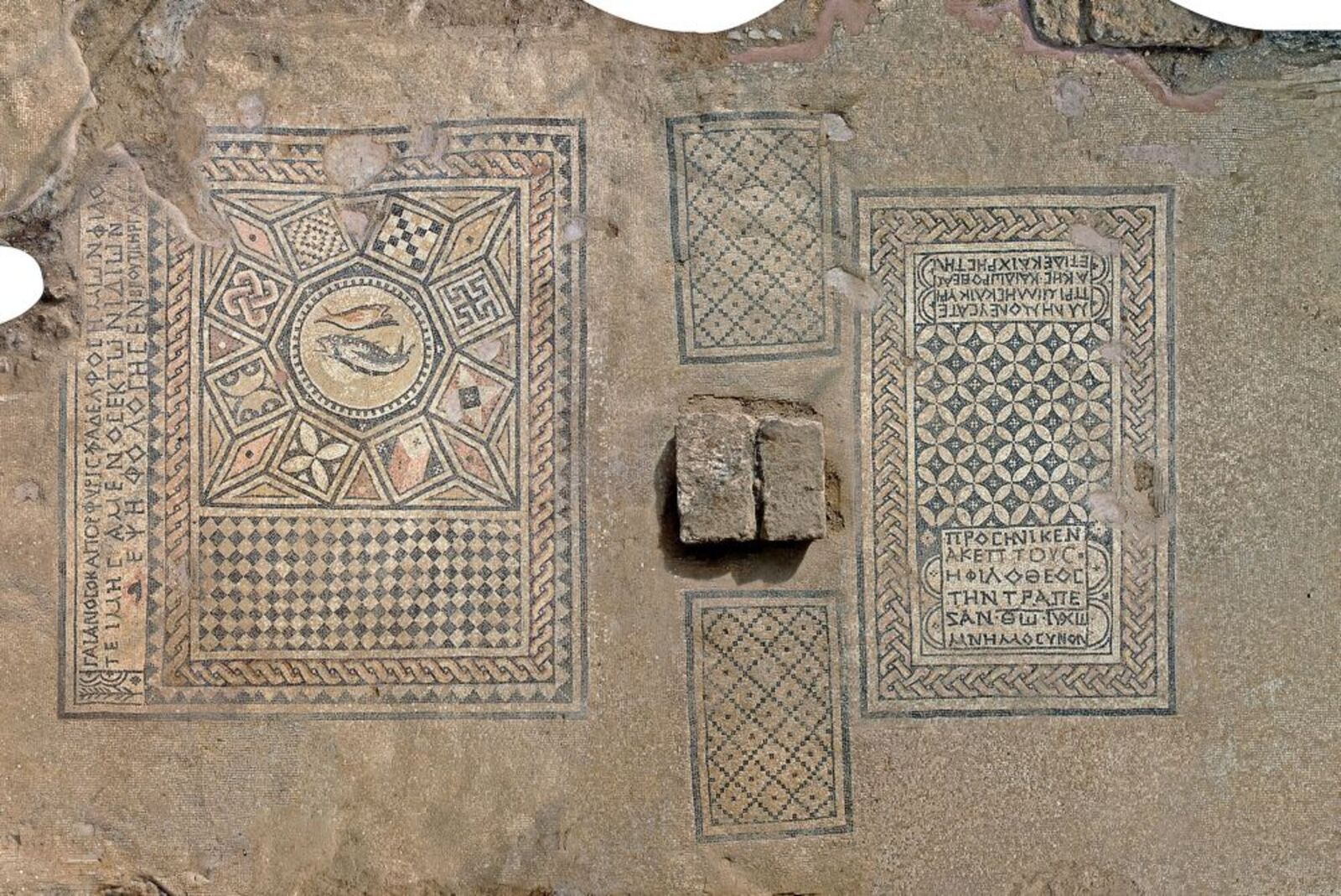
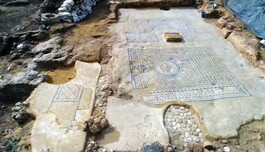
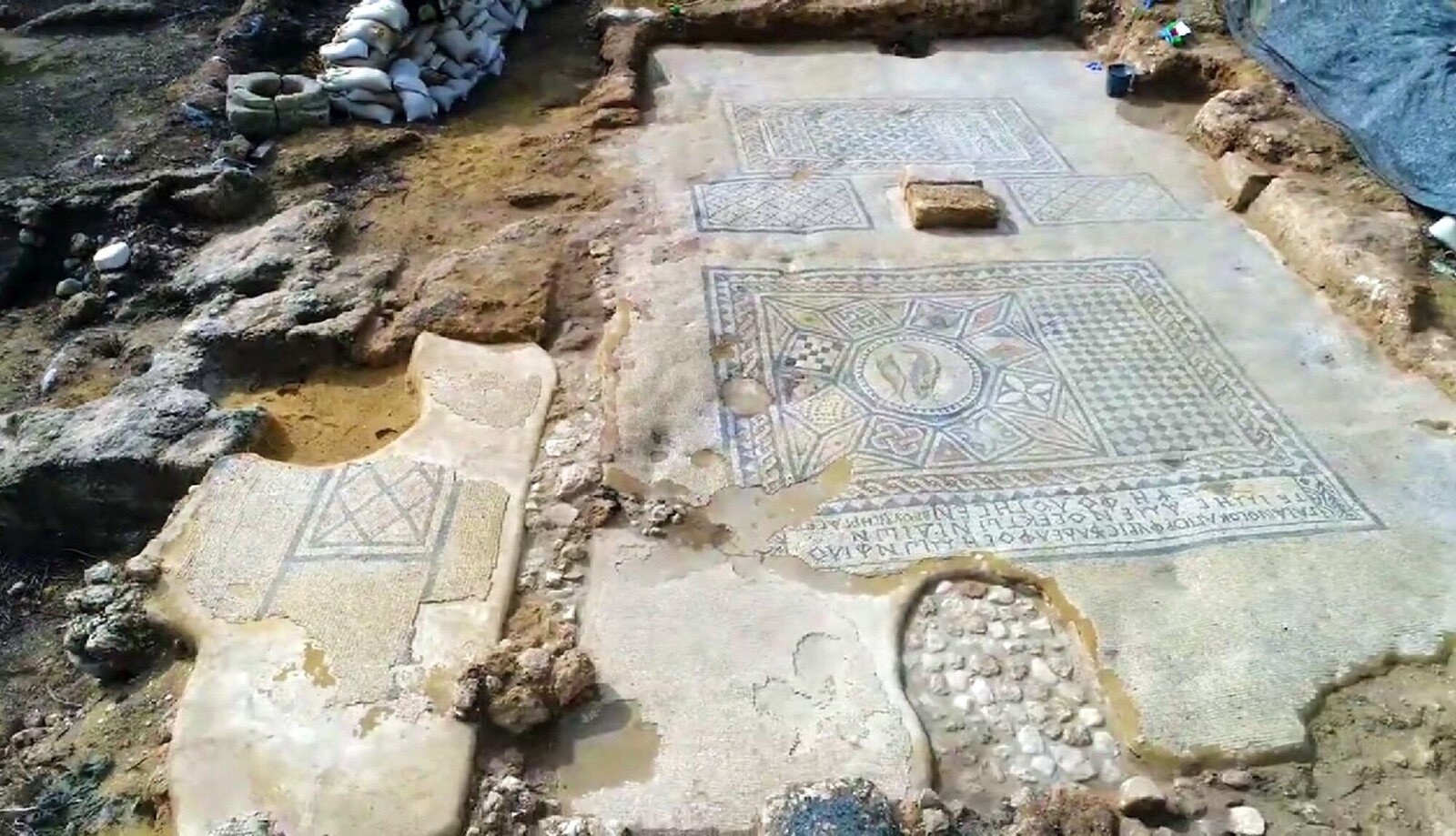
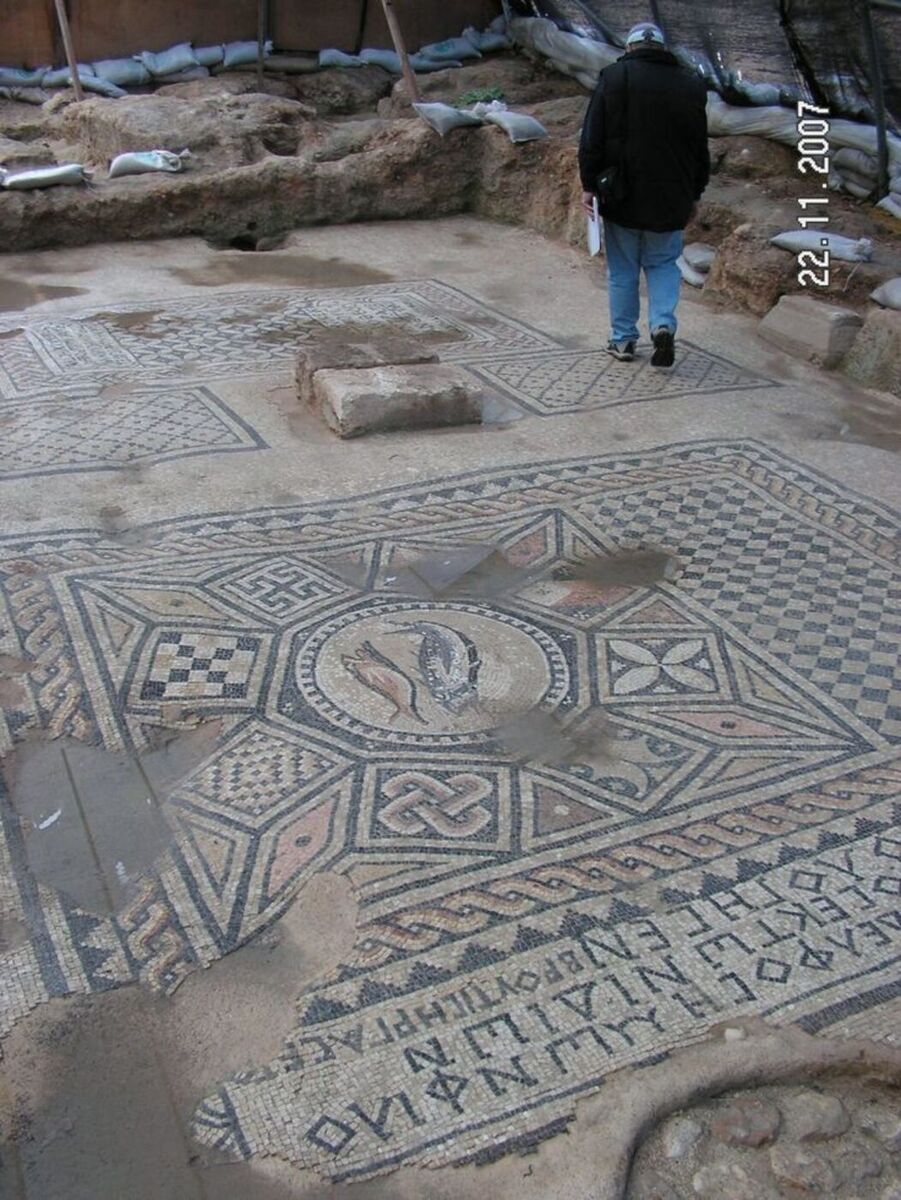
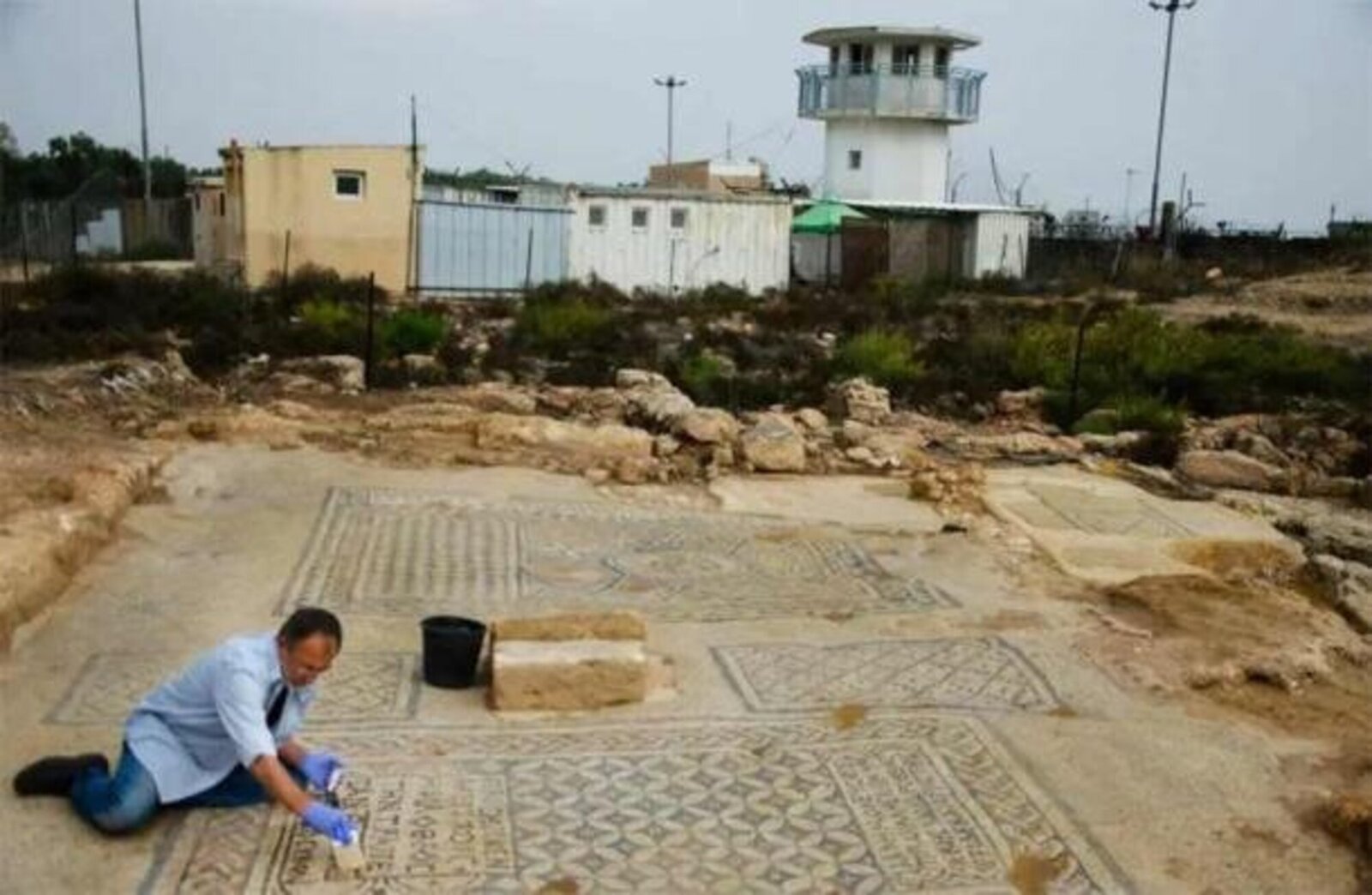
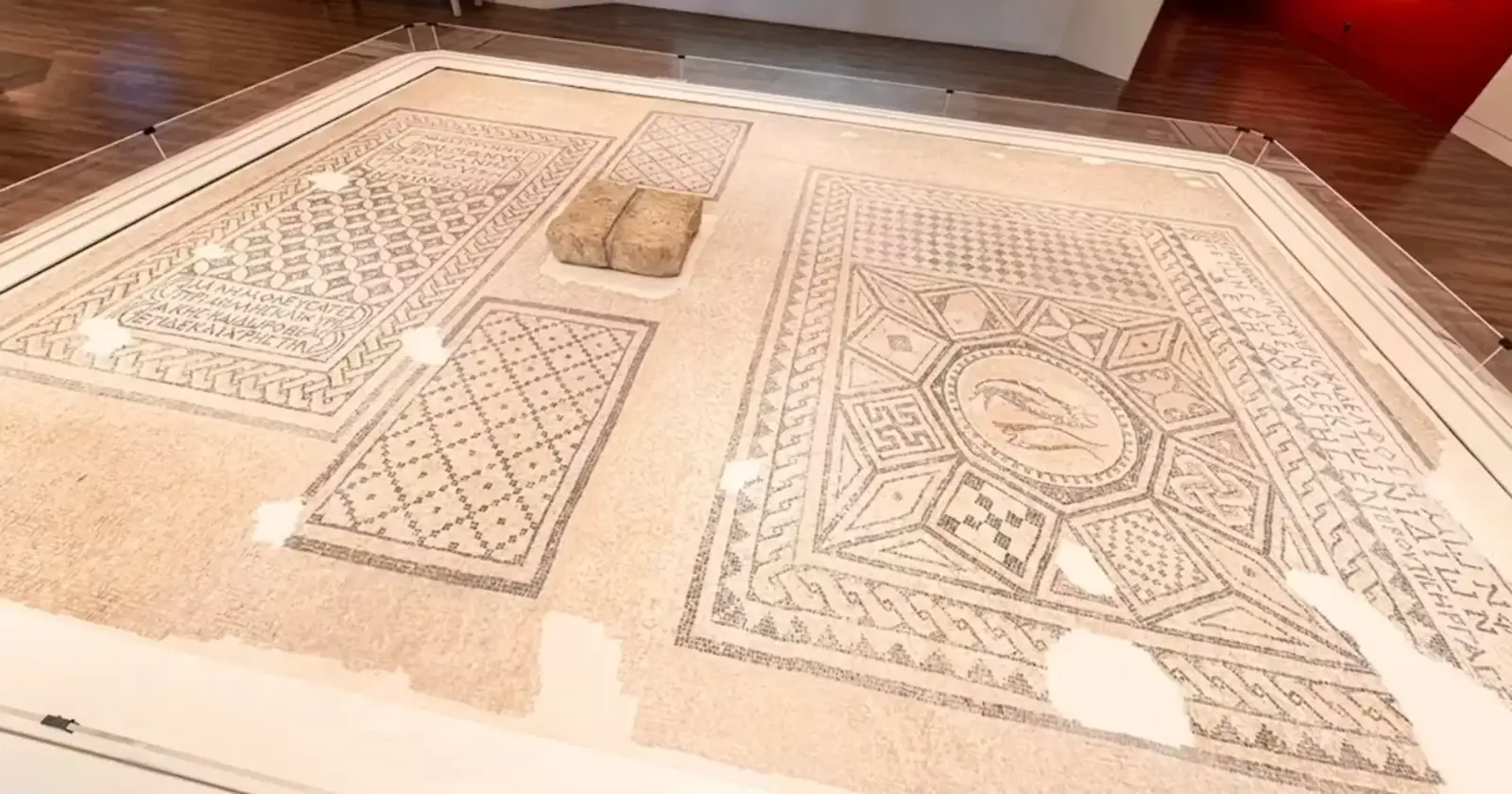
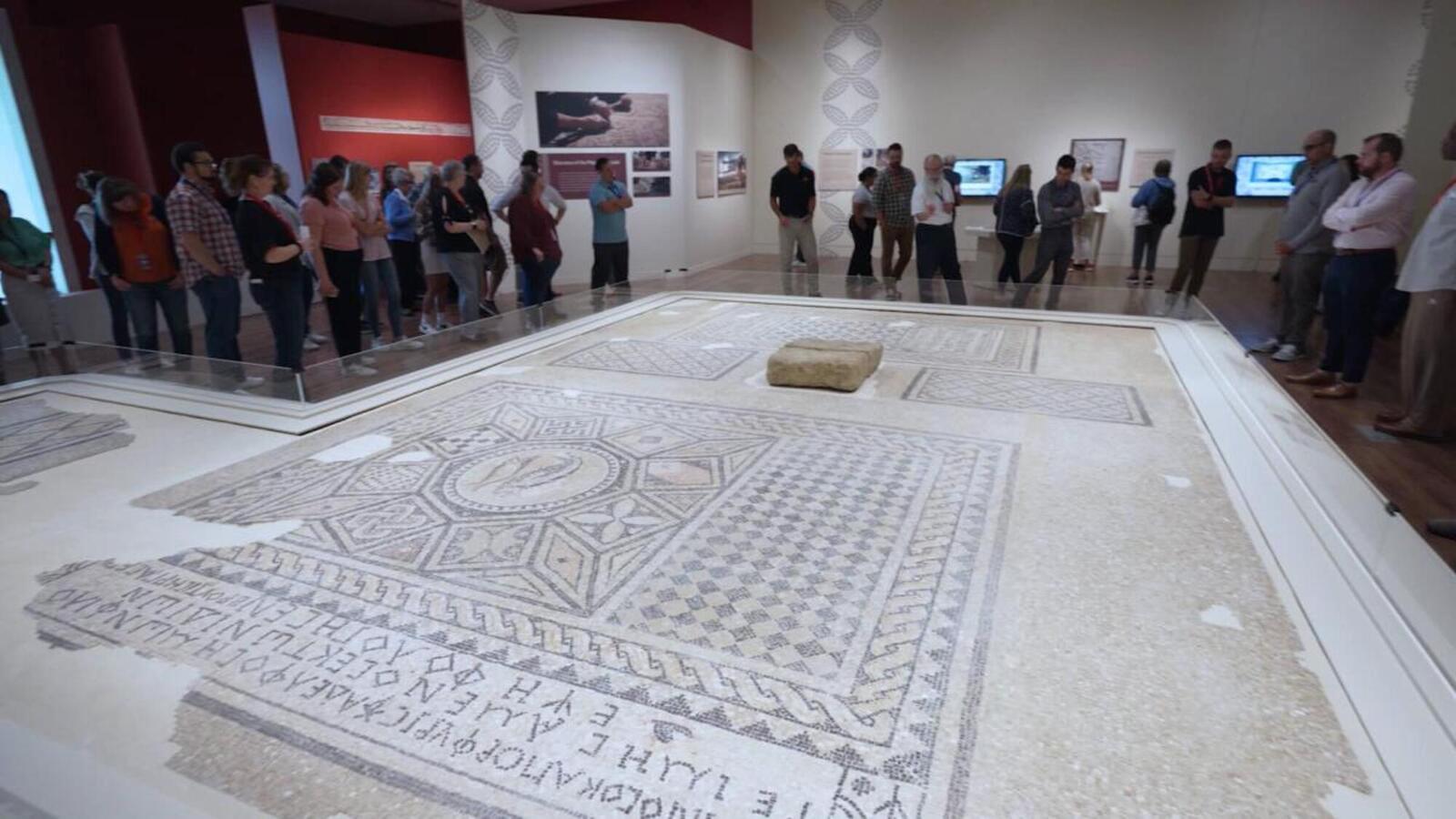
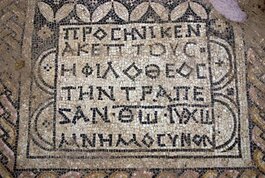
In the Christian church of the early 3rd century, memorial plaques have survived on the floor: the names of donors and their loved ones, who were commemorated during the divine services together with the names of other Christians. One of these inscriptions contains the naming of Christ as God: “Akeptous, the God-loving, offered the table to God Jesus Christ as a memorial”.
[larger]
[larger]
[larger] [add. photo 2] [add. photo 3]

[larger]
[larger]
Inscriptions:
All the inscriptions on the church floor are a kind of memorial notes. From the most ancient times to the present, in the churches of the Orthodox Church there has been a tradition, when divine services are celebrated in a church, always to add to the prayerful commemoration the names of those who built the church or donated something important. So here too, with the call to commemoration, are recorded the names of those who donated the mosaic floor (the centurion Gaius Porphyrius), who laid it (Broutus), who donated the altar table (Akeptous), as well as some other names, possibly relatives of the donors: Primilla, Cyriacus, Dorothea, Christa. In the same way, church vessels were donated in memory of the living and the departed: eucharistic chalices and censers (see more).
RU: Акепта, боголюбивая, пожертвовала сей престол Богу Иисусу Христу в поминовение
EN: Akeptous, the God-loving, offered the table to God Jesus Christ as a memorial.
Transcription: Prosēniken Akeptous, ē philotheos, tēn trapezan Th(e)ō Ι(ēso)u Ch(rist)ō mnēmosunon.
Orig: ΠΡΟСΗΝΙΚΕΝ ΑΚΕΠΤΟΥС, Η ΦΙΛΟΘΕΟС, ΤΗΝ ΤΡΑΠΕΖΑΝ Θ(Ε)Ω Ι(ΗСΟ)Υ Χ(ΡΙСΤ)Ω ΜΝΗΜΟСΥΝΟΝ
ΠΡΟϹΗΝΙΚΕΝ
ΑΚΕΠΤΟΥϹ,
Η ΦΙΛΟΘΕΟϹ,
ΤΗΝ ΤΡΑΠΕ-
ZΑΝ {ΘW} {ΙΥ} {ΧW}*
ΜΝΗΜΟϹΥΝΟΝ
*Nomina Sacra: ΘW ΙΥ ΧW = θεῷ Ἰησοῦ Χριστῷ = God Jesus Christ
[larger]