
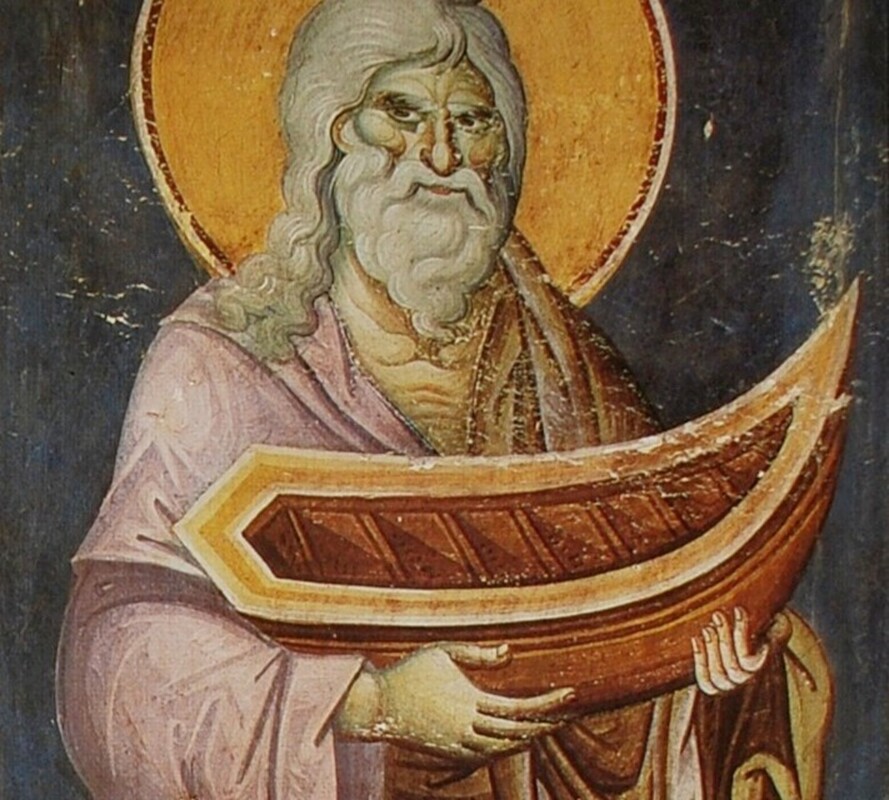
1st century
St Ignatius the God-bearer, bishop of Antioch, hieromartyr (c. 35–107)
Wherefore, as children of light and truth, flee from division and wicked doctrines, but where the shepherd is, there do ye as sheep follow. For there are many wolves that appear worthy of credit, who, by means of a pernicious pleasure, carry captives those that are running towards God; but in your unity they shall have no place. Keep yourselves from those evil plants which Jesus Christ does not tend, because they are not the planting of the Father. Not that I have found any division among you, but exceeding purity. For as many as are of God and of Jesus Christ are also with the bishop. And as many as shall, in the exercise of repentance, return into the unity of the Church, these, too, shall belong to God, that they may live according to Jesus Christ. Do not err, my brethren. If any man follows him that makes a schism in the Church, he shall not inherit the kingdom of God. If any one walks according to a strange opinion, he agrees not with the passion [of Christ.]
<…>
For where there is division and wrath, God doth not dwell. To all them that repent, the Lord grants forgiveness,
if they turn in penitence to the unity of God, and to communion with the bishop.
Do not err, my brethren. Those that corrupt families shall not inherit the kingdom of God. If, then, those who do this as respects the flesh have suffered death, how much more shall this be the case with any one who corrupts by wicked doctrine the faith of God, for which Jesus Christ was crucified! Such an one becoming defiled [in this way], shall go away into everlasting fire, and so shall every one that hearkens unto him.
For this end did the Lord suffer the ointment to be poured upon His head, that He might breathe immortality into His Church. Be not ye anointed with the bad odour of the doctrine of the prince of this world; let him not lead you away captive from the life which is set before you. And why are we not all prudent, since we have received the knowledge of God, which is Jesus Christ? Why do we foolishly perish, not recognising the gift which the Lord has of a truth sent to us?
In like manner, let all reverence the deacons as an appointment of Jesus Christ, and the bishop as Jesus Christ, who is the Son of the Father, and the presbyters as the sanhedrin of God, and assembly of the apostles. Apart from these, there is no Church. Concerning all this, I am persuaded that ye are of the same opinion.
<…>
I therefore, yet not I, but the love of Jesus Christ, entreat you that ye use Christian nourishment only, and abstain from herbage of a different kind; I mean heresy. For those [that are given to this] mix up Jesus Christ with their own poison, speaking things which are unworthy of credit, like those who administer a deadly drug in sweet wine, which he who is ignorant of does greedily take, with a fatal pleasure leading to his own death.
Give ye heed to the bishop, that God also may give heed to you. I am a sacrifice for those who are obedient to the bishop, to the presbyters, and to the deacons.
And may my portion in God be the same as theirs. Labour together, journey together, suffer together,
be at rest together, rise together, as God’s stewards and members of His household and servants.
...
I pray that you may always be strengthened in our God Jesus Christ. Through Him continue in unity with God and the bishop.
...
Whoever can remain in purity to the honour of the Lord of the flesh, let him remain without vainglory.
But if he begins to boast, he is lost; and if he counts himself greater than the bishop, he is utterly ruined.
(To Polycarp, 6, 8, 5)
See that ye all follow the bishop, even as Jesus Christ does the Father, and the presbytery as ye would the apostles; and reverence the deacons, as being the institution of God. Let no man do anything connected with the Church without the bishop. Let that be deemed a proper Eucharist, which is [administered] either by the bishop, or by one to whom he has entrusted it. Wherever the bishop shall appear, there let the multitude [of the people] also be; even as, wherever Jesus Christ is, there is the Catholic Church. It is not lawful without the bishop either to baptize or to celebrate a love-feast; but whatsoever he shall approve of, that is also pleasing to God, so that everything that is done may be secure and valid. It is well to reverence both God and the bishop… He who honours the bishop has been honoured by God; he who does anything without the knowledge of the bishop, does [in reality] serve the devil
2nd century
St Irenaeus of Lyons, hieromartyr (c. 130–202)
Wherefore it is incumbent to obey the presbyters who are in the Church, — those who, as I have shown, possess the succession from the apostles; those who, together with the succession of the episcopate, have received the certain gift of truth, according to the good pleasure of the Father. But [it is also incumbent] to hold in suspicion others who depart from the primitive succession, and assemble themselves together in any place whatsoever, [looking upon them] either as heretics of perverse minds, or as schismatics puffed up and self-pleasing, or again as hypocrites, acting thus for the sake of lucre and vainglory. For all these have fallen from the truth. And the heretics, indeed, who bring strange fire to the altar of God — namely, strange doctrines — shall be burned up by the fire from heaven, as were Nadab and Abiud (Lev. 10:1–2). But such as rise up in opposition to the truth, and exhort others against the Church of God, [shall] remain among those in hell (apud inferos), being swallowed up by an earthquake, even as those who were with Chore, Dathan, and Abiron (Num. 16:33). But those who cleave asunder, and separate the unity of the Church, [shall] receive from God the same punishment as Jeroboam did (1 Kgs. 14:10 ff.).
<…>
From all such persons, therefore, it behooves us to keep aloof; but to adhere to those who, as I have already observed, do hold the doctrine of the apostles, and who, together with the order of priesthood (presbyterii ordine), display sound speech and blameless conduct for the confirmation and correction of others.
(Against Heresies, Book IV, 26, 2)
“For in the Church,” it is said, “God hath set apostles, prophets, teachers” (1 Cor. 12:28), and all the other means through which the Spirit works; of which all those are not partakers who do not join themselves to the Church, but defraud themselves of life through their perverse opinions and infamous behaviour. For where the Church is, there is the Spirit of God; and where the Spirit of God is, there is the Church, and every kind of grace; but the Spirit is truth. Those, therefore, who do not partake of Him, are neither nourished into life from the mother’s breasts, nor do they enjoy that most limpid fountain which issues from the body of Christ; but they dig for themselves broken cisterns out of earthly trenches, and drink putrid water out of the mire, fleeing from the faith of the Church, lest they be convicted; and rejecting the Spirit, that they may not be instructed.
2. Alienated thus from the truth, they do deservedly wallow in all error, tossed to and fro by it, thinking differently in regard to the same things at different times, and never attaining to a well-grounded knowledge, being more anxious to be sophists of words than disciples of the truth. For they have not been founded upon the one rock, but upon the sand, which has in itself a multitude of stones.
(Against Heresies, Book III, 24)
3rd century
St Cyprian of Carthage, hieromartyr (c. 200–258)
And now a deserter and a fugitive from the Church, as if to have changed the clime were to change the man, he goes on to boast and announce himself a confessor, although he can no longer either be or be called a confessor of Christ who has denied Christ’s Church. For when the Apostle Paul says, “For this cause shall a man leave his father and mother, and shall cleave unto his wife; and they two shall be one flesh. This is a great mystery; but I speak concerning Christ and the Church;” (Eph. 5:31–32) — when, I say, the blessed apostle says this, and with his sacred voice testifies to the unity of Christ with the Church, cleaving to one another with indivisible links, how can he be with Christ who is not with the spouse of Christ, and in His Church?
(Epistle 48, to Cornelius, concerning the crimes of Novatus)
Nor let them think that the way of life or of salvation is still open to them, if they have refused to obey the bishops and priests, since in Deuteronomy the Lord God says, “And the man that will do presumptuously, and will not hearken unto the priest or judge, whosoever he shall be in those days, that man shall die, and all the people shall hear and fear, and do no more presumptuously.” (Deut. 17:12–13) God commanded those who did not obey His priests to be slain, and those who did not hearken to His judges who were appointed for the time. And then indeed they were slain with the sword, when the circumcision of the flesh was yet in force; but now that circumcision has begun to be of the spirit among God’s faithful servants, the proud and contumacious are slain with the sword of the Spirit, in that they are cast out of the Church. For they cannot live out of it, since the house of God is one, and there can be no salvation to any except in the Church. But the divine Scripture testifies that the undisciplined perish, because they do not listen to, nor obey wholesome precepts; for it says, “An undisciplined man loveth not him that correcteth him. But they who hate reproof shall be consumed with disgrace.” (Prov. 15:12; Prov. 15:10) Therefore, dearest brother, endeavour that the undisciplined should not be consumed and perish, that as much as you can, by your salutary counsels, you should rule the brotherhood, and take counsel of each one with a view to his salvation.
(Epistle 61, to Pomponius, concerning some virgins)
Whoever is separated from the Church and is joined to an adulteress, is separated from the promises of the Church; nor can he who forsakes the Church of Christ attain to the rewards of Christ. He is a stranger; he is profane; he is an enemy. He can no longer have God for his Father, who has not the Church for his mother. If any one could escape who was outside the ark of Noah, then he also may escape who shall be outside of the Church. The Lord warns, saying, “He who is not with me is against me, and he who gathereth not with me scattereth.” (Matt. 12:30) He who breaks the peace and the concord of Christ, does so in opposition to Christ; he who gathereth elsewhere than in the Church, scatters the Church of Christ. The Lord says, “I and the Father are one;” (John 10:30) and again it is written of the Father, and of the Son, and of the Holy Spirit, “And these three are one.” (1 John 5:7) And does any one believe that this unity which thus comes from the divine strength and coheres in celestial sacraments, can be divided in the Church, and can be separated by the parting asunder of opposing wills? He who does not hold this unity does not hold God’s law, does not hold the faith of the Father and the Son, does not hold life and salvation.
This sacrament of unity, this bond of a concord inseparably cohering, is set forth where in the Gospel the coat of the Lord Jesus Christ is not at all divided nor cut, but is received as an entire garment, and is possessed as an uninjured and undivided robe by those who cast lots concerning Christ’s garment.
(On the Unity of the Church, 6–7)
But how can he cleanse and sanctify the water who is himself unclean, and in whom the Holy Spirit is not? since the Lord says in the book of Numbers, “And whatsoever the unclean person toucheth shall be unclean.” (Num. 19:22) Or how can he who baptizes give to another remission of sins who himself, being outside the Church, cannot put away his own sins? But, moreover, the very interrogation which is put in baptism is a witness of the truth. For when we say, “Dost thou believe in eternal life and remission of sins through the holy Church?” we mean that remission of sins is not granted except in the Church, and that among heretics, where there is no Church, sins cannot be put away. Therefore they who assert that heretics can baptize, must either change the interrogation or maintain the truth; unless indeed they attribute a church also to those who, they contend, have baptism.
(Epistle 69, to Januarius and other Numidian bishops, on baptizing heretics)
they strive to set before and prefer the sordid and profane washing of heretics to the true and only and legitimate baptism of the Catholic Church, not considering that it is written, “He who is baptized by one dead, what availeth his washing?” (Sir. 34:25) Now it is manifest that they who are not in the Church of Christ are reckoned among the dead; and another cannot be made alive by him who himself is not alive, since there is one Church which, having attained the grace of eternal life, both lives for ever and quickens the people of God.
<…>
But if he who comes from the heretics has not previously been baptized in the Church, but comes as a stranger and entirely profane, he must be baptized, that he may become a sheep, because in the holy Church is the one water which makes sheep. And therefore, because there can be nothing common to falsehood and truth, to darkness and light, to death and immortality, to Antichrist and Christ, we ought by all means to maintain the unity of the Catholic Church and not to give way to the enemies of faith and truth in any respect.
<…>so that we, priests of God and prelates of His Church, by His condescension, should know that remission of sins cannot be given save in the Church, nor can the adversaries of Christ claim to themselves anything belonging to His grace.
(Epistle 70, to Quintus, concerning the baptism of heretics)
Whence we perceive that only they who are set over the Church and established in the Gospel law, and in the ordinance of the Lord, are allowed to baptize and to give remission of sins; but that without, nothing can either be bound or loosed, where there is none who can either bind or loose anything. Nor do we propose this, dearest brother, without the authority of divine Scripture, when we say that all things are arranged by divine direction by a certain law and by special ordinance, and that none can usurp to himself, in opposition to the bishops and priests, anything which is not of his own right and power. For Korah, Dathan, and Abiram endeavoured to usurp, in opposition to Moses and Aaron the priest, the power of sacrificing; and they did not do without punishment what they unlawfully dared. The sons of Aaron also, who placed strange fire upon the altar, were at once consumed in the sight of an angry Lord; which punishment remains to those who introduce strange water by a false baptism, that the divine vengeance may avenge and chastise when heretics do that in opposition to the Church, which the Church alone is allowed to do.
<…>
There is no ground, therefore, dearest brother, for thinking that we should give way to heretics so far as to contemplate the betrayal to them of that baptism, which is only granted to the one and only Church. <…> Why do we receive as allowed an adulterous and alien church, a foe to the divine unity, when we know only one Christ and His one Church? The Church, setting forth the likeness of paradise, includes within her walls fruit-bearing trees, whereof that which does not bring forth good fruit is cut off and is cast into the fire.
<…>
The apostles only delivered one Church, and one baptism, which is not ordained except in the same Church. And we cannot find that any one, when he had been baptized by heretics, was received by the apostles in the same baptism, and communicated in such a way as that the apostles should appear to have approved the baptism of heretics.
<…>
there is only one baptism, which is with us, and is within, and is granted of the divine condescension to the Church alone
<…>
we cannot be saved, except by the one only baptism of one Church. “In the ark,” says he, “of Noah, few, that is, eight souls, were saved by water, as also baptism shall in like manner save you.” (1 Pet. 3:20–21) In how short and spiritual a summary has he set forth the sacrament of unity! For as, in that baptism of the world in which its ancient iniquity was purged away, he who was not in the ark of Noah could not be saved by water, so neither can he appear to be saved by baptism who has not been baptized in the Church which is established in the unity of the Lord according to the sacrament of the one ark.
(Epistles 72 and 73, to Jubaianus and to Pompey, on the baptism of heretics)
Peter also, showing this, set forth that the Church is one, and that only they who are in the Church can be baptized <…> In which mystery is declared, that they who will live, and escape from the destruction of the world, must be gathered together into one house alone, that is, into the Church; but whosoever of those thus collected together shall go out abroad, that is, if any one, although he may have obtained grace in the Church, shall depart and go out of the Church, that his blood shall be upon him; that is, that he himself must charge it upon himself that he perishes; which the Apostle Paul explains, teaching and enjoining that a heretic must be avoided, as perverse, and a sinner, and as condemned of himself (Titus 3:11).
<…>
But if the flock is one, how can he be numbered among the flock who is not in the number of the flock? Or, how can he be esteemed a pastor, who, — while the true shepherd remains and presides over the Church of God by successive ordination, — succeeding to no one, and beginning from himself, becomes a stranger and a profane person, an enemy of the Lord’s peace and of the divine unity, not dwelling in the house of God, that is, in the Church of God, in which none dwell except they are of one heart and one mind, since the Holy Spirit speaks in the Psalms, and says, “It is God who maketh men to dwell of one mind in a house” (Ps. 68:6).
<…>
Then, besides, with their own voice they themselves confess that remission of sins cannot be given except by the holy Church; and not having this, they show that sins cannot be remitted among them. But that they are said to have the same God the Father as we, to know the same Christ the Son, the same Holy Spirit, can be of no avail to such as these. For even Korah, Dathan, and Abiram knew the same God as did the priest Aaron and Moses; living under the same law and religion, they invoke the one and true God, who was to be invoked and worshipped; yet, because they transgressed the ministry of their office in opposition to Aaron the priest, who had received the legitimate priesthood by the condescension of God and the ordination of the Lord, and claimed to themselves the power of sacrificing, divinely stricken, they immediately suffered punishment for their unlawful endeavours; and sacrifices offered irreligiously and lawlessly, contrary to the right of divine appointment, could not be accepted, nor profit them.
<…>
And as the ark of Noah was nothing else than the sacrament of the Church of Christ, which then, when all without were perishing, kept those only safe who were within the ark, we are manifestly instructed to look to the unity of the Church. Even as also the Apostle Peter laid down, saying, “Thus also shall baptism in like manner make you safe;” (1 Pet. 3:21) showing that as they who were not in the ark with Noah not only were not purged and saved by water, but at once perished in that deluge; so now also, whoever are not in the Church with Christ will perish outside, unless they are converted by penitence to the only and saving lava of the Church.
<…>
the name of Christ could be of no avail except in the Church alone, to which alone Christ has conceded the power of heavenly grace.
(Epistle 75, to Magnus, on baptizing the Novatians; and Epistle 74, Firmilian of Cæsarea to Cyprian)
He cannot be a martyr who is not in the Church
<…>
They cannot dwell with God who would not be of one mind in God’s Church, although they burn, given up to flames and fires, or lay down their lives, thrown to the wild beasts, that will not be the crown of faith, but the punishment of perfidy; nor will it be the glorious ending of religious valour, but the destruction of despair
(On the Unity of the Church, 14)
4th century
The Second Ecumenical Council (381)
Heretics pass over to that part of the faithful which is saved, in which salvation can be attained:
“Those who turn from heresy to orthodoxy (ὀρθοδοξία) and to the portion of those who are being saved (το μερίδι των σωζομένων), we receive according to the following method and custom…”
(The Second Ecumenical Council, Canon 7)
St John Chrysostom, archbishop of Constantinople (c. 347–407)
The ark is the Church, Noah is Christ, the dove is the Holy Spirit, the olive branch is the love of God for man. The gentle creature was sent out and departed from the ark; but that was a type, and now is the truth; look then at the superiority of the truth. As the ark saved those within it amid the sea, so the Church saves all who wander; but the ark only saved, while the Church does something more; for example: the ark received dumb animals, and saved them as dumb animals; the Church received foolish men and not only saves them but transforms them <…> The ark came to rest, and its doors were opened; Noah went out, saved from drowning, and saw the land laid waste, saw the grave formed out of the mud, a common grave for cattle and men, in which all the bodies of horses, and of men, and of every dumb beast were buried together. He looked upon that mournful sight, looked upon the earth filled with calamities, and fell into great despondency; all had perished; neither man, nor beast, nor any other creature that remained outside the ark was saved;
(Seven Homilies on Lazarus)
Do not hold aloof from the Church; for nothing is stronger than the Church. The Church is thy hope, thy salvation, thy refuge. It is higher than the heaven, it is wider than the earth. It never waxes old, but is always in full vigour. Wherefore as significant of its solidity and stability Holy Scripture calls it a mountain: or of its purity a virgin, or of its magnificence a queen; or of its relationship to God a daughter; and to express its productiveness it calls her barren who has borne seven.
(Second Homily on Eutropius; NPNF reads “The Church hath no feet”, apparently a corruption of οὐδὲν ἐκκλησίας ἴσον — “nothing is equal to the Church”)
And when I say the Church I mean not only a place but also a plan of life: I mean not the walls of the Church but the laws of the Church. When thou takest refuge in a Church, do not seek shelter merely in the place but in the spirit of the place. For the Church is not wall and roof but faith and life.
Do not tell me that the man having been surrendered was surrendered by the Church; if he had not abandoned the Church he would not have been surrendered. Do not say that he fled here for refuge and then was given up: the Church did not abandon him but he abandoned the Church. He was not surrendered from within the Church but outside its walls. Wherefore did he forsake the Church? Didst thou desire to save thyself? Thou shouldst have held fast to the altar. There were no walls here, but there was the guarding providence of God. Wast thou a sinner? God does not reject thee: for “He came not to call the righteous but sinners to repentance.” (Matt. 9:13) The harlot was saved when she clung to His feet. Have ye heard the passage read to-day? Now I say these things that thou mayest not hesitate to take refuge in the Church. Abide with the Church, and the Church does not hand thee over to the enemy: but if thou fliest from the Church, the Church is not the cause of thy capture. For if thou art inside the fold the wolf does not enter: but if thou goest outside, thou art liable to be the wild beast’s prey: yet this is not the fault of the fold, but of thy own pusillanimity. The Church hath no feet. Talk not to me of walls and arms: for walls wax old with time, but the Church has no old age. Walls are shattered by barbarians, but over the Church even demons do not prevail. And that my words are no mere vaunt there is the evidence of facts. How many have assailed the Church, and yet the assailants have perished while the Church herself has soared beyond the sky? Such might hath the Church: when she is assailed she conquers: when snares are laid for her she prevails: when she is insulted her prosperity increases: she is wounded yet sinks not under her wounds; tossed by waves yet not submerged; vexed by storms yet suffers no shipwreck; she wrestles and is not worsted, fights but is not vanquished. Wherefore then did she suffer this war to be? That she might make more manifest the splendour of her triumph.
What then will be the good of his many austerities, when after such painful exercises, any one from the Priest’s great unskillfulness in argument fall into heresy, and be cut off from the body of the Church, a misfortune which I have myself seen many suffering. Of what profit then will his patience be to him? None; no more than there will be in a sound faith if the life is corrupt.
In Christ, in His sacrifice, we have salvation, and all that was before His coming we know as a preparation for that coming, and the work of the salvation of all mankind was from the very beginning ordered as though the sacrifice of Christ, offered for all, were at all times performed before the eyes of all. But this salvation belongs, as we know, to the one Church alone, and no one outside the Church and the faith can either be a partaker of Christ or be saved. Knowing this, we understand that the salvation of the whole world is accomplished not by the works of the law, but in Christ, and we leave to the godless heresies no ground for hope at all, but set them outside all hope, since they have not the slightest communion with Christ, but vainly cover themselves with the saving name, to the harm and deception of those who pay more attention to the name and outward appearance than to the truth. Therefore let no one tear away from Christ what has been from of old, let no one think that any one of those who lived before could be saved without Christ; and those who in our time pervert and distort the truth, who set up only a vain and false likeness of the Church, alien to Christ and to the truth, let no one call such men Christians either, and let no one keep communion with them: for this is impossible, because the sacrifice is not carried out of the sacred house nor offered for communion to those who are outside it.
(Sermons on Holy Pascha, First // Catechetical Sermon on Holy Pascha) (Spuria)
The good ground is the heart of the Orthodox; it exists outside the thorns of heresy, it is cultivated by perfect teachers, and, as it were, ploughed up, it receives the Gospel words, which become seeds for the soul. Such a heart first brings forth the grass of faith, then lengthens the ear of hope, then shows the ripe fruit of perfect love.
(Homily on the words: “A sower went out to sow” (Luke 8:5)) (Spuria)
Listen, Orthodox, and do not indulge heretics; listen, pastors, and be afraid, and do not be silent, but preach the word; do not give place to the devil, do not open the doors to wolves. Imitate the blessed Apostle Peter: when in Rome the accursed Simon blasphemed and asserted of himself that he was the power of God, he did not keep silent or pass it by, but at once exposed him and, showing him to be a deceiver, a robber and an opponent of God, cast him down from his height and delivered him to destruction. In like manner the apostle also resolutely exposed and silenced his son — or rather the son of the devil — Montanus, foul, unclean and godless, together with his two adulteresses, proving that he was an opponent of God, a false christ and a false prophet, and stopped his unclean mouth with the name of Christ, not being indulgent or pandering to his blasphemy. So do you also, pastors, and not only take no part in the shameful deeds of darkness, but also reprove them, as the apostles did.
(Homily on the false prophets and false teachers, and on heretics, and on the signs of the end of this age) (Spuria)
Blessed Jerome of Stridon, monk (c. 347–420)
But as we have already had a long discussion and the protracted controversy has wearied out the attention of our audience, I will tell you my opinion briefly and without reserve. We ought to remain in that Church which was founded by the Apostles and continues to this day. If ever you hear of any that are called Christians taking their name not from the Lord Jesus Christ, but from some other, for instance, Marcionites, Valentinians, Men of the mountain or the plain, you may be sure that you have there not the Church of Christ, but the synagogue of Antichrist. For the fact that they took their rise after the foundation of the Church is proof that they are those whose coming the Apostle foretold. And let them not flatter themselves if they think they have Scripture authority for their assertions, since the devil himself quoted Scripture, and the essence of the Scriptures is not the letter, but the meaning. Otherwise, if we follow the letter, we too can concoct a new dogma and assert that such persons as wear shoes and have two coats must not be received into the Church.
(The Dialogue Against the Luciferians)
All this, as the Jews say, was literally fulfilled in the times of Vespasian and Titus, and especially of Hadrian. But if we refer what is written to the day of judgment, we shall have to say that every one that is saved is saved in the Church, or in the heavenly Jerusalem. When the captivity of Judah and Jerusalem shall be turned back, then all shall be gathered together and led down into the valley of Jehoshaphat, and there the Lord will execute judgment on those who persecuted His people and divided His inheritance among themselves, scattered them among the nations, and cast lots for His land. This we must apply not only to heretics, who have divided the people of God among themselves and turned them into heathens, but to all harsh and arrogant teachers who, under the name of teachers and priests, lord it over the clergy and oppress those subject to them. When they are negligent and cause one of the little ones to stumble, they also drag the young into debauchery or hand them over to harlots, and for the sake of their own pleasure those whose “god is their belly, and whose glory is in their shame” (Phil. 3:19) sell the maidens in order to drink wine. He hands young men over to harlots and sells maidens to debauchery who, out of shameful gain, does not reprove those who sin.
(Commentary on the Prophet Joel, Chapter III)
5th century
Isidore of Pelusium, monk (350–435)
The Word of God called the persecution by the godless and the heretical blasphemies “the gates of hell” (cf. Matt. 16:18), since the Church of God, standing against all this, struggles with some and is not overcome by others
(Letters. Book I, 238. To Serenus)
Blessed Augustine of Hippo (354–430)
Outside the Catholic Church everything is possible except salvation. One may have honour, one may have the Sacraments, one may sing “Alleluia”, one may answer “Amen”, one may hold the Gospel, one may have faith in the name of the Father and of the Son and of the Holy Spirit and preach it, but nowhere except in the Catholic Church can salvation be found.
(Translation from Latin: A Sermon to the People of the Church of Caesarea, 6 // PL. 43. Col. 695)
In Latin (corrected jussit to iussit):
Dominus Deus noster qui voluit ut veniremus ad vos, qui iussit ut eum quaereremus, qui fecit ut eum interim facie tenus inveniremus, adiutos orationibus vestris faciet nos invenire cor eius, laetari de concordia eius, gratias agere Deo de salute eius, quam non potest habere nisi in Ecclesia catholica. Extra Ecclesiam catholicam totum potest praeter salutem. Potest habere honorem, potest habere Sacramenta, potest cantare Alleluia, potest respondere Amen, potest Evangelium tenere, potest in nomine Patris et Filii et Spiritus sancti fidem habere et praedicare: sed nusquam nisi in Ecclesia catholica salutem poterit invenire.
(Augustinus. Sermo ad Caesariensis ecclesiae plebem, 6 // PL. 43. Col. 695)
For these “keys” and the right “to bind and to loose” were received not by one man, but by the One Universal Church. And that the Church really received this right, and not one person exclusively, notice another passage of Scripture where the Lord says the same thing to all His Apostles: “Receive the Holy Spirit”, and immediately after: “Whose sins you forgive, they are forgiven them; whose sins you retain, they are retained” (John 20:22–23); or: “Whatever you bind on earth will be bound in heaven: and whatever you loose on earth will be loosed in heaven” (Matt. 18:18). So, the Church binds, the Church looses; the Church, founded on the cornerstone — Jesus Christ Himself (Eph. 2:20), binds and looses. Let both the bound and the loosed be afraid: the loosed, lest they fall into the same again; the bound, lest they remain forever in the same state. For “by the cords of their own sins,” says the Wise One, “each one is caught” (Prov. 5:22); and outside the Holy Church one can nowhere obtain loosing.
(A Sermon on the Day of Peter and Paul)
We believe also in the holy Church, [intending thereby] assuredly the Catholic. For both heretics and schismatics style their congregations churches. But heretics, in holding false opinions regarding God, do injury to the faith itself; while schismatics, on the other hand, in wicked separations break off from brotherly charity, although they may believe just what we believe. Wherefore neither do the heretics belong to the Church catholic, which loves God; nor do the schismatics form a part of the same…
(A Treatise on Faith and the Creed, X)
St Cyril of Alexandria, archbishop (376–444)
So let the sacred victim be “male and without blemish.” And it is brought to the very doors of the holy tabernacle: for it is not in any other place that we are made perfect, but only in the church, becoming acceptable to God and the Father, when Christ offers us as a priest: “for through Him both have access” (Eph. 2:18)
(On Worship and Service in Spirit and Truth)
Blessed Theodoret of Cyrrhus (386–457)
They said: “Whoever goes out of the doors of your house into the street, his blood shall be on his own head, and we shall be guiltless” of this word of yours (Josh. 2:19). And to us salvation is given through the Church; and whoever is outside the Church will not receive eternal life.
(Commentary on the Book of Joshua, Question 2) (Why did God, having promised to give the Hebrews every place on which the sole of their foot would tread, and the wilderness, and Antilibanus, even to the great river Euphrates (Josh. 1:3–4), not fulfill this promise?)
6th century
Blessed John Moschus of Jerusalem (c. 550–619)
In these stories, what matters first of all for this article is the testimony of the faith of Christians of that ancient time.
There lived in the Lavra of Calamon, near the holy Jordan, an elder great before God, named Cyriacus. Once a brother, a stranger from the country of Dora, named Theophanes, came to him and asked the elder about lustful thoughts. The elder began to instruct him with words about chastity and purity. The brother, having received great benefit from these instructions, exclaimed: “My father, in my country I am in communion with the Nestorians. Were it not for that, I would stay with you forever!” Hearing the name of Nestorius, the elder was deeply grieved over the perdition of the brother and began to urge him and beg him to abandon this pernicious heresy and join the holy catholic and apostolic Church.
– It is impossible to be saved unless you think rightly and believe that the Most Holy Virgin Mary is the true Theotokos.
– Father, – the brother objected, – but all heresies say exactly the same thing: if you are not in communion with us, you will not receive salvation. I do not know, wretched man that I am, what I should do. Pray to the Lord that He may show me clearly which faith is true. The elder joyfully heard the brother’s words.
– Stay in my cell, – he said. – I have hope in God that He, in His mercy, will reveal the truth to you.
And leaving the brother in his cave, the elder went to the Dead Sea and began to pray for the brother. And indeed, on the next day, about the ninth hour, the brother sees that someone appeared to him, terrible in appearance, and says: “Come and know the truth”! And taking him, he leads him to a dark place, foul-smelling and emitting flame, and shows him in the flame Nestorius and Theodore, Eutyches and Apollinarius, Evagrius and Didymus, Dioscorus and Severus, Arius and Origen and others. And the one who appeared says to the brother: “Behold, this place is prepared for heretics, and for those who teach impiously about the Most Holy Theotokos, as well as for those who follow their teaching. If you like this place, remain in your teaching. But if you do not wish to taste such punishment, turn to the holy catholic Church, to which the elder who instructed you also belongs. I tell you: even if a man adorns himself with all the virtues, but believes wrongly, he will fall into this place.” At these words the brother came to himself. When the elder returned, the brother told him everything he had seen, and in a short time he joined the holy catholic apostolic Church.
(The Spiritual Meadow. Limonar, or the Sinai Patericon // 26. The Life of the Brother Theophanes and His Wondrous Vision)
The presbyter Anastasius, sacristan of the church of the Holy Resurrection of Christ our God, told us that once, on the night before Sunday, Cosmiana, the wife of the patrician Germanus, coming alone, wished to venerate the holy and life-giving tomb of our Lord Jesus Christ, the true God. She had already approached the gates of the sanctuary, and behold, our Lady the Most Holy Theotokos appeared visibly to meet her, accompanied by other women.
– You do not belong to us, you are not ours, and therefore do not enter here, – said the Mother of God.
Cosmiana indeed belonged to the sect of Severus the Acephale. To persistent pleas for permission to enter the holy tomb, the Mother of God answered:
– Believe me, woman, that you will not enter here unless you join us.
Realizing that her deviation into heresy barred her access to the shrine, which she would not see until she turned to the holy catholic and apostolic Church of Christ our God, Cosmiana at once called the deacon. When the deacon came with the holy Chalice, she partook of the holy Body and Blood of the great God and Saviour our Jesus Christ, and then was deemed worthy to venerate without hindrance the holy life-giving tomb of the Lord.
(The Spiritual Meadow. Limonar, or the Sinai Patericon // 48. The Miracle of the Most Holy Theotokos That Moved Cosmiana, the Wife of the Patrician Germanus, to Return to the Bosom of the Holy Church from the Heresy of Severus)
The presbyter Anastasius told us also of the following incident: Gevemer, having become a Palestinian commander, first of all came to venerate the Holy Resurrection of Christ. As soon as he wished to enter the church, he saw a ram rushing at him to strike him with its horns. In great fright he stepped back. Azarius, the keeper of the holy Cross, and the temple servants standing there asked him:
– What is the matter with you, sir? Why do you not enter?
– Why did you let this ram in here? – asked the commander. All were struck with amazement. They examined the holy tomb and found nothing.
– There is nothing here – go in!
<…>
– Is it not because I cannot enter that I am not in communion with the holy catholic and apostolic Church, but belong to the sect of Severus? – said the commander, and asked the keeper of the holy Cross to grant him communion of the holy and life-giving mysteries of Christ our God.
The deacon came with the holy Chalice, and he, having partaken, joined the Church. After that he came up and venerated the holy Tomb, seeing nothing more.
(The Spiritual Meadow. Limonar, or the Sinai Patericon // 49. The Wondrous Vision of the Palestinian Commander That Moved Him to Renounce the Heresy and Return to the Bosom of the Church of Christ)
– I belong to the followers of Severus and am not in communion with the Church.
Hearing that he did not belong to the holy catholic and apostolic Church, and at the same time seeing his excellent conduct and virtue, I went away in tears to my cell, shut the door, and falling on my face before God, prayed with tears for three days: “O Lord Christ, our God, who didst bow the heavens in Thine ineffable and infinite love for mankind and didst come down for our salvation, who wast incarnate of our Lady the Most Holy Theotokos and Ever-Virgin Mary, reveal to me: who believes truly and rightly, we, the children of the Church, or the followers of Severus?” On the third day Someone invisible said to me: “Go, Theodulus, and you will see his faith.” Coming in the morning, I sat opposite him, hoping to see something, according to the word that had come to me. I sat for about an hour, looking intently at him. He stood and sang hymns in the Syriac language. And behold – God is my witness! – I see, my children, a dove hovering over his head, blackened as if by soot in a chimney, tattered and ugly. Then I understood that the black and ugly dove that appeared to me signified their faith. This is what, shedding tears and sighing deeply, that truly blessed man told me.
(The Spiritual Meadow. Limonar, or the Sinai Patericon // 106. The Story of Abba Theodore about the Monk Who Held to the Heresy of Severus)
Abba George, presbyter of the cenobium of the Scholarians, told us that there lived in the cells an elder, a great ascetic, who was simple in faith and partook of Communion indiscriminately, wherever it happened. Once an angel of God appeared to him.
– Tell me, elder: if you die, how do you wish to be buried? As the Egyptian monks are buried, or as the Jerusalem ones?
– I do not know, – answered the elder.
– Look, – said the angel, I will come to you in three weeks, and you will give me an answer.
The elder went to another elder and told him what he had heard from the angel. The elder listened and was amazed. And looking at him long and intently, as if by inspiration from above, he asked the elder:
– Where do you partake of the holy Mysteries?
– Wherever it happens…
– See that you do not partake anywhere outside the holy catholic and apostolic Church, in which four holy councils are glorified: that of Nicaea of 318 fathers, that of Constantinople of 150, the first of Ephesus of 200, and that of Chalcedon of 630. And behold, when the angel comes, say to him: “I wish to be buried according to the Jerusalem custom.”
After three weeks the angel came and asked the elder:
– Well, elder? Have you made up your mind?
– I wish to be buried in the Jerusalem manner, – answered the elder.
– Good, good! – said the angel. And the elder at once gave up his soul to God. All this happened so that the elder would not lose his labors and would not be condemned with the heretics.
(The Spiritual Meadow. Limonar, or the Sinai Patericon // 178. The Life of the Most Simple Elder)
7th century
The Sixth Ecumenical Council (691)
Those joining Orthodoxy (ὀρθοδοξίᾳ) and the portion of those who are being saved (τῇ μερίδι τῶν σῳζομένων) from among the heretics, we receive according to the following order and custom…
(Canon 95)
11th century
Theodosius of the Kiev Caves, monk (c. 1008–1074)
Lord, bless! I have a word for you, God-loving Prince. I am Theodosius, the wretched servant of the Most Holy Trinity, Father and Son and Holy Spirit, born and raised in the pure and Orthodox faith in good instruction by Orthodox father and mother. Beware, child, of the misbelievers and of all their conversations, for our land too has been filled with them.
If anyone saves his soul, it is only by living in the Orthodox faith, for there is no faith better than ours, pure, Holy, Orthodox. Living in this Faith, you will not only be delivered from sins and eternal torment, but will also become a partaker of eternal life, and will rejoice with the Saints without end. But those who live in another faith will not see eternal life.
It is not fitting either, child, to praise another faith. Whoever praises another faith is the same as one who reviles his own. If anyone praises both his own and another’s, he is of two faiths, close to heresy. So, child, beware of them and always stand for your Faith.
<…>
Child! If you must die for your Holy faith, go to death with boldness. So the saints died for the Faith, and now they live in Christ. If you see, child, men of another faith disputing with an Orthodox man and wishing to tear him away from the Orthodox Church – help the Orthodox man. By this you will deliver the sheep from the lion’s jaws. But if you keep silent and leave him without help, it is the same as if you took a soul redeemed by Christ and sold it to Satan. If anyone says to you: “Your faith and our faith are from God”, then you, child, answer him thus: “Misbeliever, do you consider God also to be of two faiths? Do you not hear what the Scripture says: ‘There is one God, one Faith, one baptism’ (Eph. 4:5).” Do you not hear the Apostle Paul teaching: “Though… an angel from heaven preach to you any other gospel than that which we have preached… let him be accursed” (Gal. 1:8). Those of other faiths have rejected the apostolic preaching and the ordinances of the holy fathers and have accepted a false and corrupt faith, full of all perdition, and therefore they are rejected by us. They are dead and bring a dead sacrifice. But we bring a living Sacrifice to the living God, pure and without blemish, in order to obtain eternal life in Christ Jesus our Lord. To Him be glory. Amen.
(Testament to the Kiev Prince Izyaslav on the Orthodox Christian Faith)
(*According to a number of scholars, the epistle was written in the middle of the 12th century by Theodosius the Greek)
Nestor the Chronicler, monk (c. 1056–1114)
God also established one day on which, coming down from heaven, He will judge the living and the dead and render to each according to his deeds: to the righteous — the kingdom of heaven, beauty ineffable, joy without end and eternal immortality; but to sinners — fiery torment, the undying worm and torment without end. Such will be the torments for those who do not believe in our God Jesus Christ: those who are not baptized will be tormented in fire
<…>
Vladimir summoned his boyars and the city elders and said to them: “Behold, the Bulgars came to me, saying: ‘Accept our law.’ Then the Germans came and praised their law. After them came the Jews. After all of them came the Greeks, reviling all laws and praising their own, and they said much, telling from the beginning of the world about the existence of the whole world. They speak wisely, and it is wondrous to hear them, and everyone is glad to listen to them; they also tell of the other world: if anyone, they say, passes over to our faith, then, having died, he will rise again, and he will not die forever; but if he is in another law, then in that world he will burn in fire.”
(The Tale of Bygone Years)
15th century
Gennadius II Scholarius, patriarch of Constantinople (1403–1472)
And if anyone says that of two evils one must choose the lesser, and, fearing to become wholly unbelieving, prefers under the pressure of circumstances to deviate only a little from the right faith — [let him know that] there is no difference here. For the judgment for both of these offenses is the same. We know that even one who has deviated but little from the right faith is considered a heretic by every law; this is evident to a man of knowledge. For both in the doctrine concerning the Divine and in every thing in general there is only one truth, while errors, which have departed from the truth in various measure and degree, are without number. And the truth must lead into eternal life, for it is said: “and the unclean shall not pass through it” (Isa. 35:8), whether this uncleanness and stain of shame be in the mind or in the will. But if one who deviates but little from the right faith is deemed worthy of eternal life, then immediately after him there will enter into life the next one also, who has deviated to the same measure from the one who [first] introduced this defilement, and after him another, and another… So that in the end all will receive eternal life, however much they may err, in small things or in great. But if this is impossible, then neither can he be saved who consciously departs from the truth even a little. We stand on the firm foundation of the faith, and we have no need to expose ourselves to such danger by deviating from it even in a small thing.
But if someone asks us (and nowadays many have formed the habit of doing so) whether we consider the Latins heretics, we will answer thus: it is not for us, when poverty and destitution prevail in our affairs, to give such names to a church which has now come into such power and does not consider itself subject to our laws (just as we are not subject to hers). It is enough for us to follow the ancestral dogmas and laws, without entering into any more contests with anyone. But what the Latins are, God knows and the coming day [of Judgment] will reveal. And even if God permits that they, who have made an addition to the faith, should stand in the truth, our [course] also will not be worthy of condemnation by the Divine Judge, since we have followed so great a multitude of teachers. But if the opinion of the Latins, as we suppose, turns out to be far from the truth, then how dangerous will it be for those who join the Latins to depart from the most true and universal ancestral teaching, and moreover without being based on [reliable] arguments of reason? For what arguments, invented by the present-day Latins, have persuaded any of our people to join them? There are no such arguments! [Those who have crossed over] display for all to see those ancient [testimonies] which the Latins also sing at every corner, and say that these are what convinced them. However, a fine refutation of this has been given by our fathers and teachers.
As we have already said above, even a small falling away from the truth, in our opinion, casts down as deeply as great impiety — both the one and the other deprive of eternal life.
…
We would not wish (even if it were possible) to benefit the whole earth as well, if for this it were necessary to offend God and the truth and to bring eternal torments upon our souls.
(A Brief Apology Explaining Why Sensible Greeks Do Not Accept the Council of Florence and the Union Wretchedly Concluded There) (Editor’s note: the author has in mind the plan to save Constantinople by concluding a union with the Catholics.)
16th century
St Maximus the Greek (Trivolis), monk (1470–1556)
We could offer you, for your assurance, many other strong testimonies and indications from the books of Moses and the prophets, in confirmation of the fact that there is only one true, infallible and God-pleasing faith – the evangelical and apostolic faith, which the Orthodox Christians hold.
(Answers to Christians against the Agarenes, Who Blaspheme Our Orthodox Christian Faith)
17th century
St Dmitry of Rostov (Tuptalo) (1651–1709)
A great evil, under the guise of good deeds hypocritically performed, is the deception of others, so that they accept a lie as faith: to reckon false deeds as true, and to honour a pretended saint as a true saint, and to hold his words as words of truth, and to submit to his teaching. In such a hypocritical manner many heretics have deceived many away from the Orthodox faith into false belief; such a one is like Satan, who transforms himself into an angel of light; darkness appears as light, in order to deceive man and turn him aside from the path of salvation.
The last and greatest evil is eternal perdition; for he who does good deeds hypocritically, for vainglory, will be condemned equally with him who does evil; for hypocrisy itself and vainglory are evil.
<…>
Good deeds that bring no fruit of salvation are those which are done:
Either not from love for God Himself, but from self-love.
Or those which are done outside the Orthodox Catholic Church.
<…>
On Good Deeds That Are Outside the Orthodox Church
Those good deeds which are done outside the Orthodox Church, even if they be very good, are nevertheless fruitless, not meriting salvation; for they are done outside the Church, whose head is Christ, who says: he who is not with Me is against Me, and he who does not gather with Me scatters. For he who holds to the Church of Christ holds to Christ Himself, who is joined to His Church as the head to the body, and is ever present with her. But he who keeps aloof from the Church of Christ keeps aloof from Christ Himself, the head of the Church; and without Christ, all the good deeds that a man thinks he gathers for salvation, he does not gather but scatters, and does not merit salvation for himself. Can a member cut off from the body, which is quickened and governed by the head, be alive and active? Can a branch cut from the vine, and a bough broken from the apple tree, bear fruit? By no means. So also a Christian man, even if he leads a virtuous life, when he is separated from union with the Orthodox Church of Christ, cannot obtain salvation. Hear what the most holy Athanasius, patriarch of Alexandria, says at the beginning of his symbol: Whoever wishes to be saved must first of all hold the catholic faith; which unless each one keeps whole and undefiled, without any doubt he will perish forever. Likewise at the end he says: This is the catholic faith, which unless a man believes faithfully and firmly, he cannot be saved. Thus far Athanasius. From these his words it is clear to see that no one can be saved outside the Orthodox Catholic Church; just as in the days of Noah no one was saved from the flood who was found outside Noah’s ark, but only those were saved who entered the ark, and all who did not enter perished: so it is to be understood also concerning the holy Church of Christ (for Noah’s ark was a type of her), that not one of those will obtain salvation who is not found within her: for he is not worthy to have God as a father, (says St Cyprian) who does not have the Church as a mother. And the Gospel says: if anyone does not listen to the church, let him be to you as a heathen and a tax collector. Do not look at his good deeds when he is not obedient to the church. Many virtuous men are found even among the Agarenes, who keep righteousness, show mercy, wrong no one, and show love and beneficence to others, not only to their own but also to Christians; yet their good deeds do not procure salvation for them, because they are strangers to Christ and to the Church of Christ. Likewise those also who bear the name of Christ upon themselves, are called Christians, yet keep aloof from the Church of Christ, will perish with their good deeds (if they have any). St Chrysostom clearly testifies to this in his commentary on Paul’s Epistle to the Philippians, on chapter 1, in homily 2, saying: Nothing is more foul than the devil, for thus everywhere he burdens his own with useless labors and tears them to pieces. And he does not allow them to receive the threefold heavenly reward, but knows how to make them liable to punishment. For he gives them a law not only for preaching, but also for such fasting and virginity, which not only deprives them of the reward, but brings great evil upon those who practice it, of whom he says elsewhere: seared in their own conscience. Thus far Chrysostom. And we understand that both fasting, and purity, even virginity, and the preaching of those who are heretical, and their other labors and toils, not only bring them no salvation, but also procure eternal torment. The truthful lips of Chrysostom have made this clear.
<…>
From such revealed testimonies anyone can be assured concerning the deeds of the schismatics, how displeasing they are to God, and that they merit not salvation but torment.
Let all those hear these things who, forsaking the Church of Christ and her true pastors and teachers, follow after the schismatic false teachers: and let them attend and see whom they listen to, to whom they give credence, whom they follow: murderers of men, destroyers of souls, sorcerers, charmers, heretics, hypocrites, fornicators, lawless men, apostates from the holy faith, blasphemers of the most high sanctities of God, despisers of the grace of the Holy Spirit, by whom the true way is blasphemed, by whom Christ our Lord is dishonored in His most pure mysteries, by whom the Christian name is mocked, whose perdition the demons rejoice over, whose souls after death the fire of hell receives. Those who follow them, what salvation can they expect and hope for? Except the same perdition which their leaders receive.
Behold, O beloved Orthodox people, true sheep of Christ’s flock, and genuine children of His holy Church! We have broken open with sound reasoning the third fruit of the Bryn garden as well, their deeds, and have searched them out with a thorough investigation:
Concerning their supposed good deeds,
And concerning the not-good, which they approve.
And we have found in that fruit, as in the fair-colored apple of Sodom, not a sweet taste, but stinking dust and ashes; we have found, I say, that:
Their good deeds are not pleasing to God, because they are done hypocritically. And if any of them are done not hypocritically, yet even these are not acceptable to God, nor do they merit salvation for them: because they are done outside the Orthodox Catholic Church, without which it is impossible for anyone to be saved.
(An Investigation of the Schismatic Bryn Faith)
Just as the inner unity of the Church is conditioned by the unity of faith and love, so its outer unity is conditioned by the hierarchy (and in it chiefly by the authority of the bishop) and by the church sacraments. Outside this one true and saving Church, according to the reasoning of St Cyprian, there is not and cannot be salvation; only this one Church is the truly apostolic Church, and consequently the infallible one. “We follow, – reasons St Cyprian, – what we received from the apostles, and they handed down to us only one Church. Only one Church, having received the grace of life, both lives forever and gives life to the people of God.” In this very one true Church, which has received the grace of life, all divine blessings are concentrated, and in it alone is salvation possible
(Lives of the Saints, Cyprian of Carthage)
The Holy Spirit acted both through the prophets and through the Apostles. Holy Scripture is the first and chief source of faith and religious knowledge, true and infallible and obligatory for all. A right and unerring understanding of Scripture is possible only under the guidance of the holy universal Church, and in her alone can the truth be found.
Holy Tradition has the same divine origin as Scripture, and therefore constitutes another source of faith and religious knowledge, just as true and infallible and obligatory for all as Holy Scripture; the only guardian of the truly apostolic Tradition can be only the universal Church, in the person of its primates. – “Everyone who wishes to know the truth, – reasons St Irenaeus, – must turn to the Church, because the Apostles communicated the divine truth to her alone, and, like a rich man into a treasury, deposited in her everything that pertains to the truth. Only the Church is the door of life.” And, in particular, according to the teaching of St Irenaeus, only the pastors of the Church, lawfully ordained, are the true teachers and guardians of the truth contained in the Church.
(Lives of the Saints, Irenaeus of Lyons)
St Mitrophan of Voronezh (Vasilyev), bishop (1623–1703)
To have the Orthodox Catholic faith in God with whole-souled love, and to honour as a mother the Holy Church, one in the universe, which has been established in the truth in the East and among us, and to abide in her unswervingly, holding firmly to the unchanging right teaching, and to keep firmly the traditions and teachings defined and confirmed by the holy fathers at the Councils, and to hold them inviolable and unshakable in nothing. Since without the right faith it is impossible to please God, and also without the Holy Eastern Church, her wisdom and her bright God-given teaching, it is impossible for anyone to be saved; and concerning this, through the holy Symbol of faith, we confess the Church as one, Holy, Catholic and Apostolic, and so to keep her from all heresies and to guard her from seductive attacks.
(Spiritual Testament of St Mitrophan, Bishop of Voronezh)
18th century
The Epistle of the Patriarchs (1723)
This is a conciliar document of the Church of Jerusalem (1672), but by this time (1723) it had also been approved by the four patriarchates (Constantinople, Jerusalem, Antioch, Alexandria) and by the Synod of the Russian Church.
But for a sign to be believed, that is for reformation of their innovations, and for their return to the Catholic and Apostolic Church; in which their forefathers also were of old, and assisted at those Synods and contests against heretics, which these now reject and revile. For it was unreasonable on their part, especially as they considered themselves to be wise, to have listened to men that were lovers of self; and profane, and that spake not from the Holy Spirit, but from the prince of lies, and to have forsaken the Holy, Catholic, and Apostolic Church, which God hath purchased with the Blood of his own Son (cf. Acts 20.28); and to have abandoned her. For otherwise there will overtake those that have separated from the Church the pains that are reserved for heathens and publicans. But the Lord who hath ever protected her against all enemies, will not neglect the Catholic Church; to him be glory and dominion unto the ages of the ages. Amen.
That the dignity of the Bishop is so necessary in the Church, that without him, neither Church nor Christian could either be or be spoken of. For he, as a successor of the Apostles, having received in continued succession by the imposition of hands and the invocation of the All-holy Spirit the grace that is given him of the Lord of binding and loosing, is a living image of God upon the earth, and by a most ample participation of the operation of the Holy Spirit, who is the chief functionary, is a fountain of all the Mysteries of the Catholic Church, through which we obtain salvation. And he is, we suppose, as necessary to the Church as breath is to man, or the sun to the world.
St Cosmas of Aetolia, equal-to-the-apostles (1714–1779)
I, Christians, devoted forty or fifty years to study, read about the righteous, the impious, the godless and the heretics — I have studied the depths of wisdom. All faiths are false, counterfeit, and come from the devil. In one thing I do not doubt: only our faith, the faith of the pious Orthodox Christians, is the right and holy faith. So let us hold to it, having been baptized in the Name of the Father and of the Son and of the Holy Spirit.
This is what I will say to you in conclusion: rejoice and be glad that you have been deemed worthy of the honour of being Orthodox Christians; weep and lament over the impious, the godless and the heretics who abide in darkness, in the hands of the devil.
And what are we ourselves, Christians: righteous or sinful? If righteous, then thrice-blessed and happy. If sinful, the time has come to repent, to cease doing evil and begin doing good, for hell awaits us.
<…>
This is what I will say to you in conclusion: “Rejoice and be glad that you have been deemed worthy of the honour of being Orthodox Christians, weep and lament over the impious, the godless and the heretics who abide in darkness, in the hands of the devil”.
<…>
But to the sinful, standing on His left, the Lord will say: “Depart, accursed, into hell, to burn forever with your father the devil, because you have not kept My Faith and My commandments.” Then there will flow a river of fire, like a sea, which will scorch all the impious, the unbelieving, the heretics and the godless, while the pious Christians will rejoice forever in Paradise.
<…>
The first seed that fell by the wayside — the Jews — are doomed to the torments of hell. The second seed that fell on the rock — the impious; their faith is likewise vain and comes from the devil. The third seed, which fell among thorns — the heretics, whose faith is also diabolical. The fourth seed, which fell on good soil — the faith of the pious and Orthodox Christians. They will be saved. But how? Each is saved according to his deeds: he who did good will enter Paradise, he who did evil will go to hell.
<…>
I, my brothers, devoted forty or fifty years to study, read many different books both about the Jews and about the Hellenes (pagans), and about other impious men and heretics — I have studied the depths of wisdom. I understood that all faiths are false and counterfeit, and only our faith, the Christian faith, the Orthodox faith, is true and holy. Therefore I say to you, my brothers, rejoice and be glad that you have been deemed worthy of the honour of being Orthodox Christians; weep and lament over the impious and the heretics who abide in darkness. For them hell was created — their common homeland. Let them perform thousands of good deeds, without Holy Baptism their efforts will be in vain. Let them enjoy the goods of this life, but in the other, heavenly life, they have nothing to hope for. The other faith is ours, the Christian one. The faith of the baptized, the chrismated, the repentant, the communicants. The faith of the martyred, the hungry, the thirsty, the suffering, the mocked, the beaten, the imprisoned.
<…>
The Terrible Judge, the King of kings, our Lord and God Jesus Christ will come in great power and glory with thousands of thousands of Angels and myriads of myriads of Archangels and will sit on a high throne to judge the world. Then He will divide people into two parts, as a shepherd separates the sheep from the goats. And the sheep (that is, the good and righteous people) He will place on the right side, and the goats (the bad and sinful) on the left, and He will judge and test each one according to his deeds. Those who have kept the vows given at holy Baptism, have fulfilled His commandments, and at the end of life have confessed and partaken of the Holy Mysteries, He will place in the Kingdom of Heaven, in the angelic place, so that they may rejoice and be glad forever in His glory. The unbelieving, the heretics, and those who have stained holy Baptism by not keeping His commandments, who did not confess and died unrepentant, He will place in the depths of hell, so that they may burn forever with their father the devil. Then they will be tormented, weep and lament inconsolably: “What fools we were! The church books told us about this, and we did not listen; the preachers cried out about this, and we laughed at them, not abandoning our evil and our sins, never thinking at all of the hour of death. Woe to us! Never now will we see freedom”.
(“The Words” of Cosmas of Aetolia)
St Tikhon of Zadonsk (Sokolov) (1724–1783)
Finally, when the Church of Christ is the ship that saves us from the wrath of God and the terrible flood of hell, and you are in this ship: beware of angering the Helmsman — Christ, lest you fall out of this saving ship and perish in the eternal flood of the wrath and judgment of God. For all are saved in this one ark — all who have been saved and are being saved…
Do you see, beloved brother, what the Church of Christ is, and how great is her magnificence, and how blessed are those who are her true sons? Know, in addition to this, that these names belong properly — only to the holy Orthodox Catholic Church, which alone is the true Church of God, and that these names cannot be applied either to Latin Catholicism, or to Lutheranism, or to the schism, — or to any other heretical and schismatic community.
(On the Truths of the Orthodox Christian Faith and Church)
St Paisius (Velichkovsky), monk (1722–1794)
God the all-merciful works out our salvation by the Orthodox faith, by good deeds and by His grace. The Orthodox faith is that which the one holy, Catholic and Apostolic Eastern Church holds; without this Orthodox faith no one can possibly be saved. Good deeds are the Gospel commandments, without the fulfillment of which, as without faith, it is likewise impossible for anyone to be saved. The Orthodox faith without good deeds is dead, and good deeds without faith are also dead. Whoever wishes salvation must have both together: both the Orthodox faith with good deeds, and good deeds with the Orthodox faith, and then, with the help of the grace of God, which assists his good deeds, he will be saved according to the word of Christ, who said: “without Me you can do nothing”
(How Can a Layman Be Saved?)
19th century
Encyclical of the Patriarchs (1848)
The epistle was signed by the patriarchs, synods and bishops of the Orthodox Churches (see the end of the epistle)
Our faith, brethren, (took its beginning) not from men nor through man, but through the revelation of Jesus Christ, which the divine Apostles preached, the holy Ecumenical Councils confirmed, the great and wise Teachers of the universe handed down by succession, and the holy Martyrs sealed with their blood! Let us therefore hold fast to the confession which we received pure from so many men, rejecting every novelty as an inspiration of the devil: he who accepts a new (teaching) acknowledges, as it were, that the Orthodox Faith handed down to him is imperfect. But it, being already fully unfolded and sealed, admits neither diminution, nor addition, nor any other change whatsoever; and he who dares either to do, or to advise, or to devise this, has already denied the faith of Christ, has already voluntarily subjected himself to eternal anathema for blasphemy against the Holy Spirit, as though He (the Holy Spirit) had spoken imperfectly in the Scriptures and at the Ecumenical Councils. This dread anathema, brethren and beloved children in Christ, we do not pronounce now, but our Saviour pronounced it before all: whosoever speaketh against the Holy Spirit, it shall not be forgiven him, neither in this world, nor in the world to come (Matt. 12:32) <…> Therefore, all who devise novelty — heresy or schism — have voluntarily clothed themselves, in the words of the psalmist, with cursing as with a garment (Ps. 109:18)
(Encyclical Epistle of the One, Holy, Catholic and Apostolic Church to All Orthodox Christians, 1848)
St Philaret (Drozdov), metropolitan of Moscow (1782–1867)
272. If the Catholic Church contains all true believers in the world, must we not acknowledge it to be necessary for salvation that every believer should belong to her?
Exactly so. Since Jesus Christ, in the words of St. Paul, is the Head of the Church, and he is the Saviour of the Body, it follows that, to have part in his salvation, we must necessarily be members of his body, that is, of the Catholic Church. Eph. v. 23. The Apostle Peter writes that baptism saveth us after the figure of the ark of Noah. All who were saved from the general deluge were saved only in the ark; so all who obtain everlasting salvation obtain it only in the one Catholic Church.
<…>
274. Why is the Church called Apostolic?
Because she has from the Apostles, without break or change, both her doctrine and the succession of the gifts of the Holy Ghost, through the laying on of consecrated hands. In the same sense the Church is called also Orthodox, or Rightly-believing.
(The Longer Catechism of The Orthodox, Catholic, Eastern Church, part 1; questions 272 and 274, in the numbering and wording of the English edition)
St Innocent (Veniaminov), metropolitan of Moscow (1797–1879)
Therefore, brethren, if you wish to live with God there, in the Kingdom of Heaven, be Orthodox Christians. If you wish for well-being and happiness, seek it in God. And if you desire that our heart be fully satisfied, turn it to God, from whom you have departed by your sins.
<…>
But before we speak of how one may receive the Holy Spirit, it must be said that only he who truly believes can receive the Holy Spirit, that is, he who confesses the holy Orthodox Catholic faith: who confesses it rightly, without any addition or subtraction or change, but as the holy Apostles handed it down to us and the holy Fathers set it forth and confirmed it at the Ecumenical Councils. Every doubt and every reasoning of one’s own about the faith is disobedience; and the disobedient cannot be a temple or a house of the Holy Spirit. The known and true means of receiving the Holy Spirit, according to the teaching of Holy Scripture and the experience of the great Saints, are the following:
1) Purity of heart and chastity.
2) Humility.
3) Hearing the voice of God.
4) Prayer.
5) Daily self-denial.
6) Reading and hearing Holy Scripture.
7) The sacraments of the Church, and especially Holy Communion.
Every faithful soul will be filled with the Holy Spirit, if it is cleansed from sins and is not obstructed and closed up by self-love and pride. For the Holy Spirit always surrounds us and desires to fill us; but our evil deeds, surrounding us like a stone wall, as evil guards, do not let Him in to us and drive Him away from us. Every sin can drive the Holy Spirit away from us; but especially hateful to Him are bodily impurity and spiritual pride. The Holy Spirit, as the most perfect purity, can in no way dwell in a man defiled by sins.
(Indication of the Way into the Kingdom of Heaven)
St Macarius of Optina (Ivanov), monk (1788–1860)
As without a ship one cannot cross the sea and reach a calm haven, so without faith and obedience to the teaching of the Orthodox Church one cannot reach the haven of temporal well-being and of the salvation of the soul.
(A Homily for Your Benefit, 1860)
Glory be to God that you have come to know, or are coming to know, the truth — and where is it to be found? The Lord said: I am the way, and the truth, and the life (John 14:6), since He both authorized the Church and is Himself its foundation and head; and therefore the holy apostle writes: The Church is the pillar and ground of the truth (1 Tim. 3:15). Here is where the truth must be sought: in the teaching of the Holy Catholic and Apostolic Orthodox Church of Christ, to honour her statutes and ordinances holily and to obey them, for the Lord commanded expressly: If he neglect to hear the Church, let him be unto thee as an heathen man and a publican (Matt. 18:17); and the teaching of the Church is all founded on the Word of God contained in Holy Scripture, and the Holy Spirit Himself acted in the holy fathers who established the rules, laws and statutes of the Church.
(A Homily for Your Benefit, 1857)
The Church in her foundation will always stand firm, and the gates of hell shall not prevail against her (Matt. 16:18); whatever institutions and ordinances were afterwards made in the Holy Church by the holy apostles, the Ecumenical Councils, the pastors and teachers of the Church, according to the commandments of God written above, we must reverently honour and keep; we must obey the teaching of the Church, and not determine the meaning of Holy Scripture by our own reason, but as the Church has received and defined it, for she did all this by the Holy Spirit, having Christ Himself as the head of the Church. From the opposite of this it is known what heresies, schisms and divisions have arisen. But we, who by the grace of God are in the truly Orthodox Catholic and Apostolic Church, must, thanking God, obey her in all things, not heeding foreign opinions or our own, and otherwise we cannot be called or be sons of the Church, but adversaries of her, and for this we cannot escape condemnation.
<…>
Therefore I advise you, when you wish to be saved, to obey in all things the Church in which you find yourself, the Orthodox Eastern Greco-Russian Church; and in order to know her teaching exactly, read the Orthodox Confession of the Catholic and Apostolic Church of the East, which was published for the seventh time in 1838.
(A Homily for Your Benefit)
St Theophan the Recluse, bishop (1815–1894)
But first I am constrained to remind you that, when I speak of the decisive necessity for salvation of being in a living union with the Church, I mean by the Church not every Church without distinction that bears the name of the Christian Church, but the one true Church, the Church founded by the holy Apostles and to this day faithfully preserving all that was divinely established in her through them — and such a Church is our Holy Orthodox Eastern Church — and besides her, none.
Christian churches, as you of course know, are named, besides our Orthodox Church, the Latin church and many Christian Protestant societies. But neither the Latin church, nor still less the Protestant communities, should be recognized as true Churches of Christ; because they are not in conformity with the apostolic constitution of the Church of God.
The Latin church is of apostolic origin; but it has fallen away from the apostolic traditions and has been corrupted. Its chief sin is the passion for forging new dogmas according to its own conceit and self-will. <…> by these teachings the Latins have damaged and spoiled the holy faith handed down by the holy Apostles. Especially destructive is the last new dogma — that of the infallibility of the pope. After it, one does not know how even to look at this church.
As for the Protestant communities, although they may be called Christian because they talk about Christianity, they are by no means Churches of Christ. The Church of Christ was established by the holy Apostles according to the design and plan of the Lord Himself, made clear and confirmed by the Holy Spirit. But these communities were established by men of their own authority and according to a plan invented by themselves. <…> Since in them both the one and the other are not Christ’s but their own, devised by their own mind, these communities cannot rightly be called Churches of Christ. For Christ has no part in their constitution. — True, they say that they borrowed indications for the constitution of their communities from the Scriptures. But the idea and plan of the building of the Church were not handed down to Scripture; therefore they could not have been borrowed from there.
<…>
take care to be accounted worthy to receive the treasures of salvation acquired by the Lord — make them your own and use them as you ought, and you will be saved. But this twofold work can be accomplished as it ought, and is accomplished, only in the Holy Orthodox Church.
<…>
The Holy Orthodox Church is the treasury of the goods of salvation. Whatever you may need for salvation — all of it you will find in her — and only in her. Apart from her even the Lord Himself does not give these goods. So it pleased Him Himself to arrange it. Having become the Head of the Church, He acts for our salvation in no other way than through this His body. And do not seek another access to His treasures of salvation. There is none.
<…>
the Holy Spirit descended directly only upon the Apostles; but after them the grace of the Holy Spirit is communicated to believers no otherwise than through special means, or Sacraments, instituted by the Lord’s direction through the Holy Spirit by the Apostles. And these Sacraments are entrusted to the Holy Orthodox Church and exist in her alone. And the Church became a treasury not of truth only, but also of grace. Do you feel the need of grace? Go to the Orthodox Church, approach the Sacraments — and you will receive grace, — every kind, whatever you seek.
Do you seek regeneration? Seek it in the Holy Orthodox Church. She — and she alone — will bring you forth by water and the Spirit, in the Sacrament of holy baptism. — Do you seek the gift of the Holy Spirit? Seek it in the Holy Orthodox Church. She — and she alone — will impart it to you in the Sacrament of chrismation. — Have you sinned? Do you repent and seek the healing of the soul’s wounds and the loosing of the bonds of conscience? Go to the Holy Orthodox Church. She — and she alone — having in the person of her pastors received the power to bind and to loose, will absolve you from your sins and heal the wounds of your soul with healing bandages. — Do you have a need and seek the most intimate communion with the Lord? Go to the Holy Orthodox Church. She — and she alone — having given you to taste the Body and Blood of the Lord from His sacrifice, which she ever offers, will bring it about that you are in the Lord and the Lord in you, according to His unfailing promise. — Do you seek to lay a grace-filled foundation for your family? Go to the Holy Orthodox Church. She will grant you this good, sealing your marriage union with grace in the Sacrament of marriage. — Are you weak in body and do you seek healing? Turn to the Holy Church. She will grant you this good, together with the remission of sins, through the Sacrament of anointing.
<…>
living communion with the Holy Orthodox Church is as necessary as is the partaking of the grace-given powers unto salvation.
(Letter 27. The Fifth Letter to St Petersburg concerning the Heresy There)
The Lord Christ, our Saviour, having established His holy Church on earth, is pleased to abide in her as her Head, Quickener and Governor. Here Christ is in our Orthodox Church, and in any other there is He not. Seek not, for you will not find Him. Therefore, if anyone from a non-Orthodox assembly comes to you and begins to urge: “we have Christ,” do not believe him. If you hear from anyone: “we have an apostolic community and we have Christ,” do not believe him. The Church founded by the Apostles abides on earth; this is the Orthodox Church. And here is Christ. But that community, set up yesterday, cannot be apostolic, and in it there is no Christ. If you hear someone saying: “Christ speaks in me,” while he keeps aloof from the Church, does not wish to know her pastors and is not sanctified by the sacraments — do not believe him: in him it is not Christ, but another spirit, appropriating to itself the name of Christ, in order to draw away from Christ the Lord and from His holy Church. And do not believe anyone who urges on you anything small that is alien to the Church. Recognize all such as instruments of the spirits of deceit and false preachers of falsehood.
(Thoughts for Every Day of the Year, Tuesday (2 Pet. 2:9–22; Mark 13:14–23))
It is clear after this as day that they have no truth, no following of Christ, no Church — and therefore no salvation, for salvation is only in the Church, as in Noah’s ark. The Church of Christ has the priesthood; the schismatics have no priesthood, and so no Church. The Church of Christ has the sacraments; among the schismatics there is no one to perform the sacraments, and consequently they have no Church either. And how is it that they still dare to open their mouths and to seduce the Orthodox! “We want to save [others],” they say; to save, when they themselves are perishing!.. Salvation is impossible without grace, and grace is not given without the sacraments, and the sacrament is not performed without the priesthood. No priesthood — no sacraments; no sacraments — no grace; no grace — no salvation.
(Two or Three Words against the Schismatics)
Be in the Church, hold to all that she holds — and you will be in the truth, you will possess the truth and live by it and in it, and consequently you will truly be filled with life. Outside the Orthodox Church there is no truth. She is the one faithful guardian of all that the Lord commanded through the holy Apostles, and is therefore the true Apostolic Church. Others have lost the Apostolic Church, and since according to the Christian consciousness they carry the conviction that only the Apostolic Church can faithfully preserve and point out the truth, they have taken it into their heads to build such a church themselves, and have built it, and have given it that name. They gave the name, but could not impart the substance. For the Apostolic Church was created, by the good pleasure of the Father, by the Lord Saviour through the grace of the Holy Spirit and through the Apostles. Men cannot create such a one. Those who think they can create such a church are like children playing with dolls. If there is no true Apostolic Church on earth, then there is no use in labouring to create one. But thanks be to the Lord, He did not permit the gates of hell to prevail against the holy Apostolic Church. She exists and will exist, according to His promise, until the end of the age. And this is our Orthodox Church. Glory be to God!
(1887, the Saturday before Theophany)
The spirit of Catholicism is earthly. Their Church, and in their understanding, is a political corporation, sustained by human forces and means, such as: the inquisition, indulgences — with a visible head. The Orthodox Church is a spiritual union of all in Jesus Christ and, through Him, with one another. The Church is invisibly governed by the Lord and directed toward her end. Among them the pope leads her — and whither?!!
(Letter 21, Letters on the Christian Life. Instructions. Collected Letters)
Concerning preachers of the faith not on behalf of the Church. On the perniciousness of the words of false teachers: “Believe, and you are saved.” Preachers preach about salvation not as the Lord and the Apostles did. On the degrees of the fall into falsehood and darkness of Catholics, Protestants and the new preachers, and their falling away from the one faith and Church. Do they have the truth of God? The Orthodox Church is the one true Church, containing the truth of God. All teachings that distort the truth about Christ have been exposed and anathematized by the Church. Preachers interpret and pervert the Gospel crookedly. On the Most Holy Trinity. What is necessary for the salvation of each one. On the grace of the Holy Spirit. What we must hold to if we wish to be saved. On the sign of the cross.
(Letter 8. The First Letter to St Petersburg concerning the Heresy There)
Neither among the papists, nor among the Protestants, nor among the English, nor among those to whom your infector belongs with his infected ranter, is there the truth of God — the real, pure, full truth. It abides only in the one true Orthodox Church. It is true that they themselves, in their delusion, think that they possess the truth, but the truth is far from them. The papists were the first to fall away from the truth, but they think that they are the ones who hold it. The Protestants exposed the inconsistency of the papists in many things, but they themselves did not hit upon the truth, but ran still further away from it, having built their new faith according to their own conceit, and not according to the truth of God; yet they too, like the papists, think that they have hit upon the truth, which they considered the papists to be strangers to. The English did not like the German faith, and they built their own, also according to their own conceit, and not according to the truth of God, saying: this and that is not good among the Germans; we will compose a faith for ourselves that suits us better — and they composed it, departing from the truth of God still further, thinking, however, that they stand in it more firmly than others. Among the English afterwards, as also among the Germans, there multiplied a multitude of faiths, which all likewise boast that they have at last hit upon the truth, whereas in fact they have departed from it still further. Since they sought it not where God has placed it, but in their own conceit, they did not hit upon the truth, but took various phantoms of truth for the truth, and on them built their beliefs. Among their number is also that conceit which the Englishman brought to you and by which your ranter was seduced. — But while such a diversity of faiths, more or less false, multiplied in the West, in the East the Orthodox Church remained unchanged in her belief, the one true Church, containing the truth of God, that very truth which was proclaimed by the Lord Saviour and planted in the Church by His holy Apostles. We — the sons of the Orthodox Church — hold this truth and stand in it. Through a whole series of ages the unchangeable truth went on in the Orthodox Church and has come down to us. The Holy Church stands in the truth; and we stand in it. Thanks be to the Lord, who was pleased to give us birth in the bosom of the one true Orthodox Church!
<…>
How many teachings were there that distorted the truth about Christ Jesus, both before Arius and still more after him? — All of them have been exposed by the Church and anathematized. How many of them have multiplied in the West? There is no counting them. But all of them are rejected by the Orthodox Church, in spite of the fact that they speak of nothing but the Lord Saviour. Consequently, one cannot conclude thus: since such a man preaches about Christ Jesus, for that very reason he proclaims the truth; but one should verify whether he rightly proclaims the truth about Christ Jesus. Among you there, however, no one, it seems, has taken the trouble to do this, but all, as soon as they heard from his lips the sweetest name of the Lord Saviour, took his side without discrimination, not suspecting that this worshipped name is in the mouth of him, the deceived one, a bait for catching your souls, simple in the faith.
<…>
These are all the seven streams of divine grace, operating in the Holy Orthodox Church. And there is no other way to receive grace. If anyone begins to point out to you another way to this, turn away from him as from a conceited man.
<…>
What does it mean to be a Christian? It means both to believe rightly, and to live holily, and to be sanctified by the Sacraments, and to listen to the guidance of the pastors, and to belong to the Orthodox Church of God, and strictly to fulfil all that she commands, that is, to do all that, as we showed before, constitutes the way to salvation.
<…>
Indeed, after what you have said, it is tangibly clear that he has fallen away from the Holy Orthodox Church, and if he rushes about with his teaching, it is in order to tear you away from the Church too and to form some special sect, alien to the Church and rejected by God.
(Letter 8. The First Letter to St Petersburg concerning the Heresy There; editor’s note: the seven sacraments)
Of the sources of grace, the Holy Sacraments, I do not speak; nor do I speak of the constant guidance in the spiritual life and of the models for it. You yourself know that the Holy Church is rich in these — and only the Orthodox Church.
(Letter 28. The Sixth Letter to St Petersburg concerning the Heresy There)
By virtue of this, the Pashkovites too had Christ in themselves, but when they turned aside into sectarianism and fell away from the Church, Christ left them empty <…> The Pashkovites, having lost the presence of Christ the Lord in themselves in its first form, by reason of their heresy, can certainly not have it in the second. But they may shout about themselves as much as they like.
(Letter 71. On Mourning. The Sectarians Have No Christ)
without the priesthood there is no salvation, and that the true priesthood is to be found nowhere but in the true Church of Christ, they turned to the right Church and asked for priests. The priests perform the holy Sacraments among them, and the commandments and dogmas they had before. And so they came to have a not hopeless way of salvation. For they came to have all that is needed for salvation. And so, if anyone does not wish to turn to the Orthodox Church, let him accept Edinoverie, but let him not destroy souls outside all communion with the Holy Church. I say this only to the schismatics — but whoever goes to the Orthodox Church ought not to turn to the Edinoverie church. That means stepping backwards, which ought not to be. But you, Orthodox Christians, bless God that you belong to the Church of God, that you are within her saving enclosure, and guard yourselves in every way against any inclination to schism, which destroys souls! You are surrounded by schism: but be of good courage
(23. On Monday of the 13th week after Pentecost (the schismatics cannot fulfil the conditions of salvation, and that by which they wished to replace what was lacking has no power or value))
In the course of time, various statements of St Theophan are found on the questions under discussion. Let us examine them in more detail.
In 1870, St Theophan’s commentaries on the letters of Count M. M. Speransky were published. There the following reflections of the count on Communion are given (they are not very important now):
Communion. In communion Jesus Christ is truly united with us. He is always in us (and this presence is called grace); this is the true meaning of that expression, so little known to the scholars of our age — although we do not feel Him, yet we ought to feel Him in ourselves; and in order to arouse or quicken this feeling, holy communion was instituted. Those who assert that, in consequence of a constant and uninterrupted communion, they can dispense with this special union, are deeply mistaken. For, in the first place, constant communion presupposes a high degree of holiness — and who would be bold enough to ascribe it to himself? Further, even supposing that this uninterrupted communion exists, this other, special and symbolic communion will only quicken and strengthen it. Thus in any case it is exceedingly profitable and necessary. Add to these arguments that your church offers such great conveniences for this exercise that not to use them is unforgivable*2.
(letter 10)
The statement of the count itself is not of interest now; what matters is St Theophan’s comment on it in footnote 2. In it the saint withdraws from judgments about the operation of grace in the sacraments of the Lutherans:
*2 Speransky writes to a Lutheran about the Lutheran church. To what extent the grace of God is present in this church is not our business to judge. Perhaps the Lord’s word applies here: according to your faith be it unto you (Matt. 9:29). To the extent that they believe, to that extent they receive. But as for what is said about the conveniences of communicating in this church, it should rather have been expressed thus: “And your church offers conveniences. In our Orthodox Church there are all conveniences, but yours is not entirely devoid of them either.”
(pdf file, p. 353, footnote 2)
Thus, this was written before 1870. After 1874 St Theophan already denies the sacraments outside the Orthodox Church. For instance, he has lengthy letters about the heresy that appeared in St Petersburg. That heresy was brought by Lord Granville Redstock, who came from England (that Englishman who introduced novelties among you, who came for the first time in 1874; see also the article “Evangelical Christians (Prokhanovites)” in the Russian Wikipedia) — it was in 1874. St Theophan in his letters is already reacting to the accomplished fact of the appearance and spread of the heresy. Consequently, his letters were written later than 1874. The adjacent letters in the collection against Redstock’s activity were written in 1879:
Letter 1128. On the results of the consultation with the oculist. Redstock’s tares. Refusal of the proposed service in Japan — 24 April 1879
Letter 1129. Efforts to stop Redstock’s propaganda. On the case of recognizing the schismatic hierarchy. Religious readings in private homes — 24 April 1879
Thus, in any case, these statements of St Theophan are at least later than the words from footnote 2 about the Lutherans quoted earlier. In these letters the saint undoubtedly acknowledges the possibility of salvation and the operation of the saving sacraments only in the Orthodox Church. These words have already been quoted above; let us repeat only a part:
But first I am constrained to remind you that, when I speak of the decisive necessity for salvation of being in a living union with the Church, I mean by the Church not every Church without distinction that bears the name of the Christian Church, but the one true Church, the Church founded by the holy Apostles and to this day faithfully preserving all that was divinely established in her through them — and such a Church is our Holy Orthodox Eastern Church — and besides her, none.
Christian churches, as you of course know, are named, besides our Orthodox Church, the Latin church and many Christian Protestant societies. But neither the Latin church, nor still less the Protestant communities, should be recognized as true Churches of Christ
<…>
take care to be accounted worthy to receive the treasures of salvation acquired by the Lord — make them your own and use them as you ought, and you will be saved. But this twofold work can be accomplished as it ought, and is accomplished, only in the Holy Orthodox Church.
<…>
The Holy Orthodox Church is the treasury of the goods of salvation. Whatever you may need for salvation — all of it you will find in her — and only in her. Apart from her even the Lord Himself does not give these goods. So it pleased Him Himself to arrange it. Having become the Head of the Church, He acts for our salvation in no other way than through this His body. And do not seek another access to His treasures of salvation. There is none.
<…>
the Holy Spirit descended directly only upon the Apostles; but after them the grace of the Holy Spirit is communicated to believers no otherwise than through special means, or Sacraments, instituted by the Lord’s direction through the Holy Spirit by the Apostles. And these Sacraments are entrusted to the Holy Orthodox Church and exist in her alone. And the Church became a treasury not of truth only, but also of grace. Do you feel the need of grace? Go to the Orthodox Church, approach the Sacraments — and you will receive grace, — every kind, whatever you seek.
Do you seek regeneration? Seek it in the Holy Orthodox Church. She — and she alone — will bring you forth by water and the Spirit, in the Sacrament of holy baptism. — Do you seek the gift of the Holy Spirit? Seek it in the Holy Orthodox Church. She — and she alone — will impart it to you in the Sacrament of chrismation. — Have you sinned? Do you repent and seek the healing of the soul’s wounds and the loosing of the bonds of conscience? Go to the Holy Orthodox Church. She — and she alone — having in the person of her pastors received the power to bind and to loose, will absolve you from your sins and heal the wounds of your soul with healing bandages. — Do you have a need and seek the most intimate communion with the Lord? Go to the Holy Orthodox Church. She — and she alone — having given you to taste the Body and Blood of the Lord from His sacrifice, which she ever offers
(Letter 27. The Fifth Letter to St Petersburg concerning the Heresy There)
However, some 14 years later, at the age of 73, in a letter of 1888, St Theophan has statements about the Roman Catholics in which he seems to acknowledge the sacraments in the Roman Catholic Church:
Now — at this hour — I can say nothing about the article, nor about sin, but only about the heretical character of the Catholic Church.
You and I are private persons; and in our opinions we must conform to the decision of the Orthodox Church. It seems that our holy Church is condescending toward Catholics — and recognizes the power not only of Catholic baptism and the other sacraments, but also of the priesthood, which is very significant. Therefore it is better for us to refrain both from posing these questions and from resolving them. One thing only should be held: that one should not go over to the Catholics, for certain parts of their confession of faith and church order are damaged or changed, with a falling away from the most ancient. More than this I do not know what to say.
(Letter 1181. On the Heretical Character of the Catholic Church and on Various Other Subjects)
Let us note also that the following widely circulated quotation is not found in the written works of St Theophan. It occurs in another author — Archbishop Nikon (Rozhdestvensky) (1851–1919), who repeatedly mentions it in various forms as the words of St Theophan. These words were spoken in 1914, twenty years after the repose of St Theophan:
“What need, then, has an Orthodox Christian to ask further: ‘Are other faiths pleasing to God: Lutheranism, Latinism, and the rest, which are without number?’ The answer is clear of itself. I say nothing of paganism, Mohammedanism, Judaism with its Talmud. Even concerning the Christian confessions the faithful son of the Church will say what the unforgettable St Theophan said: ‘
I do not wish to enter into judgment whether Catholics will be saved — one thing I know: if I leave Orthodoxy and go over to Latinism, I shall undoubtedly perish’”
Archbishop Nikon (Rozhdestvensky), Orthodoxy and the Coming Destinies of Russia, ch. 5
However, it is possible to allow such a statement by St Theophan, considering all that has been examined above. We have only gathered the saint’s quotations here, offering them for more detailed study.
St Ignatius (Brianchaninov), bishop (1807–1867)
Where is that blessed ark, like the ark of righteous Noah, to which one might flee from the waves that encompass us on every side, where one might find sure salvation? The ark is the Holy Church, borne above the waves of the moral flood and, in the dark, stormy, threatening night, with good courage and firmness guiding herself on her way by the heavenly lights: the writings of the holy saints of God. No darkness, no clouds can hide the radiance of these lights.
The ark will reach the haven of blessed eternity and will bring there safely all who have entrusted their salvation to it.
Whoever despises this ark and thinks, in the blindness of pride and self-conceit, to cross the terrible waves in the frail boat of his own reason, whoever despises humble obedience to the true Church, whoever seats himself in other ships, damaged by false teaching, worm-eaten by the seduction of the crafty serpent, whoever rejects the guidance of the Holy Spirit, or will be guided only with coldness and double-mindedness by the Holy and sacred Scripture, in which alone is the teaching of the Spirit — he will perish.
(Ascetic Experiments, vol. 1, Reflection at Sunset, 1846)
The spiritual chamber in which the spiritual treasure is kept and from which it is inexhaustibly dispensed — the true faith, is the One Holy Orthodox Church. For this reason it is necessary for salvation to belong to the Orthodox Church; he who does not obey the Church “let him be unto thee as an heathen man and a publican” (Matt. 18:17), said the Lord. In vain do some consider the sin of the mind a light and trifling sin! As much as the spirit is higher than the body, so much is the virtue performed by the spirit more exalted than the virtue performed by the body; as much as the spirit is higher than the body, so much is the sin accepted and committed by the spirit more grievous and more pernicious than the sin committed by the body.
<…>
The radiant angel, struck by an evil thought, became a gloomy demon and, cast out of the heavenly habitations, was hurled into the nether world. He drew there a multitude of angels and a multitude of men who allowed the cast of their thoughts to be infected with false opinions. The Lord, having called the fallen angel the father of lies, called him also a murderer, as one who abides not in the truth (see John 8:44). Falsehood is the source and cause of eternal death; on the contrary, truth is the source and cause of salvation, by the definition of the Lord Himself (see John 8:32). The Holy Church keeps holy truth in her bosom. Belonging to her and obeying her, one can have a right way of thinking about God, about man, about good, about evil, and consequently about salvation. It is evident that without a right way of thinking about salvation, it is impossible to have salvation itself. The beginning of salvation is truth! The beginning of salvation is right thought!
(Ascetic Sermon, Instruction for the Twelfth Week. On Salvation)
Whoever wishes to be saved must belong to the one holy Orthodox Church, be her faithful son, and submit in all things to her ordinances. If anyone does not obey the Church, if anyone has separated himself from the Church, if anyone is a schismatic, then however many prostrations he may make, however much he may fast, however much he may pray, he cannot be saved. The Lord compared him who does not obey the Church to an idolater: “if he neglect to hear the Church,” He said, “let him be unto thee as an heathen man and a publican” (Matt. 18:17). Even in the Old Testament, when Saul offered sacrifice of his own will, contrary to the commandment of the Lord, the prophet Samuel said to him: “Thou hast done foolishly, because thou hast not kept my commandment which the Lord commanded thee” (1 Sam. 13:13). “Hath the Lord as great delight in burnt offerings and sacrifices, as in obeying the voice of the Lord? Behold, to obey is better than sacrifice, and to hearken than the fat of rams. For rebellion is as the sin of witchcraft, and stubbornness is as iniquity and idolatry” (1 Sam. 15:22–23). In the New Testament the beloved disciple of the Lord testified that then only does the Lord accept our prayer, when that prayer is offered according to the will of the Lord (1 John 5:14). The prayers of those who by their deeds oppose God are not accepted, are rejected by God (Matt. 7:21–23). The schismatic and the heretic are strangers to humility, as the devil is a stranger to humility, and therefore they are strangers to salvation, as the devil is a stranger to it.
<…>
Once the devil appeared to St Macarius and said: “Macarius! You fast much, but I eat nothing at all; you sleep little, but I do not sleep at all; by one thing only you conquer me — by your humility”. The schismatics keep long and heavy fasts, spend whole nights in prayer, make numerous prostrations, but alas! they labour in vain and to no purpose, because they do not wish to be humble. Without humility it is impossible to be a disciple of Christ. The Lord said: “Take my yoke upon you, and learn of me; for I am meek and lowly in heart: and ye shall find rest unto your souls” (Matt. 11:29). He who has not humbled himself is not a disciple of Christ, has not submitted to Christ. True humility is from obedience, said St John Climacus, just as the Lord showed His humility in that He “became obedient unto death, even the death of the cross” (Phil. 2:8). Without obedience to the Church there is no humility; without humility there is no salvation: “I was brought low, and he saved me,” said the prophet (Ps. 116:6). Heresy and schism contain, besides this, blasphemy against the Holy Spirit, which is a mortal sin, not forgiven by God to man either in this age or in the age to come, if man remains in this sin. Even the blood of martyrdom cannot cleanse this sin, according to the teaching of St John Chrysostom. This sin is cleansed only when a man renounces his heresy, leaves the schism and joins the holy Church.
(Ascetic Sermon, Instruction to the Simple People on Visiting the Diocese. On Salvation)
It is necessary for him who wishes to be saved to belong to the Orthodox Church, the one true Church, and to obey her ordinances. The Lord likened him who disobeys the Church to a heathen, a stranger to God (see Matt. 18:17). Each of us, when reciting the Creed, confesses that he believes in the One Holy Catholic and Apostolic Church, and confesses, consequently, that besides this one Church there is no other Church, and still less are there other Churches, even though various human societies may appropriate to themselves the name of Church. It is necessary for him who wishes to be saved to be baptized in the bosom of the Orthodox Church in the name of the Father and of the Son and of the Holy Spirit, as the Lord Himself said: “he that believeth and is baptized shall be saved; but he that believeth not shall be damned” (Mark 16:16).
(Ascetic Sermon, Instruction for the Thirtieth Week. On Salvation and Perfection)
The teaching of the holy fathers of the Eastern Church is true: it is the teaching of the Holy Spirit. I beseech you, hold fast to this teaching! It will guide you to blessed eternity.
A shining lamp is kindled in the Holy Church of Christ — the radiance of the Holy Spirit: do not turn your eyes to other lamps, shining on various paths. One path of holy truth leads to salvation, all the other paths lead to perdition. Many labour, many suffer, many strive, but only those who strive lawfully will be saved (see 2 Tim. 2:5). The true lawful striving is in Christ Jesus and the Holy Spirit, within the enclosure of the Holy Eastern Church.
(Letters to Laymen, letter 218)
The question you proposed now comes next. “Why should the pagans,” you write, “the Mohammedans and the so-called heretics not be saved? Among them there are very good people.”
<…>
One good deed is needful for us for salvation: faith; — but faith is a deed. By faith, by faith alone, we can enter into communion with God through the sacraments granted by Him. In vain, then, and mistakenly, do you think and say that good people among the pagans and the Mohammedans will be saved, that is, will enter into communion with God!
<…>
You say: “heretics are the same Christians.” Where did you get that from? Would anyone who calls himself a Christian and knows nothing of Christ, in his extreme ignorance, venture to acknowledge himself a Christian just like the heretics, and not distinguish the holy Christian faith from a child of the curse — blasphemous heresy! True Christians reason otherwise about this! Numerous hosts of saints received the crown of martyrdom, preferred the fiercest and most prolonged torments, prison and exile, to agreeing to share with the heretics in their blasphemous teaching. The Ecumenical Church has always recognized heresy as a mortal sin, has always recognized that a man infected with the terrible disease of heresy is dead in soul, a stranger to grace and salvation, in communion with the devil and his perdition. Heresy is a sin of the mind. Heresy is more a devilish sin than a human one; it is the daughter of the devil, his invention — impiety close to idolatry. The Fathers usually call idolatry impiety, and heresy — wickedness. In idolatry the devil receives divine honour for himself from blinded men; by heresy he makes men who are blinded participants in his chief sin — blasphemy.
(Letters, 203: On the Impossibility of the Salvation of Non-Orthodox and Heretics)
Divine Truth became man, in order to save by Himself us who were perishing from the acceptance and assimilation of the murderous lie. “If ye continue in my word,” it declares, “if you receive My teaching and remain faithful to it, then are ye my disciples indeed; and ye shall know the truth, and the truth shall make you free” (John 8:31–32). He alone can remain faithful to the teaching of Christ who with determination has rejected, and will constantly reject, all teachings invented and being invented by reprobate spirits and men, hostile to the teaching of Christ, the teaching of God, plotting against its integrity and inviolability. In inviolable integrity the revealed teaching of God is preserved solely and exclusively in the bosom of the Orthodox Eastern Church. Amen.
(A Word on the First Week of Great Lent. On Orthodoxy)
The consequences of such a falling away are known: the death of the soul, beginning in time, and burial in the prisons of hell in eternity. The spirit of man is corrupted, is struck with blindness and darkness, as we have already said, by the acceptance of a false teaching, a teaching proceeding from the world and from Satan, a teaching contrary to the revealed divine teaching, the teaching of Christ, the teaching of the Ecumenical and Eastern Church. The following teachings are recognized as false teachings: the teaching that denies the existence of God, or atheism; the teaching that denies Christ and Christianity while acknowledging the existence of God, but denying all relations between God and men, or deism; teachings that do not directly deny Christianity, but distort the God-revealed teaching by an arbitrary, human, blasphemous teaching, by which the essence of Christianity is destroyed, such as all heresies; teachings that do not directly deny Christianity, but reject the works of faith or the moral evangelical and church tradition, adopting pagan practice, thereby putting faith to death and destroying the essence of Christianity.
(Counsel on the Spiritual Work of Monks // Chapter 49. On Guarding the Spiritual Eye from Everything Harmful to It)
Abba Agathon
heresy is estrangement from God. The heretic is cut off from the living and true God, and is made a partaker of the devil and his angels. He who is cut off from Christ no longer has a God whom he might entreat for his sins, and, in every respect, is a lost man. But if the heretic turns to the faith held by the true, ecumenical, holy Church, he is received by the good and merciful Redeemer, and is reunited with the true God, our Creator and Saviour, Christ
(The Patericon, Ignatius (Brianchaninov))
St Ambrose of Optina (Grenkov), monk (1812–1891)
Another question: if, as has been said, apart from the One, Holy, Catholic and Apostolic Church, which the Orthodox Church is called and is, the salvation of other confessions is so doubtful: why then is this truth not preached openly in Russia? The answer to this is very simple and clear. In Russia religious toleration is permitted, and the non-Orthodox, on an equal footing with the Orthodox, hold important positions among us: the heads of educational institutions are for the most part non-Orthodox; the governors of provinces and district towns are often non-Orthodox; regimental and battalion commanders are not infrequently non-Orthodox. Wherever a clergyman might begin to preach openly that outside the Orthodox Church there is no salvation, the high-ranking non-Orthodox would be offended. From this situation the Russian Orthodox clergy acquired, as it were, a habit and an ingrained disposition to speak evasively on this subject. And perhaps some, for the same reason, and from constant dealings with the non-Orthodox, and more from reading their writings, have come to think more indulgently concerning the hope of salvation of other confessions as well.
(An Answer to Those Favourably Disposed toward the Latin Church)
St John of Kronstadt (Sergiyev), righteous (1829–1908)
Lutherans and Anglicans call themselves Evangelicals, as it were in reproach of us Orthodox, who accept, besides the Gospel, or the true revelation of God, also Holy Tradition on a par with Scripture; but they call themselves so quite unjustly, for they do not accept by faith the most important thing in the Gospel — the words of the Saviour about the transformation of bread into the most pure Body and of wine into the most pure Blood of Christ [Matt. 26:26-28 and others]. Christ God came to earth and perfectly accomplished the divine dispensation for the salvation of the human race by His teaching, sufferings, and death for the human race, and for the renewal of human nature corrupted by sin He granted to believers as food and drink His most pure Body and His most precious Blood; but Protestants and Reformed say: no, this is not His Body and this is not His Blood, but bread and wine, and the Body of Christ only touches the bread in some way, which remains bread, as the wine remains wine, or that this bread and wine are only symbols, signs of the Body and Blood of Christ, and the Body of Christ Itself is only in heaven. O, human false wisdom! O, unbelief in the faith! O, distortion of all Christianity! O, heresy! O, ruin! O, pitiful deprivation of the Mysteries of the Body and Blood of Christ! O, terrible anathema upon all Protestantism and the Reformed faith. They speak blasphemy against the Holy Spirit, oppose His works, do not acknowledge His true works as truth — and they dare to call themselves Christian Evangelicals! O, perverse mind, blinded mind! Diabolical mind!
<…>
What faith can teach the greatest art in the world — to conquer sin and its author, the devil, the ancient murderer of men and the destroyer of the human race, wise for evil — except the true, Orthodox faith? What faith can give all the means and powers for victory over the world, the flesh, and the devil? — Only the one true, Orthodox faith. For five and a half thousand years the devil destroyed the human race by his lie, extreme flattery, and every kind of deception, especially the deception of idolatry, and no one could be delivered from him except the righteous of the Old Testament — the patriarchs and prophets and the few righteous, the servants of the true faith [under the law]. The Son of God Himself had to come to earth in order to proclaim the truth, to fulfill all righteousness, and to suffer — the Righteous One for the unrighteous — in order to make it possible to fulfill the righteousness of God with His help and grace under the true faith, which He enclosed in the Holy, Catholic, and Apostolic Church; but the Papists and Protestants distorted the God-given faith, distorted the truth of the Gospel, and thereby deprived themselves and the believers of the grace of salvation, they reproached the Holy Spirit, the Spirit of truth, and began to teach falsely about Him Himself, as though He proceeds eternally from the Son of God. And by whom are we saved, if not by the Holy Spirit, by the grace of Christ God and the good pleasure of God the Father? O, how truly spiritual must the mind of a Christian be, how all-blameless and whole the teaching must be, as life also must be blameless and whole46! Both must be Orthodox. Show me, what faith, besides the Orthodox, could bring a man to perfection, to holiness? — None, except the Orthodox. The conclusion from this is clear: salvation is only in the Orthodox Church, for the enemy, the murderer of men, that ancient serpent wise for all evil, can be conquered only by a man who thinks rightly in the faith and lives rightly; but he who does not think rightly cannot live rightly and holily, as one who does not have the right faith, and cannot be saved without having the whole armour of the right faith, for false reasoning and confession deprive the soul of grace, for what communion has righteousness with lawlessness, or the faithful with the unfaithful [2 Cor. 6:14-15]?
(Diary, March 14, 1893)
Our salvation is in the Church, as in Noah’s Ark, and — nowhere else. “If he refuses to hear the Church, let him be to you as a heathen and a tax collector” (Matt. 18:17). — The Church is we, “the body of Christ” (1 Cor. 12:27), and He, Christ, is the Saviour of the body; and we are members of the body, of His flesh and of His bones. The helmsman of the spiritual ship of the Church is the Holy Spirit. Only in the Church, as in Noah’s Ark, can one be saved. The pious Cornelius the centurion, formerly a pagan, who always prayed and gave alms, was instructed by an Angel to call the Apostle Peter and from him to hear the word of salvation and to receive baptism with all his household (Acts 10:1-48). It is significant. — “Whoever is not born of water and the Spirit cannot enter the Kingdom of God” (John 3:5); Mohammedans — will not enter, Jews — will not enter, idolaters — will not enter, heretics — will not enter, sectarians — will not enter; “fornicators, adulterers, extortioners,” offenders, “drunkards, thieves” — “will not inherit the Kingdom of God” (1 Cor. 6:9-10). Hasten to grasp eternal life and prepare for it. Do not be late. Only by true faith in Christ and in His Church shall we be saved, and by works of love.
(Diary, July 31, 1908)
Lutherans and Anglicans have fallen away from the body of the Church — in this lies all their misfortune. And where there is falling away, there is no salvation. The Lord is the Saviour only of the body of the Church.
(Diary, December 19, 1870)
Only those who believe in Christ and in the Church founded by Him on earth receive salvation; but outside the Church, to which the true teaching of Christ, the saving sacraments, and the guidance of pastors have been entrusted, there is no salvation. “O our Divine faith, Divine Orthodoxy, shining brighter than the sun, Orthodoxy, won for us by the blood of the apostles, of hierarchs, of martyrs, of the venerable, and of all the righteous, come to us! O precious pearl! O treasure hidden in the field (in the heart and in the Church)! O renewal! O incorruption! O light! O Divine salt! O most radiant sun! O very eternal life! O perfect reconciliation with the righteous God of sinful men! O golden chain to heaven! O golden ladder to heaven!”.
<…>
Although the redemption has been accomplished, although the terrible Blood of the Son of God, offered at the Liturgy, daily intercedes for us before the throne of the Heavenly Father, yet every man must consciously appropriate salvation to himself, each must himself give himself over to Christ with all his thought, with all his soul, and with all his heart, using for this the grace-filled means and directions of the Church.
(Living Wheat)
For on earth truly everything is delusion through the action of Satan, but the truth is only in the Church of God, in the Word of God, in the writings of the holy fathers, and in the writings of pious men of Christian good will. And everything else is the lust of the flesh, the lust of the eyes, and the pride of life (1 John 2:16).
(37. Sermon for the All-Joyful Day of Pascha)
Therefore, where, to whom shall we go to seek the words of eternal life? — Only to the Lord and to His holy Church, which alone has received these words of eternal life from Him and delivers them to all the faithful: for she alone can preserve them and hand them on incorrupt, — and in her the holy Gospel is read daily. In her alone is accomplished the greatest sacrament of the Body and Blood of Christ and is given to the faithful for eternal life; in her alone are accomplished all the other sacraments, and all the wondrous works of God are glorified — the works of creation and providence over the world and the human race, and especially over the Church of God on earth in all ages, from the beginning until now.
(Sermons and Instructions Delivered in Various Years, 1896)
That faith (or that Christian confession) is the true one which daily and unceasingly destroys in the believing man the sin that ruins all things, purifying, sanctifying, enlightening, renewing, quickening, strengthening — and not the one which leads to sinful ruin, which teaches other men to ruin (Catholicism), or which leads to false wisdom, to the dominion of the corrupted reason over Divine Revelation, to the rejection of the hierarchy, the Sacraments, fasts, and of almost everything that the Holy Spirit, who acted in the holy apostles and holy fathers, established for our salvation; not that Church is the true one which of its own will established itself on the shifting, weak ground of human reasonings and has, as is known, saved no one; not that Church is the true one which has fallen away from the living, flourishing, fruitful, life-giving tree of the Apostolic Church. Not that Church is the true one which has boldly and insolently cut off the connection with the Church of the firstborn written in heaven (Heb. 12:23), who pleased God, who rejoice in blessedness in God, who glorify God and unceasingly pray for us (for us on earth, the living) and help us in the work of salvation by their prayers; not that Church is the true one which has presumptuously, insolently, proudly broken the connection with the departed (or with the Church below) and considers prayers for them invalid.
(Diary, October 26, 1874)
St Nicholas of Japan, equal-to-the-apostles (1836–1912)
I said that this small society already constitutes a Christian Church and, besides, binds the Japanese people to the Universal Church, that they must be happy in the thought of belonging to the True Church of Christ, for Catholics and Protestants are not the True Church;
(Diary, fellowship meeting of Christians in Nagoya)
Ah, legion of Roman and Protestant missionaries — for all your multitude and zeal, you must renounce the victory that belongs to us and will undoubtedly be ours, for you, without knowing it yourself, defend only the case of the treasure, the phantom of Truth, while the treasure itself — the full Christian Truth — is with us — so who is stronger? Sooner or later you will be bound by the consciousness of your futility and will fall, and the Truth will set free
(October 20/November 1, 1889. Friday. Preliminary meeting in Osaka)
So what was I longing for in Japan? What was the soul seeking? You cannot escape what has grown into it. — and my happiness on earth is this one thing — the good course of affairs in the Mission. <…> The soul too is warmed and enlarged, and I would like to speak and speak, I would like to strike all evil, all lies, all falsehood, Catholicism, Protestantism, everything that is against Christ! Yes, so, perhaps — for me the one true happiness on earth!
(Diary, September 28, 1879. Friday)
Orthodoxy is the truth, and Japan must take it, but it means that it is too early for Japan to rise to this — that is not yet appointed in the destinies of God
(Diary, December 19/31, 1884)
In Russia there are the Stundists, Count Tolstoy — a Protestant of the basest kind, Vladimir Solovyov, who once asked to be received here among the missionaries — Catholicism, or for the Papacy in its paltry sense, — here Protestantism — Methodism, the Baptist movement, and every sort of rubbish, — O God, what a torment to see all this in full view together with the True Christian Faith!
(Diary, December 29, 1886/January 10, 1887. Monday)
Where there is a dogma, there one cannot yield or indulge by a single jot — neither to Protestants nor to Catholics.
(Diary, January 15/28, 1901. Monday)
Of course, Orthodoxy is light in comparison with Protestantism
(June 5/17, 1887. Friday)
Instead of Catholic slavery people will learn submission to the truth, instead of Protestant self-will they will love freedom. — So let us not grieve, but calmly do our work with joyful confidence in the future victory. The world belongs to the truth, and not to lies; and the truth is in Orthodoxy here, and it is needed so that the truth may gradually take possession of the world: hasty and violent conquests are not lasting.
(December 30, 1886/January 11, 1887. Tuesday)
What Japan is destined to be — Orthodox or of another confession, who knows! She is very material and petty, she throws herself very much on outward appearance, and the outward appearance — with hundreds of missionaries, teachers, and schoolmistresses — with all the allurements of civilization, is on the side of the heterodox; Orthodoxy can convince only by its impressive power, its persuasiveness, its invincibility — but will they want to listen, to enter into it, to test it, that is the whole question! The Japanese are very superficial, fickle, frivolous — in this sense Protestantism suits them. But do they really have no greater dignity before God than to be thrown into the embrace of this stinking, decomposing corpse called Protestantism! How it stinks in the Protestant current press (Japan Mail — that contemptuous lackey and the like), in the enticing and in other things! The spirit cannot endure it!
<…>
Unhappy Japan, if only she does not soon choose Orthodoxy! All the spawn of the devil will crawl in here, will fasten onto her body, will begin to drink her juices and infect her with poison… Lord, be merciful to this country! Deliver her from this bitter cup! But if she has deserved it, then grant her first to be healed of the poison and darkness by the light of Thy one saving truth! For the prayers of Thy most pure Mother and of all Thy Saints, have mercy on this country!
(Diary, December 21, 1888/January 2, 1889. Wednesday)
However, the equal-to-the-apostles Nicholas also expressed such an opinion:
I explained to him the difference between us in the understanding of the passages on which the seven sacraments are based, and pointed out that their priesthood is not lawful, since they do not recognize it as a sacrament, and that therefore they have no sacrament of the Eucharist either. To the question whether I acknowledge the possibility of salvation in Protestantism, I answered: “How can I decide that?” It is said to me: “Who are you to judge another’s servant? He stands or falls before his Lord,” and therefore I leave the judgment as to whether Protestants, Catholics, and others will be saved to God, not daring to touch it with my thought or my word. One thing I can say, that Protestants are in great danger. We stand on the direct and sure road to Heaven, while the Protestant makes his way through thickets and all sorts of roundabout paths; of course, it is very easy for him to get lost (and to become entangled in his own or others’ inventions)
(Diary, September 25/October 7, 1895. Monday)
St Macarius (Nevsky), metropolitan of Moscow and Kolomna (1835–1926)
Some, for example, say: “Why should one care about the conversion of the schismatics? After all, they too, first, are Christians just like the Orthodox; second, they are pious in their own way and possess many good qualities, which supposedly cannot always be found among the Orthodox; third, being distinguished by diligence and temperance, they perform state and public duties more diligently and live more prosperously than the Orthodox.”
Let us examine these judgments and, as much as time permits, give answers to them.
“Why, they say, should the schismatics be converted to Orthodoxy: after all, they too are Christians!”
It is true that they also are called Christians. But not everyone who bears this name is saved, just as not everyone who says… “Lord! Lord!” will enter the Kingdom of Heaven (Matt. 7:21). Salvation is possible only for those who, being called Christians, keep the right faith and do good works.
But the guardian of the right faith is the One, Holy, Catholic, and Apostolic Church. To fail to recognize this would mean to deny the God-revealed truth.
But the schismatic and generally the sectarian communities do not constitute a Church, for the Church, according to the confession of the Creed, is One, as one body under one Head — Christ, quickened by one bread of life; she has one faith, one Baptism (Eph. 4:5). But the Old Believer schismatics have no such unity — they have a multitude: division into factions and sects.
<…>
They say: “The Old Believer schismatics are pious in their own way and are distinguished by good qualities more than the Orthodox.”
The Jews too are pious in their own way, and among the Muslims there is a kind of piety, and among the Buddhists there are those who wear out their flesh. But does it follow from this that all will enter the Kingdom of God and that, contrary to the direct saying of the Saviour, they need neither the preaching of the Gospel nor Baptism?
If among the schismatics there are those who are pious in their own way, then far more of these will be found among the Orthodox population of many millions. Therefore it is unjust to give the schism the advantage of piety over Orthodoxy. Who does not know how many among the Orthodox there are saints of God glorified by God through miracles and the incorruption of relics, who lived after the separation of the would-be Old Believers from the Church: such, for example, are the hierarchs Mitrophan, Innocent, Demetrius, and Tikhon. But it is also known that among the schismatics there are no such righteous ones glorified by God.
Even the fathers of the first centuries noticed that heretics who separate themselves from the Church were often distinguished by special abstinence and other qualities, and they left us this judgment about it: even if those who separate themselves from the Church perform a thousand virtues, it will profit them nothing. The sin of schism — the division of the Church — is so heavy, says St Chrysostom, that even martyr’s blood cannot wash it away. “Nothing so offends God,” he says, “as divisions in the Church. Even if we perform a thousand good works, we shall be condemned no less than those who tore His body, if we tear apart the integrity of the Church.”
(One Thing Needful, vol. 3, Should One Care for the Conversion of the Schismatics?)
By the sufferings and death of the Son of God all men are redeemed, but every individual man must appropriate this redemption to himself voluntarily. Man must express his consent to avail himself of the salvation won for him — by obedience, by the fulfillment of everything that his Redeemer requires of him. And the Saviour requires of man above all — faith in Him as the Only-begotten Son of God, Whom the Father sent into the world to save the world. Man must express his faith by receiving the sacrament of baptism. Both are necessary for salvation. For only he who believes and is baptized will be saved.
The Wisdom of God built a house of salvation for men and in it laid all the means of salvation. This house is the Holy Church. No one who has not entered this house can be saved.
(On Christian Life and Education (for City Dwellers), conversation 2)
St Joseph of Optina (Litovkin), monk (1837–1911)
What does this mean: Orthodox Christians do not ask the Roman Catholics and Protestants to pray for themselves and for their departed; while the latter, on the contrary, often ask the Orthodox to serve memorial services for their relatives, and so on? What is the reason for this?
It is evident that this reason is the poverty of the inner spiritual content of the Western heterodox Christian Churches. The soul of a Roman Catholic or a Protestant, thirsting for salvation, cannot in its own church find satisfaction for its higher spiritual needs, and therefore turns to the Orthodox Church, to which alone belong all the divine powers, all things needed for life and godliness (2 Pet. 1:3). And this is confirmed by the fact itself. Not infrequently, the heterodox who sincerely joined the Orthodox Church, soon after their joining and after partaking of the Divine Mysteries of the Body and Blood of Christ, felt in their souls inexpressible spiritual consolations, of which before, before joining the Orthodox Church, they had no conception.
(Symphony)
Although in the Longer Christian Catechism of the Orthodox Catholic Eastern Church, in the 11th article, it is said that the prayers offered for the departed can help their souls to attain the blessed resurrection, especially those joined with the offering of the Bloodless Sacrifice of the Body and Blood of Christ, — yet this is said of the souls of Orthodox Christians, and moreover of those who died with faith. But for the soul of a heterodox person who died in his errors and brought no sincere repentance for them before the Lord, what hope of salvation can there be? And how, and for what, should one pray for such a soul? — To pray for its salvation (“With the saints give rest…”) is impossible, because during his life the heterodox did not renounce his errors and brought no sincere repentance for them before the Lord. To pray for the conversion of the soul to repentance is too late, because the soul, after being separated from the body, cannot repent, since the future life is a time not for repentance, but for retribution.
And this too must be taken into account: why would the Orthodox Church compose special “Rites” for the reception of Roman Catholics and Protestants into the Orthodox faith, if it were possible to pray for the salvation of their souls without that? Yet our Holy Church certainly requires of every heterodox person who wishes to be in communion with her that he publicly — before the whole Church — renounce his errors and accept the pure Christian teaching. And furthermore: if it were possible to pray with a church prayer for the salvation of the souls of departed heterodox, or at least for the alleviation of their lot beyond the grave, then special litanies, or petitions, for them would certainly be used at the services of the Orthodox Church; yet in all our church services there is nothing of the kind. On the contrary, on the 1st week of Great Lent, when the Triumph of Orthodoxy is celebrated, our Holy Church pronounces anathema, that is, excommunication from union with herself, upon all heretics and apostates from Orthodoxy; consequently also upon the Latins, or Roman Catholics, and upon the Protestants. How then, we ask, can the Church at one and the same time anathematize them and pray for them?
(Symphony on the Works of the Venerable Optina Elders, vol. 2)
St Barsanuphius of Optina (Plikhanov), monk (1845–1913)
For salvation it is necessary to be a member of the Orthodox Church. At the present time a multitude of sects has sprung up: all the sects are at enmity among themselves and agree only in one thing — in irreconcilable enmity toward the Orthodox Church, in the desire to do her some mischief…
Sometimes sectarians come to me:
— Here we believe in Christ and seek Him, where is He?
— He, first, in heaven especially manifests His glorious presence, and second, on earth in the Church; are you in it?
— No, we have departed from the Church, but we still hope to be saved.
— Well then, your hope is vain, outside the Church salvation is impossible.
People who are in the Orthodox Church are directed toward the Heavenly Jerusalem, that is, toward the Kingdom of Heaven, by the right way: they sail over the sea of life in a boat whose Helmsman is Christ Himself; but those who are outside the Church strive to cross this sea on a single plank, which, of course, is impossible, and perish irrevocably
(Symphony)
St Anatoly of Optina (Potapov), monk (1855–1922)
If you see, child, people of another faith arguing with an Orthodox Christian and wishing by flattery to tear him away from the Orthodox Church, help the Orthodox Christian. By this you will deliver a lamb out of the mouth of the lion. But if you keep silent and leave him without help, it is the same as if you took a redeemed soul away from Christ and sold it to Satan.
(Symphony)
St Nektarios of Aegina (Kefalas), bishop (1846–1920)
The Church is the place in which all must offer service in spirit and truth. She is the door that leads into life. Of her the Lord spoke to the Samaritan woman, that the true worshippers will worship the Father and offer service in spirit and truth. Through her alone the faithful are brought into the Kingdom of Heaven. She alone is the bride, the wife of the Lamb, through whom He multiplied the children of salvation to her one husband, Christ the Saviour, and they alone constitute the Church of Christ, and they alone serve God in the Trinity, and they alone offer service in spirit and truth.
Only the children of the bride of Christ, coming forth from the womb of the font, children of the new Adam, born of water and the Spirit in the Visible Church of Christ — only they offer God service well-pleasing to Him. Those not reborn in the Church by water and the Spirit will not inherit the Kingdom of God (John 3:5).
The new interpreters of the Gospel who think otherwise, who understand the Church as a congregation of believers constituting the invisible Church, which God alone saw, and whom the Holy Spirit, who descended invisibly, showed to be children of salvation and members of the invisible Church, these wickedly err with a terrible error, and the Spirit of God does not dwell in them, for they have not been reborn of water and the Spirit in the Church of Christ, the one holy Catholic and Apostolic Church, and have not become children of the new Adam through rebirth, for as in Adam all die, so in Christ all shall be made alive, and these enter the Kingdom of God
…
It was fitting that the work of redemption, as the greatest of the Mysteries, should act eternally through the divine sacraments. The Church is the guarantor of the New Covenant. She alone saves the faithful through the ages, and she alone leads to God, and alone adopts and makes them children of God. Of her the Lord spoke to the Samaritan woman.
In Aegina, July 1, 1919. † Metropolitan Nektarios of Pentapolis
(On the Church)
The cause of the existence of a place outside the Church was Adam’s sin. Therefore in this world, from the moment of Adam’s fall, there exist two places — the place of the Church and the place outside the Church.
Those who come from the place of sin and through faith and the sacraments enter the place of Christ’s Church become her members forever; it is impossible for them themselves to return to the place of sin after rebirth in baptism and cleansing from original sin. And since no other place exists, those who enter the Church remain in her, even sinners. The Church separates them, as a shepherd separates the sick sheep from the healthy, but the sick sheep nonetheless do not cease to be sheep of the whole flock. When the sick sheep recover, they are united with the healthy again. But if they prove incurable, they perish in sin and will be judged according to their sins. Yet as long as they are still in this world, they are regarded as sheep of the common flock, in other words — as children of the Church of Christ.
According to the Orthodox teaching, there is only one Church, the visible Church of Christ. In her man is reborn, coming from the place of sin; in her he remains, regardless of whether he is a saint or a sinner. As a member of the Church the sinner does not infect the rest of her, because the members of the Church are moral beings, free and not deprived of freedom, as in the case of the bodies of animals, where the disease of one is transmitted to all the others.
Protestants who believe in an “invisible” earthly Church consisting of the elect, known to God alone, are mistaken. An invisible earthly Church cannot exist. Since people are not blameless and there is no sinless man, where are the elect to come from? The invisible Church of the elect would suffer from constant changes, from the eternal substitution of its members, if only because of man’s inclination to stumble and fall on the one hand, and on the other hand because of God’s compassion and His love for man, for God receives all who return to Him.
The true essence of the Church is that she both struggles and triumphs. She struggles when she fights against evil for the kingdom of good; she triumphs in heaven and in the hearts of the righteous, who in the struggle have perfected themselves in faith in God and in the virtues.
He who believes in the invisible Church of the elect comes into contradiction with the true spirit of the Church, which does not separate those who are on the path of perfection from those who have already become perfect. Such a distinction is God’s work; He alone will separate the righteous from sinners after death. Christ does not turn away from those whom He freed by His own blood, just as He did not turn away from sinners during His earthly life. Jesus Christ regards them as members of His Church and awaits their conversion until the last moment.
Those who divide the militant Church into visible and invisible: 1) divide the indivisible; and 2) sin against the very meaning of the name of the Church.
First, they divide the Church. The Church of Christ is the Church of saints, otherwise it is not Christ’s Church at all. A church of sinners cannot be a church of saints. Thus, the Church of Christ is the Church of saints.
If the One, Holy, Catholic, and Apostolic Church is the Church of saints, then why is the invisible Church of the elect needed? Who are they, these elect? Who can call saints those who have not yet left the arena as victors and crowned with glory? Whom can one call blessed before the end has come?
Second, they sin against the very meaning of the name of the Church, dividing her in two, into visible and invisible, whereas the concept of the Church means only the visible.
If they believe that the Church remains undivided because the members of the invisible Church are at the same time members of the visible, and because the visible Church is included in the invisible, then the question arises: how can the Church of the imperfect, that is, of sinners, contain in her bosom the Church of the perfect? If the visible Church of the imperfect, of those who are not saints, gives birth to holy children, how then does she turn out to be deprived of holiness? If the members of the Protestant “community of saints” do not come from the children of the visible Church, then why is the visible Church needed? To avoid contradictions and be consistent, those who believe in the “community of saints” would have to stop believing in the visible Church, stop using the term “Church.” Then they would not sin against the concept of the Church and would not utter paradoxical things, believing in the Church in one case and denying her in another.
For if the members of the invisible Church are not descendants of the visible Church, but are mystically united in God by faith in Christ alone, then in whom does the Saviour act and upon whom does the Holy Spirit descend, who becomes a saint and perfect, why then, the question arises, is the visible Church needed, since she in no way contributes to union and perfection in Christ the Saviour? Why then the name “Church,” if her members are isolated from each other and do not know each other, if they do not constitute a single organic whole, an indissoluble union in the full sense of the word?
The truth is that those who admit the existence of some invisible Church utterly reject the concept of the visible Church. And in order to avoid a final dismemberment, they admit some form of the Church, such as a congregation uniting their followers for the glorification of God and the hearing of a sermon. But all this is not at all the One, Holy, Catholic, and Apostolic Church which we confess in the sacred Creed. They constitute a congregation of the Lord’s followers who believe in Him without the preliminary and truly regenerating washing in the font, without the true attainment of holiness and perfection. Unless, of course, their visible Church is the Church of the imperfect, while the other, invisible, is the Church of the perfect, existing only in their imagination.
It is contradictory to call the invisible Church a Congregation of Saints — a collection of the elect who do not know each other and who are not united by an organic bond into a single whole. For:
1. How can those who have never gathered together constitute a congregation?
2. How can a Church consisting of individuals be invisible?
The Church and the invisible are two contradictory, or rather opposite, concepts.
In the first case they regard as a Congregation, that is, a Church, something visible, that which has not yet been united, and in the second they contradict themselves, calling it invisible.
“The community of saints” does not exist and cannot exist. It does not exist, because the One Holy, Catholic, and Apostolic Church is undivided and visible, composed of those who are reborn in her. There is nothing that is at the same time visible and invisible.
Those who have not been reborn by the grace of God acting in the One, Holy, Catholic, and Apostolic Church do not constitute any Church, either visible or invisible.
The so-called Protestant Church is an exclusively abstract concept. It is devoid of a divine principle, of divine and historical authority. It is entirely related only to human ideas and actions and does not possess an unchanging, stable character. If Protestants regard the visible Church they constitute as a Holy Congregation, why then does the invisible Church exist? And again the question arises, how can those who constitute it be saints, when, by their own definition, man after the fall became utterly perverted? Who confirmed to them their rebirth, their holiness, their reconciliation and communion with God? Who proved to them that the grace of Christ acts in them? Who testified to them of the descent upon them of the Holy Spirit, of the abundance of divine gifts?
All this is infallibly, without doubt, given only in the One, Holy, Catholic, and Apostolic Church. He who is reborn in her receives full assurance of his communion with God.
4. The trustworthiness and authority of the Church.
As a divine institution the Church is guided by the Holy Spirit; He abides in her and makes her the immutable dogmatic rule, “the pillar and ground of the Truth” (1 Tim. 3:15). It is the Church that keeps the apostolic teaching pure and unchanged. She alone can lead to the truth, be the only immutable judge, able to speak concerning the saving truths of the teaching revealed to us by God. The One, Holy, Catholic, and Apostolic Church, represented by all her ministers at the Ecumenical Councils, is the only authentic judge, the only and natural guardian, standing on guard of the God-inspired teaching. The Church alone decides the question of the trustworthiness and authority of Holy Scripture. She alone guarantees and carefully preserves in her bosom, pure and unchanged, Tradition and the apostolic teaching. She alone can confirm, explain, and formulate the truths, being guided by the Holy Spirit. Only the Church leads to Christ those who believe in Him and gives them a correct understanding of Holy Scripture. She alone guards her children on their path to salvation. She alone with certainty leads them to salvation. Only in her alone do the faithful find firm assurance in the truths they believe and in the salvation of their soul. Outside the Church — this Noah’s ark — there is no salvation at all. In the Confession of Patriarch Dositheus it is said that we believe that the Holy Spirit enlightens the Church, for He is the true Paraclete, whom Christ sends from the Father for the imparting of the Truth and the driving out of darkness from the souls of the faithful.
Without the authority of the Church there is nothing stable, indisputable, reliable for salvation. Only the authority of the Church keeps the apostolic heritage pure and unstained; only through it are the truths of the apostolic preaching transmitted pure and unstained. Without the authority of the Church the content of the faith can be subjected to distortions, and the apostolic preaching will turn into slander. Without the visible Church created by God there can be no connection between the members of any community that would not be the Body of Christ, for the Body of Christ is His Church, of which He is the Head. Without the Church no one can be united with the Body of Christ; no one can become a member of Christ if he is not reborn and does not become a partaker of the grace that abides in the Church.
Protestants, who define the Church as an invisible society, a congregation of the elect, of saints, a society of faith and of the Holy Spirit, in which the Saviour supposedly acts, excommunicate themselves from the grace of God, dispensed by the Church to which they do not belong.
Those who deny the visible Church of Christ also deny the nature of the Church, that is, her concrete character, which makes of her a divine institution on earth, in which the redemptive work of the Saviour is continuously continued.
Those who like to call themselves members of the invisible society of saints, consisting of the saints of the whole earth, known to God alone, who suppose that by a purely theoretical faith in the Saviour they become partakers of the Holy Spirit, who think that the Saviour works their salvation without the mediation of the Church He created — that man is mistaken, for “extra ecclesiam nulla salus” (outside the Church there is no salvation — Lat.). Outside the One, Holy, Catholic, and Apostolic Church there is no salvation. This Church is visible; she is not merely a congregation of people who believe in Christ. She is a divine institution. She was entrusted with the guarding of the truths revealed to us by God. In her the redemption of man is accomplished. In her man has communion with God and becomes a child of God.
Protestants who have left the visible Church of Christ and have created their own “communities of saints” sin against the fundamental character of the Church. They consider faith sufficient in itself for salvation. They interpret the work of redemption as a theological theory capable of saving the one who studies it or accepts it. However, the work of redemption is not merely a theological theory. It is a mystical act accomplished in the visible Church of Christ. It is precisely the work that brings salvation, that makes believers partakers of the Holy Spirit. Outside the Church there is no theoretical faith, no society leading to communion with God. The Saviour said: He who believes and is baptized will be saved (Mark 16:16). It was the Lord who raised up the visible altar of the Church. That is why, together with the theory, He requires an act, an act consonant with the truth that He communicated to His Holy Church, the only one that leads into Life, whose Head is Christ Himself. Her we must obey, from her we must learn the Truth and receive salvation. She alone is the pillar and ground of the Truth, for the Spirit, the Paraclete, abides in her forever.
(From the Works of St Nektarios of Aegina. Translator’s note: the Russian text reads “visible” in the preceding sentence, which appears to be a slip; the sense requires “invisible”.)
St John Vostorgov, hieromartyr (1867–1918)
But if the Church cannot cope with her God-established order, with her grace-filled supernatural powers, with her experience of two thousand years — then who is able to cope?
<…>
O, believe, brethren, in the Church of God! Keep inviolably the grace-filled union with her more than the apple of your eye! With childlike trust press lovingly to her motherly bosom! Hold more firmly to her saving hand! Give yourselves wholly to her guidance! O, it is not for the Church that we fear when we fervently call you to full unity with her! The Church is invincible by the gates of hell; she will stand until the end of the ages and will not remain without sons and daughters. A holy place will not be empty, and the Lord will fill His Divine Supper. But for our people, for our homeland, for ourselves we fear: we shall perish temporally and eternally, on earth and in heaven, we shall perish without the Church.
Let us cling to her, seeking salvation!
Looking at this majestic assembly of bishops, which will yet be completed before our eyes by two bearers of the highest grace; listening to these touching confessions of the universal faith by the newly consecrated bishops, to these oaths and vows of theirs to remain faithful to the teaching of the Church — let us stand obediently under the church’s banner, let us remain in unity with her until the last breath of life, let us not depart from the God-given spiritual leaders in the work of our salvation, from the archpastors of the Church, let us surround them with love and obedience, that they may do their work with joy and not with sighing, for this is not profitable for us.
In the Church is our salvation; in the Church are peace, joy, happiness, and life; without her it is not worth working, there is nothing to strive for, without her — let us say boldly — it is not worth even living, for it is senseless to live. Therefore, let us be in obedience to the Church.
<…>
Let us constantly be good sheep of Jesus Christ and not remain deaf to the voice of the good Shepherd, Who gives His word to His Church.
To whom the Church is not a mother, God is not a Father! Amen.
(The Church)
In recent times the activity of a whole series of other sectarian societies with a Protestant tinge, striving by all means to draw into their midst the faithful members of the Orthodox Church has revived very considerably. On the basis of all that has been set forth above, recognizing it urgently necessary to adopt decisive measures to counteract the sectarian onslaught on the Orthodox Church and the Orthodox population and taking into account that one of the most effective means in the struggle against sectarian propaganda is church schools, which educate the growing generation in the spirit of the true faith and devotion to the Orthodox Church, the Most Holy Synod determines to enjoin upon the diocesan hierarchs to warn the diocesan school councils of the advancing propaganda, making it their duty to see to it: 1) that in all church schools, in the lessons on the Law of God, the teachers of the Law of God endeavor to explain: a) the necessity of Holy Tradition, b) the necessity of the guidance of the Church in the interpretation and understanding of Holy Scripture, c) the necessity of the Church for salvation, d) the necessity of the intercession of the saints, e) the necessity of the hierarchy in the Church, with the refutation of the Protestant teaching on the universal priesthood, and f) the necessity of good works for the salvation of man; 2) that in the singing lessons church hymns be sung predominantly, and not secular songs; 3) that school buildings not be made available for meetings resembling the meeting of the Evangelicals; 4) that the teachers avoid participation in such meetings, and 5) that the publications of the Evangelicals do not get into the pupils’ libraries and generally into the hands of the pupils.
(Positive Church Teaching)
Too much has the new Prometheus fought against the Godhead, and too much bitterness and disappointment have accumulated in him: the healing will be in the very disease, which more surely than anything will teach humility, will teach to seek higher help and to accept it not in the spirit of pride and denial, proper to scientific self-conceit or sectarian Christianity, but in the spirit of love and humility, proper to the true Church of Christ. And only in this help, offered in Christianity, will the weary thought and the oppressed life of mankind find renewal; only with it shall we, in the words of the apostle, “walk in newness of life” (Rom. 6:4), and amid the imperfections of the world we shall draw strength of life and consolation from that joyful belief that, according to the infallible promise of Christianity, we shall see in the age to come a new heaven and a new earth (2 Pet. 3:13), where eternal righteousness will dwell.
(The Powers of the Renewal of Life)
Only in the Church, in the church consciousness, in the church life, in the church teaching, in this church fragrance — is our salvation and the salvation of the people. In the Church, and only in the Church will the true task of good instruction and education be accomplished, by way of the church school; only here will the man of God be perfected, equipped for every good work. Amen.
(The Spiritual Light)
And remember that, in accordance with the lessons of the word of God, only that which is not against the Church and is blessed by her, which is in accord with her instructions, — this is the true teaching. Support and sympathize with such teaching.
(Spiritual Blindness and Spiritual Enlightenment)
“For we know,” says St Paul, “that when our earthly house of this tabernacle is destroyed, we have a building prepared in the heavens, a house not made with hands, eternal” (2 Cor. 5:1). But nothing unclean or defiled will enter there, and only the holy Church leads us there — through faith and the grace of the eternal Head of the Church — the Lord Jesus Christ, to Whom be honour, and glory, and worship unto the ages of ages! Amen.
(Salvation Is in the Church of Christ)
And indeed, where is salvation? Salvation can be found only in the Lord Jesus Christ and in His Holy Church, which continues and will continue until the end of the ages the work of Christ on earth. The Church of Christ gives us in the teaching of Christ an unerring knowledge of what is good and holiness, and what is evil and sin; the Church educates mankind and points out to each of us, according to the measure of his moral development, the motives for moral perfection: in the love of God, in the example of the Saviour and of His Saints — in an example visible, close, and incarnate; in the voice of conscience, truly directed; in the commandments of the Lord; in promises and threats, and in the fear of the last judgment, and in the blessedness of paradise, and in the horrors of hell and eternal torments. The Church, finally, gives us also the higher powers for good, the powers that are unto life and godliness (2 Pet. 1:3) — in the holy sacraments, in which is hidden, and sealed, and imparted, according to the divine, mysterious redemption of the sinful human race by the death of the Son of God, the power of His saving sufferings and of our eternal justification before God.
(Beware of Deceitful Words)
“The holy Church,” he writes, “is the greatest, holiest, most gracious, most wise, necessary institution of God on earth; it is the true tabernacle of God, which God has pitched, and not man. Only in the Church is the renewing power (for our nature corrupted by sin); outside the Church it does not exist and cannot exist”
(A Word in Memory of John of Kronstadt, 1909)
We shall not here enter into an absolute evaluation of the newly arisen religious teachings; from this “absolute” point of view, Protestantism and Lutheranism with their faith without works, very convenient for the German burgher who innocently sips his beer and smokes his pipe, will, of course, also prove untenable.
(Communism in the Age of the Reformation)
The ideological connection between Kant and Luther is beyond doubt. Lutheranism, as is known, arose as a reaction to the enslaving pressure of Catholicism, which, with all its profound construction, nevertheless committed a great sin by removing man from God. Luther bent the stick in the other direction. He, on the contrary, made man himself, as a separate person, determine the dogmas of faith, and thus, in opposition to the apostolic traditions, diminished the significance of the Church.
(Germany)
St Andronicus (Nikolsky), hieromartyr (1870–1918)
Thus, the holy covenant of the Church from the Lord and His Holy Apostles, her unchanging and constant duty — always and strictly definitively to declare to all her children which teachings and distortions are heresy destructive to salvation, as distorting our immaculate faith, and who is not in the Church and not with her, as having fallen away from the unity of church faith and life into heresy or schism of disobedience and opposition. All such — the originators of heresies by name, and the rest of the heretics and their followers without name — the Holy Church by her rite of Orthodoxy loudly declares and excommunicates from communion with herself, as having fallen away from her, as dried-up or rotten branches are cut from a tree. And all her children must holily and reverently keep their Christian hope, warding off every wind contrary to its purity, shaking off every refuse of heresy, and the more so of a complete falling away from Christ and His Church. Thus, whoever does not keep in all wholeness and integrity the teaching of Christ and of His Church, whoever has fallen into heresy, has fallen away from Christ and the Church, has nothing in common with her, is deprived of the hope of eternal salvation, of which all the saints of Christ have been deemed worthy and now dwell until the end of the age in the Kingdom of God. Such a one is a stranger to that grace of the Holy Spirit, the Comforter who is ours, by which the Saints of the Church were enriched and strengthened in their saving struggle. Such a one cannot inherit the salvation of the soul together with all the children of the Church, just as one who sits in a dungeon cannot breathe the pure air diffused everywhere or enjoy all the light of the sun given to us.
(On the Sunday of Orthodoxy the Holy Church Anathematizes All Who Have Fallen Away from Her)
20th century
St Nikolai Varzhansky, martyr (1881–1918)
Q. Can one be saved outside the Church of Christ?
A. No, one cannot, because no one has ever been saved outside the Orthodox Church. All the apostles, the martyrs, and all the saints of God belonged to the Orthodox Church, and outside it there has never been and never will be a single true saint of God.
Q. Are the foolish sectarians right when they say that it is enough to be a decent man, and then one may easily be saved outside the Orthodox Church?
A. The sectarians are mistaken to think so. From Holy Scripture we know that Cornelius the centurion was “a devout man and one who feared God with all his household, who gave alms generously to the people, and prayed to God always” (Acts 10:2), yet even to him the Lord, for his salvation, commanded through the apostle that he join the Orthodox Church.
<…>
Q. Are the sectarians right when they say that one can be saved outside the Church by faith alone?
A. No, they are not right, because “the devils also believe, and tremble” (James 2:19), but they of course will not be saved. Nor will the devil’s disciples, the sectarians, be saved.
(The Pattern of Sound Doctrine, 9)
What is the true Church called?
The Orthodox Church of Christ is called the Universal Church.
What does this name mean?
It means that the Orthodox Church of Christ is one throughout the whole universe, for the whole world, and there is not and cannot be any other true Church.
<…>
Christ is the Head of the Orthodox Church, the “Chief Shepherd” of His flock (1 Pet. 5:1–6). Whoever is not in the Orthodox Church is not in Christ’s flock, is not Christ’s little sheep.
The instigators of new religions lead the sheep away from Christ and draw them after themselves, and all who have gone away have as their shepherds not Christ but the proud opponents of the Church and the self-appointed. They are governed by the chief of rebellion — the devil and his servants.
<…>
Did these people who wish to set up their own religious societies really appear?
Very many of them appeared (read about these ancient sectarians in the Second Epistle of the Apostle Peter and the Epistle of the Apostle Jude) already in the days of the apostles, and after the apostles all kinds of proud sectarians increased still more. Such are Hymenaeus and Alexander (1 Tim. 1:20; 2 Tim. 2:17, 18), the Nicolaitans (Rev. 2:15). After these appeared the Gnostics, who mixed Christianity with paganism; the Marcionites, who rejected the whole Old Testament; the Arians, who did not acknowledge the Lord Jesus Christ as God; the Nestorians, who said that Jesus was born a mere man and only afterwards Christ God settled in Him; the Monophysites, who acknowledged in Christ only one divine nature; the Monothelites, who acknowledged in Christ only one divine will and denied the human. There were many other sects too, and in their place came new sects, which exist even now and lure the Orthodox to themselves in order to destroy them.
Are these sects known among us? (as of 1910 — compiler’s note)
They are very well known, and of almost every one of them it can be said in what century each appeared, who invented it, and what false teachings it holds. These are: Latinism, Lutheranism, Anglicanism, Shtundo-the Baptist movement, Pashkovism, Adventism, Tolstoyism, Khlystism, Skoptsism, Besednichestvo, Dukhoborism, Molokanism, and many others.
(Good Confession)
Without the Church there is neither a Saviour, nor grace, nor virtue
(The Armour of Righteousness, 2: salvation only in the Church of Christ)
St Simon (Shleev), hieromartyr (1873–1921)
Having celebrated the Divine Liturgy and offered thanksgiving together with you to the Lord God on the occasion of the completed centenary of Edinoverie, of whose essence and significance you have heard from your pastor, I greet you, rejoicing for you that you abide within the enclosure of the holy, true Orthodox Church of Christ.
<…>
Glory and thanksgiving to the Lord, who has called us into His holy Church. But how great is our regret for those of our brethren who belong to our people and believe in our Lord and Saviour as we do, yet separate themselves from the Church, do not wish to be in the Church, not understanding the actions of its hierarchs and allowing themselves to revile it. Encompassed by proud self-conceit, they censure the pastors and archpastors appointed by the Holy Spirit only because these, having found the Greek rites more correct, introduced them among themselves as well. Having withdrawn from the grace of God, many of them have invented false pastors, who arbitrarily assume the title of stewards of Christ’s sacraments, and many have also invented a teaching opposed to God, namely that even without a hierarchy and without the holy sacraments one can obtain salvation. The Church grieves over these perishing ones.
<…>
And here is what the teachers of the Church declare: Blessed Augustine teaches: “outside the Church a man may have everything except salvation. He may have honours, he may have the sacraments, he may sing alleluia, he may have faith in the name of the Father and of the Son and of the Holy Spirit, and preach it; but nowhere except in the Orthodox Catholic Church can he find salvation.”
The same Augustine says: “everyone who has separated himself from communion with the Church, even if his life were worthy of praise, for that one transgression alone, that he has torn himself away from union with Christ, will not have life, but the wrath of God abides on him.”
St John Chrysostom says: “Do you wish to be saved? Abide in the Church and she will not give you up. The Church is an enclosure: if you are within this enclosure, the beast will not touch you, but if you go outside, you will be seized by the beast. Do not withdraw from the Church: there is nothing in the world stronger than she. She is your hope, in her is your salvation.”
St Cyprian, hieromartyr, bishop of Carthage, teaches thus about the necessity of being in unity with the Church: “As without a ship one cannot cross the sea and reach a calm harbour, so without obedience to the teaching of the Orthodox Church one cannot attain the salvation of the soul. Love her as a mother, obey her, and fear to interpret the very word of God according to your own mind. To her are given the keys of understanding, and she alone is its infallible interpreter. Remember: to whom the Church is not a mother, God is not a father!”
Brethren Christians! When you meet such disobedient ones of the Church, remind them with meekness of what gift they have deprived themselves. And may we all never cease to entreat the Head of the Orthodox Church, the Lord Jesus Christ, the Author of our salvation, that He may bring by His grace even these who are erring into the unity of the Church, and thus accomplish their salvation. Amen.
(A Sermon on the Day of the Centenary of Edinoverie, delivered by His Grace John, Bishop of Cheboksary)
St Hilarion (Troitsky), hieromartyr (1886–1929)
I believe that in matters of faith only one strict Orthodoxy is possible; here there can be only truth or error, but there cannot be a more or less strict truth.
(The Unity of the Church and the World Conference of Christianity)
All our Russian rationalist sectarianism took its ideological roots in Protestantism, from which it directly derives. For whence do the various sectarian missionaries come to us, if not from Protestant countries? And therefore almost all the points of disagreement between the sectarians and the Orthodox Church come down precisely to the denial of the Church in the name of an imaginary “Gospel Christianity”.
But even apart from the false teaching of Protestantism, very many come to the denial of the Church by adopting in general the Western European worldview, which developed outside the Church and is completely alien and even hostile to the spirit of the Church.
<…>
Only he who has the life of the Church knows it; for him it requires no proofs, while for one who does not have it, it is almost impossible to prove.
Therefore for a member of the Church it should be the task of his whole life — constantly, more and more, to be united with the life of the Church, and at the same time to preach to others precisely about the Church, not replacing it with Christianity, not replacing it with a dry and abstract doctrine. Here no concession should be made. There is no Christianity, no Christ, no grace, no truth, no life, no salvation — there is nothing without the Church, and everything is only in the one Church!
Too often people now speak of a lack of life in the Church, of the “revival” of the Church. All these speeches we find difficult to understand and are very inclined to regard as completely meaningless. The life in the Church can never run dry, for until the end of the age the Holy Spirit abides in her (John 14:16). And the life in the Church exists. Only people outside the Church do not notice this life. The life of the Spirit of God is incomprehensible to the natural man; it seems to him even foolishness, for it is accessible only to the spiritual man. To us, people of a natural cast of thought, the sensation of church life is rarely given. And yet even now people who are simple in heart and pious in life constantly live by this sensation of the grace-filled church life.
<…>
The Orthodox Church is the bearer of the idea of the real salvation of man, of his full rebirth, renewal, re-creation and deification, which man cannot attain by his own powers, however much he may philosophize.
<…>
In the time of St Irenaeus some false teachers asserted that the whole work of Christ consisted in this, that He gave a new law instead of the old, which He abolished. St Irenaeus, on the contrary, asserts that it was not a new law, not a new doctrine, that was the purpose of Christ’s coming, but precisely the re-creation of fallen human nature. “If the thought arises in you,” he writes, “‘What new thing did the Lord bring by His coming?’ — then know that He brought all things new by bringing Himself, and thereby renewed and gave life to man.”98
If, however, someone denies the Church with her religious ideal, then for him Christ, naturally, is reduced to the rank of merely wise teachers, alongside Buddha, Confucius, Socrates, Lao-Tzu, and others<…>
So many thirsting for God, so many sincere people thirsting for life “perish with hunger”, “feed on the husks” of some overseas student union! Can it be that they do not know how one may abound with bread in the house of the Heavenly Father, in the Orthodox Church? One need only forget all “federative principles”, freely surrender to complete obedience to the Orthodox Church, and cleave to the fullness of church life, the life of the Body of Christ.
<…>
Christ came to earth to renew human nature. For this renewal He created the Church. Renewal is accomplished not without struggle. Here, according to the Apostle, it is necessary to struggle even to blood (Heb. 12:4), to struggle, of course, with sin. And people have come to love precisely their sinful nature, they have come to love sin and do not want to part with it. Now people have become so hardened in their self-love that the Orthodox ideal of the Church seems to them some kind of violence against the person, an incomprehensible and unnecessary despotism. The Orthodox ideal of the Church demands from each one very much self-sacrificing humility and love in general, and therefore to the poor in love hearts of our contemporaries, for whom their sinful self-love is dearest of all, this ideal appears an unbearable burden.
<…>
How many are there with enough courage to confess boldly: “Yes, I believe in the one holy, Catholic and apostolic Church, I belong to the holy Orthodox Church, and therefore I am the most advanced man, for only in the Church is that new life possible for which the Son of God came to the sinful earth; only in the Church can one come to the measure of the full stature of Christ — consequently, only in the Church is genuine progress, true salvation, possible!”
(Christianity Is Not Without the Church // The Holy Spirit Breathes in the Church to This Day)
St Onuphrius (Gagalyuk), hieromartyr (1889–1938)
Know, beloved, that only in the Orthodox Church of Christ are truth and grace, and outside the Church there is no Christian truth and life.
(August 5 (July 23), 1927)
In the mind of the universal Church of God, all who call themselves Christians but are not in communion with the Orthodox Church are heretics and schismatics (Second Ecumenical Council, canon 6; Basil the Great, canon 1; cf. Matt. 18:17). And all heretics and schismatics are united by a common feeling — hostility toward the universal Orthodox Church. Among themselves the Renovationists, the self-consecrated, or the Catholics with the Lutherans fight, but when it is a question of holy Orthodoxy, they throw down their weapons and with one accord rush against the Holy Church of God.
<…>
Catholicism — this ancient heresy — also hates the Holy Orthodox Church of God as maliciously as the Renovationist schismatics and the godless. Can there be among us a single religious front with the most bitter enemies of the Church of God? On the contrary, all of them: both Catholics and Renovationists, and the Lubentsy-Ioannikites, and the self-consecrated and other sectarians, they have already formed a single front with godlessness against us Orthodox.
<…>
What are heresy and schism in their essence? They are a counterfeit, a falsification of the truth. In outward appearance some schismatics differ little in their liturgical rites from the Orthodox (for example, the Renovationists).
But they have no grace: they are human religious societies, “having a form of godliness, but denying the power thereof” (2 Tim. 3:5). And the truth in all its integrity and fullness is preserved in the Orthodox Church, the one Church (Matt. 16:18; 1 Tim. 3:15; 2 Pet. 1:3–4). And it is our duty — the duty of the Orthodox — to preserve, as the apple of the eye, this purity of our holy faith. Why? For our salvation, for without the truth we cannot be saved, and for the sake of those same heretics, schismatics and godless, and those among them who are still able to heed the voice of God’s grace, as the Saviour also says to Pilate: “For this cause I was born, and for this cause I have come into the world, that I should bear witness to the truth. Everyone who is of the truth hears My voice” (John 18:37). And I would like to believe that in the heart of schismatics and heretics and the godless too there are souls that have gone astray through ignorance, but are striving toward the truth. And all the best of them, we believe, will come to us, to the Church of God, where truth is, where grace is, where the countenance of Christ is not darkened by human falsehood; they will come and fall down and say: truly God is with you. Amid ever-increasing unbelief and wild depravity, when kings and kingdoms fall and all human powers are so weak and insignificant, the only stronghold of truth, holiness and love is the Orthodox Church of God, as a society of Orthodox Christians, headed and sustained not by weak human powers but by the grace of God Himself, who ever abides in His Church (Matt. 28:20), and who has testified that the gates of hell shall not prevail against the Church of God (Matt. 16:18). And to this only eternal and saving society all those strive who see the perdition for the soul in unbelief and depravity
<…>
truth and the grace of God are only in the Church. And we are strong inasmuch as we are in the Church
<…>
The great word of our Saviour and God: “And there shall be one fold, and one shepherd” (John 10:16), I understand, dear friend, in the sense that all that is best in men throughout all times, while the world shall exist, all that enters the enclosure of the Church of God, shall be the eternal flock of Christ, and Christ God shall be the eternal Shepherd of this flock in the life beyond the grave, the blessed life, as the seer also says of all Christ’s sheep: “They shall neither hunger anymore nor thirst anymore; the sun shall not strike them, nor any heat; for the Lamb who is in the midst of the throne will shepherd them and lead them to living fountains of waters. And God will wipe away every tear from their eyes” (Rev. 7:16–17). You and I, dear friend, have the happiness of belonging to the Church of God and even of being co-workers with God in the work of the salvation of men (1 Cor. 3:9; John 21:15–16). Let us then ceaselessly call all unbelievers to the truth of Orthodoxy and the grace-filled blessed life, convincing them of the falsity of their ways and pray to God for their enlightenment and drawing to the Church of God: this is our struggle with unbelief. And the unfortunate schismatics and heretics, the ancient ones: Catholics and Lutherans, and others, the modern ones: Renovationists, Lubentsy, self-consecrated, and others — let us try to convince and ask them to renounce their error and come into the one saving enclosure of the Church of God, so that, forming with us one flock of Christ, they may strain all their powers, with the gracious help of God, toward drawing all unbelievers to God
(The Church of God and Unbelief, a letter to a friend of 1926, February 28/15)
St Luke (Voyno-Yasenetsky), archbishop (1877–1961)
We all, Orthodox Christians, call the Most Holy Virgin Mary blessed in accordance with the teaching of Holy Scripture, but with pain we must say that the enemies of Christ’s Church — Protestants, sectarians and other heretics — do not share in this praise of the Orthodox world.
<…>
May the Lord forbid it to them! And to us all may He forbid any communion with the sectarians, lest they turn us aside onto the path of perdition. And may the Most Holy Mother of God, whose greatest feast we celebrate today, save us all from the devil and all his servants. Amen.
(Sermons on the Annunciation of the Most Holy Mother of God, I. Our Faith Is Not in Vain, 1945)
But to our great grief, the influence of these Lutheran heresies and sects has penetrated even into our Church. There have been found among our people not a few who have abandoned the faith of their fathers and gone after the Protestant sectarians. Thus Shtundism, the the Baptist movement and many other sects arose. Thus the fragmentation of the Church of Christ goes on without end, thus people leave her who are not established in the truth, people insolent, people proud. Ignorant people go into the sects and create a teaching of their own, permeated with the most grievous vice, the most grievous sin — the satanic sin of pride. They dare to criticize what has been established by the Ecumenical Councils, what has been prescribed by the holy apostles, what the Orthodox Church teaches. With their ignorant and insolent mind they subject the whole Bible, the whole New Testament, to destructive criticism, and they take from the Bible only what pleases them, what flatters their self-love, their pride, their preconceived ideas.
<…>
Do the sectarians who call themselves Evangelical Christians honour the Cross of Christ? Can this be said of the Baptists, the Molokans, the Judaizers?
They are all enemies of the Cross of Christ. To them applies what the Apostle Paul said: “For the message of the cross is foolishness to those who are perishing” (1 Cor. 1:18).
<…>
The Baptists are especially cunning and flatter your hearing especially subtly. They pretend to be holy, captivate you with love, with attention to you, entangle you in their nets, and in these nets you perish.
St Paul the Apostle says in his epistles to the Thessalonians and Galatians: “Stand fast and hold the traditions which you were taught, whether by word or our epistle” (2 Thess. 2:15). “If anyone preaches any other gospel to you than what you have received, let him be accursed” (Gal. 1:9).
All those who belong to the sects, who seduce people by their false teachings, the Apostle Paul delivers over to anathema.
And following his words, the Holy Church on this day anathematizes all heretics, all who do not acknowledge the Ecumenical Councils and Holy Tradition.
Remember and know that if anyone seduces you into sectarianism, then you are subject to anathema, to eternal damnation.
What could be more terrible? I do not know. I can only beseech you, as St Paul the Apostle besought, to beware of these ravening beasts, to beware of those who cause divisions, never to go to their assemblies — otherwise you will be poisoned by their venom.
Fear communion with heretics, communion with sectarians, as you would fear fire. Hold to the faith which the Holy Church teaches us — the faith of the Gospel, the faith of Christ, the faith of the apostles.
And the Lord Jesus Christ will save you. Amen.
(The Triumph of Orthodoxy, 1945)
On the second Sunday of Great Lent the holy Church commemorates the great hierarch Gregory Palamas, archbishop of Thessalonica, because he was a great defender of Orthodoxy.
<…>
Into the sheepfold, into your fold, into the Christian midst, there have often broken in, as the Lord Jesus Christ says, thieves and robbers, who entered this fold not by the door of Christ but climbed in elsewhere. The Lord calls them thieves and robbers. All false teachers, all separatists, heretics — these are thieves and robbers, according to the word of the Lord Jesus.
<…>
Only those who enter by this apostolic entrance, who follow the Apostle Peter, who have received ordination in succession — only those are good pastors, and all who climb in elsewhere are thieves and robbers. But the good sheep, the flock of Christ, hear the voice of their pastors, which they know and after which they follow.
(St Gregory Palamas, 1945)
St Nicholas of Serbia (Velimirovich), bishop (1880–1956)
Can a man be saved without the Church?
— No, he cannot, for the Church is the treasury of God’s grace, without which no one can be saved, just as a hand cut off from the body cannot live.
(The Faith of the Saints. Catechism of the Eastern Orthodox Church, 2.1.9. The Ninth Article of the Symbol of Faith)
The Church of Christ means a new election, which is by faith, not by blood. The Church is the chosen people, comprising those who believe, from all the nations of the earth. The Holy Spirit gives life to the Church and guides it as a helmsman guides a ship. The Orthodox Church is one, Catholic and apostolic throughout the world, but it is ordered by God’s Providence and for the sake of the most successful possible Gospel mission among different peoples and in different languages. O man and son of man, love the Orthodox Church as your spiritual mother, and beware of heretics and sectarians, lest you be separated in heaven from your Orthodox fathers and grandfathers forever.
(The Alphabet of Truth, section Ts)
— We are astonished at those who say: “We can be good Christians without the Church”. It seems to us that this is pride, whose cause is ignorance, egoism, which instead of wealth brings poverty, death in life. Are we reasoning correctly?
— Quite right, my brothers, may God bless you for it. Why did the Saviour create the Church, if one can live without her? Why did He give her a power surpassing the power of hell, if insolent individuals can overcome the “gates of hell” without the Church?
(The Harvests of the Lord, THE SIXTH HARVEST. The Harvest Everywhere and Always)
In the name of Christ pagan Europe was baptized, and for a time she sealed and affirmed her thoughts, and words, and deeds with His name. Yet, having fallen into confusion and gone off the rails, she departed from Christ step by step, more and more willingly and resolutely dragging after the mind of her mad fools. So this continued over many centuries, beginning from that fateful date [1054 — Ed.], when her Pharisees and high priests — in their insane pride — broke away from their Holy Eastern Church and set out on a path that is closer and better known to the foul Jupiter and the bloodthirsty Nero than to the good Christ, the Son of the Virgin.
In time the Christian West understood its fatal error, and [for this] hated its high priests, and rejected them, and in their place summoned philosophers, recognizing them as the discoverers and interpreters of the truth. Alas, my brothers! As if the truth could be found among the rubble and gravel on the shore of the sea of life! But it cannot be found there. And [therefore] all human sophisms are vain and harmful. We know not a single philosopher in Europe or America who has known the truth and guessed the right path. We know of no such one, because there is not a single one. They are all pagans. They are all closer to the Stoics and Epicureans than to the apostles John and Paul. They all seduce and deceive — blind leaders of the blind (Matt. 15:14).
(God Is with Us, To the Serbian People — From a Prison Window, LIII)
Our baptized brothers, who have trailed after the Papist and Lutheran heresies, have become very “wise” against Christ. And they have despised us, Orthodox Christians, as “unintelligent” and “uncultured”. Indeed, the words of the Apostle Paul were fulfilled in them: Professing to be wise [in Serbian: making themselves out to be wise — Trans.], they became fools (Rom. 1:22). For they cast aside the spiritual wisdom according to Christ, which walks in the garment of humility and love, and — in the manner of pagan philosophers — clothed themselves in carnal and worldly wisdom, whose essence is arrogance and malice.
<…>
Europe is a heresy. And any Christian heresy is worse than paganism. For experience itself has proved that it is easier to gain pagans for Christ than to bring back to Orthodoxy the right-believing [Serbian: krivoverci, lit. ‘wrong-believers’ — Trans.] Christians, the heretics. As long as we call ourselves Orthodox, we dare not in any respect take heretics as our model. The task of Orthodox Christians is not to drag along after the heretics with bent legs, but to bring these latter back to their own, the right path.
(God Is with Us)
Just as before the Universal Flood all the thoughts of men were directed toward evil, so it will be before the end of the world. Before the Flood the thoughts of many people were sinful and malicious, their feelings toward their neighbours grew cold, and love for God died out. So too in the last times the love of many will grow cold. A multitude of false messiahs and false prophets will appear. Only the Orthodox will believe in the one true Messiah — Jesus Christ and will not renounce Him even at the cost of their earthly life.
(Symbols and Signals)
The Orthodox Church alone has fully preserved the faith in His Good News, in Him. She has preserved this greatest good not without fierce struggle, external and internal, and has preserved it only with the help of God, the Most Holy Mother of God, and all the saints.
(The Ljubostinja Hundred Chapters)
St John (Maximovich), archbishop of Shanghai and San Francisco (1896–1966)
Instructing their disciples to avoid by all means disputes and disagreements over questions that have no significance for salvation (1 Cor. 1:10–14), the apostles at the same time commanded them to keep entirely aloof from those who do not bring the true teaching. They pointed out that it is not by the name, but by one’s faith and deeds, that the true servant of God is recognized (Rom. 2:17–29), since if the name does not correspond to them, it is false.
The Lord Himself, in the Revelation given to St John the Theologian, spoke sternly of those who falsely appropriated to themselves the name of followers of the Old Testament: “who say they are Jews and are not, but are a synagogue of Satan” (Rev. 2:9).
In like manner, a Christian in the strict sense is only he who confesses the true teaching of Christ and lives according to it. “You have become estranged from Christ, you have fallen from grace” (Gal. 5:4), writes the holy Apostle Paul about those who pervert the true teaching. Many such perverters of the true faith, who continued falsely to bear the name of Christian, lived already in the times of the apostles, and still more appeared in the following centuries. “In contrast to such false Christians, those who confess the true faith came to be called Orthodox, for true Christianity consists in glorifying God by one’s life.”
“Let your light so shine before men, that they may see your good works and glorify your Father in heaven,” commands Christ (Matt. 5:16). To glorify God by one’s life is possible only when we have the right faith, and we express by words and deeds this faith in the truth itself. “Therefore Orthodox in the true sense is he who confesses the right, that is, the true faith and lives according to it.”
In calling our confession Orthodox, we distinguish it from false Christianity, and in calling ourselves Orthodox we thereby indicate that our faith is true, genuine and undefiled Christianity, and that it is our duty to fulfil its teaching exactly.
And that Orthodoxy does not bear that name in vain, but is the actual truth, excluding the possibility of the existence of any other truth, and that the Orthodox Church is precisely the one of which Christ said: “I will build My Church, and the gates of hell shall not prevail against it” (Matt. 16:18), this has been witnessed and confirmed by many signs, wrought from the foundation of the Church and not ceasing even now to be manifested brightly in the Orthodox Church, as also by the miracles not only of the saints of old, but of the saints of God who shone forth in times close to us.
(Orthodox Christianity)
On the day of the Triumph of Orthodoxy we celebrate Christ’s victory over iconoclasm and over all the demons. The Cross of the Lord divided believers and unbelievers, those who walked the path of salvation and those who walked the path of perdition. The present iconoclasts — Protestants and others who reject the holy icons — also reject the Cross of the Lord. They are ready to allow in their homes beautiful depictions of some Gospel events, but they nevertheless reject the veneration of the holy icons, which remind us that salvation is acquired by a heavy path, a narrow path, the path the Lord Jesus Christ Himself walked, the path of struggle with one’s sins and vices, the path of fasting and prayer. This is not acknowledged by those who wish to see in Christianity only something rosy and beautiful, when one can without any effort, without any strain of oneself, without any struggle with one’s sins enter into eternal blessedness. They walk the path of the robber who hung on the left: they reject all the laws which the Lord gave by His own lips and sent the apostles to preach throughout the whole universe; they reject the statutes and writings which the holy Orthodox Church keeps sacred.
And so through the Cross some are saved and come to the knowledge of theology, to the knowledge of the eternal Truth, while others by the weight of blasphemy descend into hellish torments.
(Sermon on the Sunday of Orthodoxy)
Orthodoxy is pure Christianity, without any admixture of human inventions. It is founded on Holy Scripture and Holy Tradition, which comes from the apostles, sent by the Son of God Himself after the descent of the Holy Spirit upon them to preach the Truth to all nations. Subsequently the Ecumenical Councils and the holy Fathers of the Church only established what is in agreement with Holy Scripture and the teaching of the holy apostles.
To be Orthodox is important because the Orthodox teaching about God is the one which the Son of God Himself revealed. The Orthodox guidance for earthly life is also founded on the Gospel and has been tested by the experience of the lives of many ascetics, crowned by God with holiness attested by miracles. To be Orthodox means to have a true knowledge of the Highest, insofar as it is accessible to man, and also to know the path to the heavenly world.
Orthodoxy gives not only abstract knowledge; it gives spiritual strength to lead a right way of life, for through the Church the gifts of the Holy Spirit are given, strengthening one in good. Every departure from Orthodoxy is an impairment of clear spiritual sight, and also a weakening of spiritual powers. Therefore those who not only depart from Orthodoxy themselves but also draw others away, the Church cuts off from herself, just as a part of the body infected with cancer or with an equally dangerous disease is cut off, in order to protect the healthy part from infection. In Greek this is expressed by the word “anathema”, which means “separation with elevation upward”, that is, consigning to the judgement of God. At the same time prayers are offered that all who are erring may turn to the truth and “come to the knowledge of the truth”, that is, may know the Truth and follow it.
(The Triumph of Orthodoxy)
St Seraphim (Sobolev), archbishop (1881–1950)
From this it is quite clear why our Church testifies that salvation, understood as our gracious union with Christ, or as our acquisition of the Kingdom of God, can be obtained only within her fold. Just as in Noah’s ark, that prototype of the Orthodox Church of Christ, salvation was found only by those who were in it, so salvation, or our attainment of the Kingdom of God, can be obtained only in the one Orthodox Church of Christ from the moment when we receive in the sacraments of baptism and chrismation the grace of the Holy Spirit. Consequently, this saving union of ours with God is attainable not for every man and not for all people, but only for the members of this Church, or for truly believing people.
(Concerning the book of Prof. Archpriest P. Ya. Svetlov, “The Idea of the Kingdom of God”)
In the Creed we confess the dogmatic truth about the Church, saying: “I believe in the One, Holy, Catholic and Apostolic Church”, but many Orthodox Christians overthrow this dogma, saying that one can be saved not only in the Orthodox Church alone, but also in the Catholic, and in the Lutheran, and in any sectarian society. These so-called “Orthodox Christians” do not want to know that the regenerating grace of the Holy Spirit, which we receive during baptism in the sacrament of holy chrismation, acts and saves us only and exclusively in the Orthodox Church. Just as in Noah’s ark only those who were in it were saved from the flood, in this prototype of our holy Church, so now only here, in the Orthodox Church and nowhere else, do we receive salvation. In Catholicism, although there is an inner baptismal grace, yet by reason of the countless heresies here it does not act, does not regenerate, and does not save people. And in Lutheranism there is no such grace at all, for here there is no sacrament of chrismation, in which we receive this grace or the gifts of the Holy Spirit. There is no need to speak of the sects, which represent this or that kind of graceless Lutheranism.
In the Russian Church, unfortunately, there are such “theologians” who assert that the dogmas of the Orthodox Church, like every science, are subject to development, change, abolition and replacement by new formulations. But in their essence our dogmas are the words of Christ; they, as the Epistle of the Eastern Patriarchs testifies, are taken from the Gospel. Consequently, to say that our dogmas are subject to development means to assert that the words of Christ, the words of the Gospel, are subject to change. Thus here there is present not only a striving to abolish all the dogmas of the Orthodox Church, but also a blasphemy in the thought that one can change the words of God Himself as something imperfect, subject to development, whereas the Lord said: “Heaven and earth will pass away, but My words will not pass away” (Matt. 24:35).
(Sermon on the day of the feast of St John of Rila the Wonderworker)
We have seen that the baptismal regenerating grace in its wondrous manifestations is proper only to the Orthodox Church. Therefore this grace, or what is the same, the Kingdom of God, is the chief essential mark by which Orthodox Christians are distinguished from pagans and Jews, since they do not have this grace. Although the latter is communicated in Catholicism, nevertheless even here there is no Kingdom of God in the manifestations of the grace of the Holy Spirit, since this grace is not saving here, i.e., it cannot manifest itself in its operations, owing to the heresies inherent in Catholicism. And this is understandable, for the Apostle Paul said: If we or an angel from heaven preach to you another gospel than that which we preached to you, let him be accursed. In view of this, although by apostolic succession the inner regenerating grace is communicated in Catholicism through the sacraments of baptism and chrismation, yet, by virtue of the cited words of the Apostle Paul, it does not act here, and those who have received this grace are cut off from it, or more precisely, from its saving operation. This grace, although it remains in Catholicism, because the divine gifts are irrevocable, i.e., unchangeable, is no longer efficacious and not saving.
As for Protestantism, in it there is neither apostolic succession nor the sacrament of holy chrismation. Consequently, there are no gifts of the Holy Spirit here, and together with this there can be no manifestations of them at all. It is clear that in Protestantism there is no Kingdom of God or efficacious grace of the Holy Spirit, neither in its essence nor in its manifestations.
Therefore the inner regenerating grace is the most important mark by which we Orthodox Christians are distinguished both from Catholics and from Protestants.
(Orthodox Teaching on Grace)
If we now wish to know what difference exists with regard to this New Testament grace of the Holy Spirit between Orthodox Christians on the one hand and those of other confessions, i.e., Catholics and Protestants, on the other, we shall again see a very great difference between the one and the other, with the incomparable superiority of the former over the latter.
One cannot say that Catholics have no grace. They have grace, by virtue of the unbroken succession of the lawful hierarchy, which traces its origin from the Apostle Peter himself. But this grace in Catholics is not efficacious. It is, if one may so express it, bound by Catholic heresies and therefore does not save. And to Catholics the words of the Apostle Paul are fully applicable: If we, or an angel from heaven, preach to you another gospel than that which we preached to you, let him be accursed (Gal. 1:8).
As for the Protestants, they cannot even be compared with the Orthodox in relation to the New Testament grace, for they do not have this inner regenerating grace. They do not have it because it is given in all the gifts of the Divine Spirit to the faithful in the sacrament of holy chrismation. And this sacrament the Protestants do not have. Besides, they also do not have the sacrament of the priesthood. Consequently, they have no hierarchy through which this grace would be poured out.
(Sermon for the Feast of the Baptism of the Lord. On baptismal grace as the distinguishing mark of Orthodox Christians)
Dmitry Vladykov, protopresbyter (1863–1955)
The grace of God, which assists man in the struggle against sin, is given not directly, but through sensible signs, i.e., through the sacred rites (sacraments) instituted by the Lord in His Church (Acts 2:38, 8:15–19; 1 John 2:20; 1 Cor. 10:15–17, 11:27; 1 Tim. 4:14; 2 Tim. 1:6, and others). Outside the sacraments of the Church the grace that sanctifies man is not given. Only in the Church is the true teaching of Jesus Christ and the apostles preserved, which is contained in Holy Scripture and Holy Tradition, only in the Church is the God-established priesthood “for the perfecting of the saints, for the work of ministry, for the edifying of the Body of Christ” (Eph. 4:12). Whoever is saved, is saved not otherwise than in the Church of Christ, i.e., being in living union with her, and through her with the Lord. What has been said is confirmed by the word of God:
a) The apostle says (Eph. 5:23) that “Christ is the Head of the Church, and He is also the Saviour of the Body” (the Church: Eph. 1:22–23; Col. 1:18, 24), i.e., He, by the good pleasure of God the Father, by the grace given through the Holy Spirit, saves only those who are in His Church, since outside the Church God is only the Creator and Provider of the world (Acts 17:28; Matt. 5:45, 6:26–30; cf. John 1:17; Rom. 5:21; Titus 2:11, 3:4–6), and therefore a man who has fallen away from the Church or has not entered it is left in the struggle with sin to his own powers (Rom. 7:24) and is doomed to perdition: “without Me you can do nothing” (John 15:5); “if he refuses even to hear the church, let him be to you like a heathen and a tax collector” (Matt. 18:17).
b) As in the body every member lives not its own life, but the life common to the whole body, so in the Church every Christian, if he separates himself from her, dies spiritually and perishes (John 15:4; Eph. 4:3–6:16; 1 Cor. 12:20–27). The apostle expresses the same thought in his epistle to the Romans (Rom. 11:16–24): the race of the saved is one from the beginning of the world, as one tree of life, and no one will be saved separately from others, but if he wishes to be saved, he must be grafted into this tree of the saved race, as a “wild olive tree”, and become a “partaker of the root and sap of the olive tree”, i.e., enter into communion with its life and become one with it. This race was preserved among the Jewish people by a special divine providence, and then through the Lord Jesus Christ union with it was opened to all nations.
c) In the Book of the Acts of the Holy Apostles (Acts 2:47) we read: “The Lord added to the Church daily those who were being saved.” But how did the Lord add to the Church and how does He add now? Not directly, but through the apostles appointed by Him and their successors. The Apostle Peter (Acts 2:14–39) preached to the Jews about the Lord Jesus Christ, and his word “regenerated” the hearers: “they were cut to the heart, and said to Peter and the rest of the apostles, ‘Men and brethren, what shall we do?’” (Acts 2:37). For their salvation, faith alone and contrition of heart (regeneration from the word of God) were not yet sufficient, since they had not received forgiveness of sins and the powers of the Holy Spirit for growth in the spiritual life, wherefore the apostle said to them: “Repent, and let every one of you be baptized in the name of Jesus Christ for the remission of sins; and you shall receive the gift of the Holy Spirit” (Acts 2:38). “Then those who gladly received his word were baptized; and that day about three thousand souls were added (to the Church)” (Acts 2:41). Subsequent believers seeking salvation were added to the same one Church of Christ and must be added until the end of the age, i.e., must have the most intimate organic connection with all the past and present of the Church of Christ, with all that the believers of all past ages lived by and cherished. Only by such a path of union, “having been built on the foundation of the apostles and prophets, Jesus Christ Himself being the chief cornerstone, in whom the whole building (the Church), being fitted together, grows into a holy temple in the Lord” (Eph. 2:20–21).
Sectarians are not in communion with the Orthodox Church of Christ, and until they are joined to her again they are deprived of the grace of God, and consequently cannot be saved. “These are people who separate themselves from the unity of the faith” (Jude 1:19); “They went out from us [having taken the books of Holy Scripture, which the Church has preserved as a precious treasure from the days of the apostles], but they were not of us; for if they had been of us, they would have continued with us; but they went out, that it might be made manifest that not all are of us” (1 John 2:19).
(The Orthodox Church and Sectarians)
St Cleopa (Ilie), archimandrite (1912–1998)
In the Creed we constantly hear that we Orthodox believe in the One Holy, Catholic and Apostolic Church. In one — one, and not in a hundred, mark this! Woe to those who have broken away from the Church of Christ. For there are not a thousand churches! She is only one — the Universal Orthodox Church throughout the whole world! For those who have fallen away from the Church there is no salvation. The Church is the pillar and ground of the truth (see: 1 Tim. 3:15)! The Church is the Body of Christ, as the great apostle Paul says, and her Head is in heaven (see: Eph. 1:22–23).
To those who have broken away from the Church and gone into some sect, there will be no salvation for ever and ever, even if they perform all the good deeds in the world! For the same apostle said: faith without works is dead (James 2:26), and works without right faith are also dead!
St Ephrem the Syrian says: “When the mind abandons the goal of piety — that is, of right faith — then all good deeds no longer bring any benefit.” Indian fakirs, bonzes and yogis also fast, but for what? For the sake of Satan, not for the sake of Christ. God does not accept a single good deed if it is not performed according to the canon of Orthodoxy.
Do you hear what the great apostle Paul says? Peace to those who walk according to this rule, and to all the elect of God (cf. Gal. 6:16), that is, to those who walk according to the faith. Outside the Church there is no salvation! The Church is the Body of Christ (cf. Eph. 2:23).
<…>
Christ said that He is the Head of the Church: I am the vine, and you are the branches (John 15:5). Every branch that abides on the vine bears much fruit. But the one that is broken off from the vine and falls, they cut off, He says, and throw into the fire (v. 6). So it is with everyone who falls away from the Church. Any sect at all that has broken away from the Church awaits eternal fire. For in it there is no longer the sap of the Holy Spirit!
Christ is the vine, the trunk of the tree. He transmitted the Holy Spirit to His Church through the laying on of hands. All the apostles were bishops, and by the laying on of hands they consecrated other bishops, such as Titus, Timothy, Philemon and others. Through the laying on of hands the hierarch, by apostolic succession, transmits the Holy Spirit further to all the priests and deacons being ordained, and the priest, after he has received the Holy Spirit in ordination, through the other Sacraments which he is appointed to perform, sanctifies all the faithful. By no other path does the Holy Spirit enter the soul of man, but solely and only by the path indicated by Christ.
Christ says to the apostles: You did not choose Me, but I chose you (John 15:16). And can God make a mistake when He chooses? Who knows the hearts and inmost parts of each better than God? If He chose 12 apostles, and then another 70, then they are the chosen! And He not only chose them, but gave these chosen ones of His great authority and privileges. For not to every man and not to any sectarian did Christ give the authority to remit and bind the sins of men, or to baptize, or to cast out demons, or to work miracles and other signs! No! To these 12 apostles, whom He chose, He said: remain in the city of Jerusalem until you are clothed with power from on high (Luke 24:49).
How then do the foolish Pentecostals say that they have the baptism of the Holy Spirit? Anathema to this accursed opinion!
Only the apostles have the baptism of the Holy Spirit and fire, for they have been given the authority to preach, teach and proclaim the good news. To them He said: in My name you will cast out demons and speak with new tongues — and so on (cf. Mark 16:17); to them He gave the authority to work miracles, to them He gave the authority to preach, and to them, the apostles, He gave the authority to bind and loose the sins of men. What does the holy evangelist John say? Having said this, he breathed on them and said to them: Receive the Holy Spirit. Whose sins you forgive, they are forgiven them; whose sins you retain, they are retained (John 20:22–23)!
Thus, only in the Church can the forgiveness of sins be accomplished; only the Church has the authority, through her priests and hierarchs, to bind and loose the sins of men. Do not let yourselves be deceived by these fools, who teach that they can forgive sins without a priest and bishop! Never believe their lie!
Christ gave authority to His apostles, and the apostles, through the laying on of hands, passed this authority on to bishops and priests. Therefore, without a priest there is no salvation, without a priest there is no forgiveness and absolution! Without the grace of the priesthood and the episcopate there is no Church, for St Cyprian says: “Without a bishop the Church is not the Church, and without a priest a Christian cannot be called a Christian”.
Therefore, hold fast to the Church of Christ, in which over two thousand years billions of people have already gathered! Do not leave the ship of salvation! Do not get into leaky boats that let in water, and do not throw yourselves into the hellish waves, hoping to be saved outside the Church! Whoever is outside Christ is outside the Church! Whoever is outside the Church is outside Christ! Because the Church is the Body of Christ. Abide in Christ, abide on the vine, in the trunk and Body of Christ, which is the Church, and do not deceive yourselves that there is any other salvation outside the Church! May God help you. Amen.
(Teachings of My Heart)
St Justin (Popovich) of Celije, monk (1894–1979)
God-bearing apostles speak in a divinely inspired way about the unity and uniqueness of the Church, grounding this in the unity and uniqueness of its founder, the Lord Jesus Christ: “For no other foundation can anyone lay than that which is laid, which is Jesus Christ” (1 Cor. 3:11). Besides the holy apostles, the holy fathers and teachers of the Church, with the wisdom of the Cherubim and the zeal of the Seraphim, confess the unity and uniqueness of the Orthodox Church; hence their fiery zeal at every separation and falling away from the Church, and their strict attitude toward heretics, heresies and schisms, are understandable. In this respect the holy Ecumenical and holy Local councils are of exceptional importance. In their opinion, the Church is not only one, but also united. As the Lord Jesus Christ cannot have several bodies, so He cannot have several Churches, hence division, the dividing of the Church, is a phenomenon ontologically and essentially impossible. Divisions of the Church have never existed and cannot exist, but there have been and will be only fallings away from the Church; thus the branches that do not wish to bear fruit fall away, withered, from the ever-living vine of the God-Man — the Lord Jesus Christ (John 15:1–6). From the one and indivisible Church at various times heretics and schismatics separated and fell away, and by this separation they ceased to be members of the divine-human Body of the Church. Thus first the Gnostics fell away, then the Arians, and after them the Pneumatomachi, the Monophysites, the iconoclasts, the Catholics (including the future Protestants), the Uniates… — in a word, all the members of the heretical-schismatic legion (Mark 5:9).
(The Orthodox Church and Ecumenism)
The sole guardian that knows the Person of the God-Man Christ is the Orthodox Church, which by her Spirit-guided ecumenical mind and ecumenical conscience speaks through the Ecumenical Councils and gives the only correct criterion for distinguishing the true God-Man Christ from false christs.
(Collected Works, Vol. 1, 4)
Seraphim (Rose), hieromonk (1934–1982)
The source of true teaching, proceeding from the Lord Himself, undiminished through the ages and eternal, one and the same for all who rightly confess it, guiding those who are faithful to it to eternal salvation, can be found only in one single place. That place is the Orthodox Church of Christ, the source is the grace of the Holy Spirit, and the true teachers of the divine teaching that takes its beginning from this source are the holy fathers of the Orthodox Church.
Alas! How few Orthodox Christians realize this, and how little understanding they have to draw from this source!
(The Holy Fathers of Orthodoxy)
To this day the Holy Spirit acts in Orthodoxy. In contemporary Western Protestant groups, whatever they have is rarely even called communion, and therefore you really should not seek the grace of the Holy Spirit in something that they themselves do not consider Communion. Of course, Roman Catholicism and a number of other groups themselves believe that they have Communion. But I want to say that the true Communion, in the form in which Christ created it, exists only in the Orthodox Church; and those who, taking the name of Communion, try to make of it the best that they can — that is a matter between the soul and the Lord, and whatever the Lord may wish to do with that soul — that is His business.
(An Orthodox American’s Offering)
The Holy Spirit lives today in the Orthodox Church. But the majority of Western Protestant confessions have lost even the very concept of the Sacraments: is it worth seeking the grace of the Holy Spirit where no one expects it? Of course, in the Roman Catholic and certain other churches the concept of the Sacraments has been preserved. It seems to me that the authentic Sacraments, instituted by Christ Himself, exist only in the Orthodox Church. And about those who are outside her and sincerely hope for something under the name of the Sacraments, I do not presume to judge: the Lord is free over them; He Himself will decide what and when to give to each individual soul. Perhaps they experience only a psychological effect, or perhaps something more — who knows? God’s will.
(When God Reveals Himself to the Heart)
Question: Could you tell me how Orthodoxy regards non-Christian confessions?
Answer: Christ came into the world to enlighten mankind. Of course, there exist other genuine religions — by no means demonic cults — where the soul seriously tries to grope its way to God. As long as Christ is unknown to people, one cannot say anything against these religions; but they will not lead to the goal. For the goal — eternal life and the Kingdom of God — has been opened to us by the coming of God in the flesh. So the fullness of truth is in Christianity; elements of truth can be found in other religions too, but however much wisdom they contain, they do not open heaven. Heaven was opened to people only when Christ, having come down to earth, said to the thief: “Today you will be with Me in paradise.”
(When God Reveals Himself to the Heart)
Question: Here is what interests me, and probably many others too: what is the similarity and difference, for example, between the Russian Orthodox and the Roman Catholic Churches? There are divergences on many questions, say, about the Trinity, or about whether priests may marry — in a word, thousands of small differences.
Answer: Indeed, there are many small differences. But one difference, I think, is the main one; I will speak of it, continuing the conversation about the Holy Spirit that we have begun. The Church’s very purpose is to give grace to people; but in the West, when Rome broke away from the Church, this grace was essentially lost. People may perhaps succeed in finding it here and there, but on the whole the Western Church has lost the influx of grace. Contemporary Roman Catholicism seems to me an attempt to replace the lost grace by the efforts of the human mind.
(When God Reveals Himself to the Heart)
Question: Could you tell me in more detail about the Anglican Church? After all, everything you said about the Roman Catholic belief in the infallibility of the pope and about the Protestant belief in the infallibility of the Bible applies to it too. As it seems to me, it tries to find a balance between these two convictions; but you will probably say that from the historical point of view it has departed from the ancient Church.
Answer: Yes, many Anglicans do indeed try to find something, but these are attempts with insufficient means. When one goes to God, it is impossible to “think up a concept” or “work out a system”: one needs the living source of His grace. Therefore they cannot do without the Church.
(When God Reveals Himself to the Heart)
John (Krestiankin), archimandrite (1910–2006)
The salvation of man was accomplished, is accomplished, and will be accomplished at all times only by faith and only in the Church.
<…>
only in the Church and through the Church is the salvation of man accomplished.
<…>
The mystery of iniquity is completely opposite to the mystery of Christian piety. The destruction of faith in Christ the Saviour as God is one of the main tasks of the unceasing diabolical care.
For only the Holy Orthodox Church of Christ is a living organism, planting and nurturing the vineyard of Christ; only in her is the pledge of man’s life and salvation, only in her is Christ always “living and acting”.
St Cyprian of Carthage said: “He who does not have the Church as mother does not have God as Father.” That is why the Church is under the particularly close attention of the enemy-destroyer.
(A Word from Eternity. Sermon on the 29th Sunday after Pentecost: The Salvation of Man Is Accomplished Only by Faith and Only in the Church)
The Lord had mercy on you and put it into your mind to turn with your question. Dear one, this is the beginning of the path to your perdition.
Lie, falsehood and guile now penetrate even into the Church, tearing the tunic of Christ. The Catacomb Church is a schismatic organization. And I do not presume to call it a Church.
And salvation is only in the Holy Orthodox Church.
So decide for yourselves what you should do next. And if in an Orthodox way, then for what has been done you must bring tearful repentance and receive the sacrament of unction, washing away this terrible sin.
(Letters)
And salvation is only in the Church and only with God.
<…>
And the troubles throughout the world will be the same, and this is a sign of the times. And salvation is only in the Church and only with God.
<…>
The Lord, knowing our weakness, has given us repentance — release from sin. But this cleansing of the soul, mind and heart is accomplished only in the Church, only in the Sacraments.
And it is precisely against the Church that the enemy has now risen up.
(Letters)
Definition of the Council of the Russian Orthodox Church (2000)
The Council allows for the action of grace outside the Orthodox Church (which is why people from schisms and heresies are received into the Church not only through baptism), but it indicates that salvation is possible only in the Orthodox Church, because a man, though baptized or even ordained, yet abiding at the same time in mortal sins, cannot be saved. Thus, in schisms and heresies, in idolatry, sorcery, fornication, drunkenness, in committing murders (that is, abiding in mortal sins — Gal 5:20), a man cannot be saved, even if he has been baptized:
1.1. The Orthodox Church is the true Church of Christ
1.2. The Church of Christ is one and the only one.
1.15. The Orthodox Church through the mouths of the holy fathers affirms that salvation can be found only in the Church of Christ.
(Basic Principles of the Attitude of the Russian Orthodox Church toward Other Christian Confessions)
See the quotations of St Seraphim (Sobolev) that show this statement more broadly: quotations
Councils’ definitions
Second Ecumenical Council (381)
Heretics pass over to that part of the faithful that is being saved, among which salvation can be attained:
“Those who from heresy turn to orthodoxy (ὀρθοδοξίᾳ) and to the portion of those who are being saved (τῇ μερίδι τῶν σωζομένων), we receive according to the following method and custom…”
(Canon 7)
Epistle of the Patriarchs (1723)
This is a conciliar document of the Church of Jerusalem (1672), but by this time (1723) it had also been approved by the four patriarchates (Constantinople, Jerusalem, Antioch, Alexandria) and by the Synod of the Russian Church.
…but for a sign to be believed, that is for reformation of their innovations, and for their return to the Catholic and Apostolic Church; in which their forefathers also were of old, and assisted at those Synods and contests against heretics, which these now reject and revile. For it was unreasonable on their part, especially as they considered themselves to be wise, to have listened to men that were lovers of self; and profane, and that spake not from the Holy Spirit, but from the prince of lies, and to have forsaken the Holy, Catholic, and Apostolic Church, which God hath purchased with the Blood of his own Son (cf. Acts 20:28); and to have abandoned her. For otherwise there will overtake those that have separated from the Church the pains that are reserved for heathens and publicans; but the Lord who hath ever protected her against all enemies, will not neglect the Catholic Church; to him be glory and dominion unto the ages of the ages. Amen.
Encyclical of the Patriarchs (1848)
The epistle is signed by the patriarchs, synods and bishops of the Orthodox Churches (see the end of the epistle)
Our faith, brethren, (received its beginning) not from men nor through man, but through the revelation of Jesus Christ, which the Divine Apostles preached, the holy Ecumenical Councils confirmed, the great and wise Teachers of the universe handed down by succession, and the holy Martyrs sealed with their blood! Let us therefore hold to the confession which we received pure from so many men, rejecting every novelty as an inspiration of the devil: he who accepts the new (teaching) acknowledges the Orthodox Faith handed down to him as it were imperfect. But she, being already fully revealed and sealed, admits neither subtraction nor addition, nor any other change whatsoever, and whoever dares to do, or to advise, or to devise this has already denied the faith of Christ, has already voluntarily subjected himself to eternal anathema for blasphemy against the Holy Spirit, as though He (the Holy Spirit) spoke imperfectly in the Scriptures and at the Ecumenical Councils. This terrible anathema, brethren and beloved children in Christ, we do not pronounce now, but our Saviour pronounced it before all: whoever speaks against the Holy Spirit, it shall not be forgiven him, neither in this age nor in the age to come (Matt. 12:32) <…> So all who devise novelty — heresy or schism — have voluntarily clothed themselves, in the words of the psalmist, with a curse as with a garment (Ps. 109:18)
(Encyclical Letter of the One, Holy, Catholic and Apostolic Church to all Orthodox Christians, 1848)
Definition of the Council of the Russian Orthodox Church (2000)
The Council allows for the action of grace outside the Orthodox Church (which is why people from schisms and heresies are received into the Church not only through baptism), but it indicates that salvation is possible only in the Orthodox Church, because a man, though baptized or even ordained, yet abiding at the same time in mortal sins, cannot be saved. Thus, in schisms and heresies, in idolatry, sorcery, fornication, drunkenness, in committing murders (that is, abiding in mortal sins — Gal 5:20), a man cannot be saved, even if he has been baptized:
1.1. The Orthodox Church is the true Church of Christ
1.2. The Church of Christ is one and the only one.
1.15. The Orthodox Church through the mouths of the holy fathers affirms that salvation can be found only in the Church of Christ.
(Basic Principles of the Attitude of the Russian Orthodox Church toward Other Christian Confessions)
Thus the same idea is set forth by St Seraphim (Sobolev):
In the Creed we confess the dogmatic truth about the Church, saying: “I believe in the One, Holy, Catholic and Apostolic Church”, but many Orthodox Christians overthrow this dogma, saying that one can be saved not only in the Orthodox Church alone, but also in the Catholic, and in the Lutheran, and in any sectarian society. These so-called “Orthodox Christians” do not want to know that the regenerating grace of the Holy Spirit, which we receive during baptism in the sacrament of holy chrismation, acts and saves us only and exclusively in the Orthodox Church. Just as in Noah’s ark only those who were in it were saved from the flood, in this prototype of our holy Church, so now only here, in the Orthodox Church and nowhere else, do we receive salvation. In Catholicism, although there is an inner baptismal grace, yet by reason of the countless heresies here it does not act, does not regenerate, and does not save people. And in Lutheranism there is no such grace at all, for here there is no sacrament of chrismation, in which we receive this grace or the gifts of the Holy Spirit. There is no need to speak of the sects, which represent this or that kind of graceless Lutheranism.
(Sermon on the day of the feast of St John of Rila the Wonderworker)
See also his other sayings above.
Definition of the Council of the Russian Orthodox Church (2009)
The document was adopted by the Synod of the Russian Orthodox Church in 2006.
The document was approved by the Local Council of the Russian Orthodox Church in 2009.
The Russian Orthodox Church strictly adheres to the teaching set forth in the Creed, that the Church of Christ is one.
As the Body of Christ and the only ark of salvation, as the pillar and ground of the truth, the Church has never been divided and has never disappeared
…
Orthodox Christians insist on their right to freely confess the faith in the Orthodox Church as the One, Holy, Catholic and Apostolic Church without any concessions to the so-called “theory of branches” and resolutely reject all attempts to blur Orthodox ecclesiology.
The Definition of Terms: Heresy, Schism, Unlawful Assembly
Second Ecumenical Council (381)
And by heretics we mean both those who were aforetime cast out and those whom we ourselves have since anathematized, and also those professing to hold the true faith who have separated from our canonical bishops, and set up conventicles in opposition [to them]. Moreover, if there be any who have been condemned for faults and cast out of the Church, or excommunicated, whether of the clergy or the laity, neither shall it be lawful for these to bring an accusation against the bishop, until they have cleared away the charge against themselves.
(Canon 6)
St Basil the Great, archbishop of Caesarea (c. 329–379)
…The old authorities decided to accept that baptism which in nowise errs from the faith. Thus they used the names of heresies, of schisms, and of unlawful congregations. By heresies they meant men who were altogether broken off and alienated in matters relating to the actual faith; by schisms men who had separated for some ecclesiastical reasons and questions capable of mutual solution; by unlawful congregations gatherings held by disorderly presbyters or bishops or by uninstructed laymen. As, for instance, if a man be convicted of crime, and prohibited from discharging ministerial functions, and then refuses to submit to the canons, but arrogates to himself episcopal and ministerial rights, and persons leave the Catholic Church and join him, this is unlawful assembly. To disagree with members of the Church about repentance, is schism. Instances of heresy are those of the Manichæans, of the Valentinians, of the Marcionites, and of these Pepuzenes; for with them there comes in at once their disagreement concerning the actual faith in God…
(Canon 1)
Blessed Augustine of Hippo (354–430)
We believe also in The Holy Church, [intending thereby] assuredly the Catholic. For both heretics and schismatics style their congregations churches. But heretics, in holding false opinions regarding God, do injury to the faith itself; while schismatics, on the other hand, in wicked separations break off from brotherly charity, although they may believe just what we believe. Wherefore neither do the heretics belong to the Church catholic, which loves God; nor do the schismatics form a part of the same…
Grace in the Separated Communities
St Basil the Great, archbishop of Caesarea (c. 329–379)
The Cathari are schismatics; but it seemed good to the ancient authorities, I mean Cyprian and our own Firmilianus, to reject all these, Cathari, Encratites, and Hydroparastatæ, by one common condemnation, because the origin of separation arose through schism, and those who had apostatized from the Church had no longer on them the grace of the Holy Spirit, for it ceased to be imparted when the continuity was broken. The first separatists had received their ordination from the Fathers, and possessed the spiritual gift by the laying on of their hands. But they who were broken off had become laymen, and, because they are no longer able to confer on others that grace of the Holy Spirit from which they themselves are fallen away, they had no authority either to baptize or to ordain.
(Canonica Prima. To Amphilochius, concerning the Canons)
… The Cathari are classed among the schismatics. However, the ancients, that is, Cyprian and our own Firmilian, judged it right to pass one decision concerning all of them, whether Cathari, Encratites, Hydroparastatae, and Apotactites. For, although the beginning of their separation was a schism, yet those who had separated from the Church no longer had on them the grace of the Holy Spirit, since its imparting ceased because the succession was broken. The first apostates received ordination from the fathers and through the laying on of their hands had the spiritual gift, but since they separated, they became laymen and no longer had authority either to baptize or to ordain, and could not transmit to others the grace of the Holy Spirit, from which they themselves had fallen away. Therefore the fathers decreed that those who had received baptism from them should, as baptized by laymen, be cleansed by the true baptism of the Church, if they come to it. But since some Asiatic fathers unequivocally decided, for the sake of care for many, to accept their baptism, let it be accepted…
(Canon 1)