
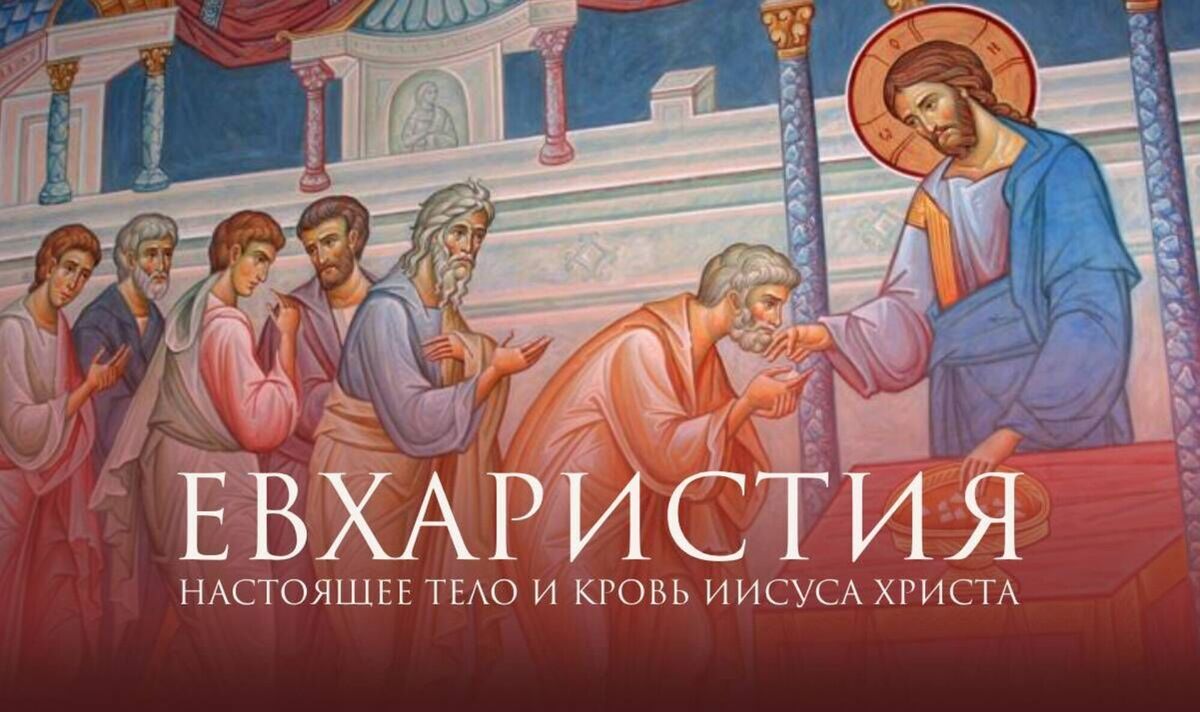
Epigraph
“Our opinion is in accordance with the Eucharist, and the Eucharist in turn establishes our opinion.”
(Irenaeus of Lyons, 2nd century, Against Heresies — Book IV, XVIII, 5)
1st century
St Ignatius the God-bearer, bishop of Antioch, hieromartyr (c. 35–107)
Let no man deceive himself. Both the things which are in heaven, and the glorious angels, and rulers, both visible and invisible, if they believe not in the blood of Christ, shall, in consequence, incur condemnation. “He that is able to receive it, let him receive it.”… They abstain from the Eucharist and from prayer, because they confess not the Eucharist to be the flesh of our Saviour Jesus Christ, which suffered for our sins, and which the Father, of His goodness, raised up again. Those, therefore, who speak against this gift of God, incur death in the midst of their disputes.
I have no delight in corruptible food, nor in the pleasures of this life. I desire the bread of God, the heavenly bread, the bread of life, which is the flesh of Jesus Christ, the Son of God, who became afterwards of the seed of David and Abraham; and I desire the drink of God, namely His blood, which is incorruptible love and eternal life.
“so that ye obey the bishop and the presbytery with an undivided mind, breaking one and the same bread, which is the medicine of immortality, and the antidote to prevent us from dying, but [which causes] that we should live for ever in Jesus Christ”
2nd century
St Justin the Philosopher, martyr (c. 100–165)
For not as common bread and common drink do we receive these; but in like manner as Jesus Christ our Saviour, having been made flesh by the Word of God, had both flesh and blood for our salvation, so likewise have we been taught that the food which is blessed by the prayer of His word, and from which our blood and flesh by transmutation are nourished, is the flesh and blood of that Jesus who was made flesh.
St Melito of Sardis, bishop (c. 100–180)
The blood of the Old Testament lamb (the type) lost its value when what is precious by nature appeared (the blood of Christ). There was a time for the type, and now is the time for the actual material (and not the type). Christians prepare the material for the type in the service, but they long for it because of what will be raised up in it (the body of Christ). They behold there:
both the type (the bread figuratively represents Christ),
and the material (the appearance of bread and wine remains)
and the truth (what is actually received — the body and blood of Christ).
The bodies themselves are sealed with the blood of Christ:
“[he speaks of the blood of the Old Testament lamb]… Everything that happened and was said partakes of parable, and what happened partakes of the type, so that as what happened was shown through the type, so what was spoken was illumined through the parable. This is how it is in preparation: the work itself is not yet raised up, but so that the future may be seen through the figurative model, a sketch of the future is made for this purpose — of wax, clay, or wood — so that one may see what is to be raised up, greater in size, and mightier in power, and beautiful in form, and rich in execution, through the small and corruptible sketch. But when the type rises, then that which once bore the image of the future is destroyed as useless, yielding to the true image of its nature. And what was once precious becomes worthless with the appearance of what is precious by nature. For everything has its season: the image has its time, the material has its time, and truth has its time. You make the image: you long for it, because in it you see the image of the future. You prepare the material for the image: you long for it because of what will be raised up in it. You finish the work: it alone you long for, it alone you love, in it alone seeing at once the image, the material, and the truth.
…
the image was destroyed when the Lord appeared; and today what was once precious has become worthless, when what is precious by nature was revealed.
…
He who came from heaven to earth because of the suffering one, having clothed Himself in him through the Virgin’s womb and passed through her and become man, received the sufferings of the suffering one through a body capable of suffering, and destroyed the passions of the flesh; but by the Spirit, who cannot die, He killed the murderer of man — death. For He Himself, as a lamb led and as a sheep slain, redeemed us from service to the world, as from the land of Egypt, and delivered us from slavery to the devil, as from the hand of Pharaoh, and sealed our souls with His own Spirit [in Baptism — note] and the members of our body with His own blood [in the Eucharist — note].
(On Pascha)
St Irenaeus of Lyons, hieromartyr (c. 130–202)
But vain in every respect are they who despise the entire dispensation of God, and disallow the salvation of the flesh, and treat with contempt its regeneration, maintaining that it is not capable of incorruption. But if this indeed do not attain salvation, then neither did the Lord redeem us with His blood, nor is the cup of the Eucharist the communion of His blood, nor the bread which we break the communion of His body. For blood can only come from veins and flesh, and whatsoever else makes up the substance of man, such as the Word of God was actually made. By His own blood he redeemed us, as also His apostle declares, “In whom we have redemption through His blood, even the remission of sins.” And as we are His members, we are also nourished by means of the creation, and He Himself grants the creation to us, for He causes His sun to rise, and sends rain when He wills. He has acknowledged the cup (which is a part of the creation) as His own blood, from which He bedews our blood; and the bread (also a part of the creation) He has established as His own body, from which He gives increase to our bodies.
3. When, therefore, the mingled cup and the manufactured bread receives the Word of God, and the Eucharist of the blood and the body of Christ is made, from which things the substance of our flesh is increased and supported, how can they affirm that the flesh is incapable of receiving the gift of God, which is life eternal, which [flesh] is nourished from the body and blood of the Lord and is a member of Him? — even as the blessed Paul declares in his Epistle to the Ephesians, that “we are members of His body, of His flesh, and of His bones.” He does not speak these words of some spiritual and invisible man, for a spirit has not bones nor flesh; but [he refers to] that dispensation [by which the Lord became] an actual man, consisting of flesh, and nerves, and bones, — that [flesh] which is nourished by the cup which is His blood, and receives increase from the bread which is His body.
And the Church alone offers this pure oblation to the Creator, offering to Him, with giving of thanks, [the things taken] from His creation. But the Jews do not offer thus: for their hands are full of blood; for they have not received the Word, through whom it is offered to God. Nor, again, do any of the conventicles (synagogae) of the heretics [offer this]. For some, by maintaining that the Father is different from the Creator, do, when they offer to Him what belongs to this creation of ours, set Him forth as being covetous of another’s property, and desirous of what is not His own. Those, again, who maintain that the things around us originated from apostasy, ignorance, and passion, do, while offering unto Him the fruits of ignorance, passion, and apostasy, sin against their Father, rather subjecting Him to insult than giving Him thanks. But how can they be consistent with themselves, [when they say] that the bread over which thanks have been given is the body of their Lord, and the cup His blood, if they do not call Himself the Son of the Creator of the world, that is, His Word, through whom the wood fructifies, and the fountains gush forth, and the earth gives “first the blade, then the ear, then the full corn in the ear.”
5. Then, again, how can they say that the flesh, which is nourished with the body of the Lord and with His blood, goes to corruption, and does not partake of life? Let them, therefore, either alter their opinion, or cease from offering the things just mentioned. But our opinion is in accordance with the Eucharist, and the Eucharist in turn establishes our opinion. For we offer to Him His own, announcing consistently the fellowship and union of the flesh and Spirit. For as the bread, which is produced from the earth, when it receives the invocation of God, is no longer common bread, but the Eucharist, consisting of two realities, earthly and heavenly; so also our bodies, when they receive the Eucharist, are no longer corruptible, having the hope of the resurrection to eternity.
3rd century
Clement of Alexandria, presbyter (c. 150–215)
The manna is the bread of heaven, while the Son of God, Christ, is the true bread of heaven, given by the Father. Those who ate the ordinary heavenly bread (the manna) died, but whoever eats the true bread (Christ) will not die. By this true bread (Christ) our flesh is nourished through the Eucharist.
He is the bread of heaven and the spiritual food of life, abundant for food and knowledge, the light of men, that is, of the Church. Those who ate the heavenly bread (the manna in the wilderness — note) died, but he who eats the true spiritual bread shall not die. “The living bread” is the Son, given by the Father to those who desire to eat. “The bread which I shall give,” He says, “is my flesh” (Jn. 6:51), or (the bread) by which the flesh is nourished through the Eucharist, or, what is more true, His flesh is His body, “which is the Church” (cf. Jn. 6:51; Ps. 78:24), “the bread of heaven,” the blessed assembly, because the elect in their essence came forth from one and the same nature and will attain to the very same end.
(Excerpts from the Works of Theodotus and the So-Called Eastern Teaching of the Time of Valentinus, § 13)
That blood which is in Christ serves as a drink for man:
“And he bound,” it is said, “the colt to the vine,” having bound this simple and childlike people to the word, whom He figuratively represents as a vine. For the vine produces wine, as the Word produces blood, and both drink for health to men—wine for the body, blood for the spirit.
(The Instructor, Book I, ch. 4)
We drink the bodily nature of Christ’s blood (redeeming and saving), and thereby are freed from death. Through the sacrament of the Eucharist the spirit of man is mystically united with the Holy Spirit, and the flesh with the Logos (the Word, Christ), for which reason the Word became flesh (so that we might be united with Him through eating):
Afterwards the sacred vine produced the prophetic cluster. This was a sign to them, when trained from wandering to their rest; representing the great cluster the Word, bruised for us. For the blood of the grape—that is, the Word—desired to be mixed with water, as His blood is mingled with salvation. And the blood of the Lord is twofold. For there is the blood of His flesh, by which we are redeemed from corruption; and the spiritual, that by which we are anointed. And to drink the blood of Jesus, is to become partaker of the Lord’s immortality; the Spirit being the energetic principle of the Word, as blood is of flesh. Accordingly, as wine is blended with water, so is the Spirit with man. And the one, the mixture of wine and water, nourishes to faith; while the other, the Spirit, conducts to immortality. And the mixture of both—of the water and of the Word—is called Eucharist, renowned and glorious grace; and they who by faith partake of it are sanctified both in body and soul. For the divine mixture, man, the Father’s will has mystically compounded by the Spirit and the Word. For, in truth, the spirit is joined to the soul, which is inspired by it; and the flesh, by reason of which the Word became flesh, to the Word.
(The Instructor, Book II, ch. 2)
Clement compares the Eucharist to the feeding of infants. He points out that within the mother blood is changed into the milk with which she feeds her children. This is a reference to the Church’s teaching on the Eucharist: just as in the mother, by a change (transmutation), blood becomes milk and is then given to the child, so in the Church bread and wine become the body and blood of Christ and are then given to the believer.
Then, speaking already of the Church, Clement says that this milk (that is, the flesh and blood) was not produced by the Church herself, but is Christ Himself, born amid bodily sorrows, bedewed with His precious blood. What is meant is the real body. The Church’s giving of the flesh and blood of Christ he calls a wondrous mystery:
The blood of the Word has been also exhibited as milk. Milk being thus provided in parturition, is supplied to the infant; and the breasts, which till then looked straight towards the husband, now bend down towards the child, being taught to furnish the substance elaborated by nature in a way easily received for salutary nourishment. For the breasts are not like fountains full of milk, flowing in ready prepared; but, by effecting a change in the nutriment, form the milk in themselves, and discharge it. And the nutriment suitable and wholesome for the new-formed and new-born babe is elaborated by God, the nourisher and the Father of all that are generated and regenerated,—as manna, the celestial food of angels, flowed down from heaven on the ancient Hebrews. Even now, in fact, nurses call the first-poured drink of milk by the same name as that food—manna. Further, pregnant women, on becoming mothers, discharge milk. But the Lord Christ, the fruit of the Virgin, did not pronounce the breasts of women blessed, nor selected them to give nourishment; but when the kind and loving Father had rained down the Word, Himself became spiritual nourishment to the good. O mystic marvel! The universal Father is one, and one the universal Word; and the Holy Spirit is one and the same everywhere, and one is the only virgin mother. I love to call her the Church. This mother, when alone, had not milk, because alone she was not a woman. But she is once virgin and mother—pure as a virgin, loving as a mother. And calling her children to her, she nurses them with holy milk, viz., with the Word for childhood.
Therefore she had not milk; for the milk was this child fair and comely, the body of Christ, which nourishes by the Word the young brood, which the Lord Himself brought forth in throes of the flesh, which the Lord Himself swathed in His precious blood. O amazing birth! O holy swaddling bands! The Word is all to the child, both father and mother and tutor and nurse. “Eat ye my flesh,” He says, “and drink my blood.” (John 6:53–54) Such is the suitable food which the Lord ministers, and He offers His flesh and pours forth His blood, and nothing is wanting for the children’s growth. O amazing mystery!
Immediately after Clement has explained the literal teaching on the Eucharist, he offers an additional way of understanding it — the symbolic one, which does not reject the literal interpretation he has just set forth. He explains that he is offering an exposition from yet another side:
But you are not inclined to understand it thus, but perchance more generally. Hear it also in the following way. The flesh figuratively represents to us the Holy Spirit; for the flesh was created by Him…
[having explained the Eucharist realistically, Clement now offers an additional, symbolic meaning, which he sets out in detail below…]
(The Instructor, Book I, ch. 6; the Russian text adds: more broadly, Greek — κοινότερον δε ἴσως, Latin — sed fortasse communius, PG8:301–302; English — but perchance more generally)
*Protestant teaching often leads its adherents to a mode of thought that may briefly be called “only”-thinking. It makes many of them pay attention only to individual parts of the text that appeal to them, imagining the word “only” where they need it — “only these words must I take into account.” Thus in the case of Clement and certain other authors who offer two explanations of the Eucharist at once (literal and symbolic), Protestants are inclined to see only the symbolic explanation, wishing to consider these authors supporters of their “only”-teachings. Many heresies arose on this principle.
Does the fact that Jesus Christ is man mean that He is only man? No, He is also God. And if He is God, does that mean that He is only God? No, He is also man. If Christ is the image of the Father, does that mean that He is only an image (a mere representation)? No, He is also true God and true man. How many have stumbled at this, and still stumble. So too here, the symbolic explanation does not reject the literal, and the literal does not reject the symbolic.
Nothing prevents Orthodox Christians, while accepting the literal understanding of the Eucharist, from also accepting symbolic meanings. Many Protestants, however, mistakenly insist on the word “only,” simply ignoring the other statements of the same authors.
Tertullian (c. 160–240)
The flesh makes possible the union of the soul with God. The flesh receives the body and blood of Christ in the Eucharist, so that the soul too may be nourished by God:
“Now such remarks have I wished to advance in defence of the flesh, from a general view of the condition of our human nature. Let us now consider its special relation to Christianity, and see how vast a privilege before God has been conferred on this poor and worthless substance. It would suffice to say, indeed, that there is not a soul that can at all procure salvation, except it believe whilst it is in the flesh. So true is it that the flesh is the very condition on which salvation hinges. And since the soul is, in consequence of its salvation, chosen to the service of God, it is the flesh which actually renders it capable of such service. The flesh, indeed, is washed (in the sacrament of baptism — note), in order that the soul may be cleansed; the flesh is anointed (in the sacrament of chrismation — note), that the soul may be consecrated; the flesh is signed (with the cross), that the soul too may be fortified; the flesh is shadowed with the imposition of hands (in the sacrament of ordination — note), that the soul also may be illuminated by the Spirit; the flesh feeds on the body and blood of Christ (in the sacrament of the Eucharist — note), that the soul likewise may fatten on its God. They cannot then be separated in their recompense, when they are united in their service.”
(On the Resurrection of the Flesh) *Tertullian, for all that, did not reject the notion of “image” with regard to the Eucharist. But it should be borne in mind here that Tertullian lived at the same time and in the same place as St Cyprian, bishop of Carthage, and on key questions held the same teaching as he, and even used the same formulations. The teaching of St Cyprian of Carthage is unambiguous and is given below.
The Jews tormented the real body of Christ; so too the makers of idols, receiving a particle of the Eucharist in these hands, torment the real body of Christ:
“A whole day the zeal of faith will direct its pleadings to this quarter: bewailing that a Christian should come from idols into the Church; should come from an adversary workshop into the house of God; should raise to God the Father hands which are the mothers of idols; should pray to God with the hands which, out of doors, are prayed to in opposition to God; should apply to the Lord’s body those hands which confer bodies on demons. Nor is this sufficient. Grant that it be a small matter, if from other hands they receive what they contaminate; but even those very hands deliver to others what they have contaminated. Idol-artificers are chosen even into the ecclesiastical order. Oh wickedness! Once did the Jews lay brands on Christ; these mangle His body daily. Oh hands to be cut off! Now let the saying, ‘If thy hand make thee do evil, amputate it,’ (Matt. 18:8) see to it whether it were uttered by way of similitude merely. What hands more to be amputated than those in which scandal is done to the Lord’s body?”
St Cyprian of Carthage, hieromartyr (c. 200–258)
St Cyprian the hieromartyr writes to Caecilius about the Eucharist, pointing out that water must not be used in celebrating the sacrament, but wine is absolutely necessary. And if water is used, how can we allow that the blood of Christ is truly present in the sacrament, that is, that the sacrament has truly been accomplished, if it was not repeated as the Lord did it:
The blood of Christ is assuredly not water, but wine; neither can His blood by which we are redeemed and quickened appear to be in the cup, when in the cup there is no wine whereby the blood of Christ is shown forth, which is declared by the sacrament and testimony of all the Scriptures.
…
For who is more a priest of the most high God than our Lord Jesus Christ, who offered a sacrifice to God the Father, and offered that very same thing which Melchizedek had offered, that is, bread and wine, to wit, His body and blood?
…
Assuredly, therefore, mention is made of wine, that the Lord’s blood may be understood, and that which was afterwards manifested in the cup of the Lord might be foretold by the prophets who announced it. The treading also, and pressure of the wine-press, is repeatedly dwelt on; because just as the drinking of wine cannot be attained to unless the bunch of grapes be first trodden and pressed, so neither could we drink the blood of Christ unless Christ had first been trampled upon and pressed, and had first drunk the cup of which He should also give believers to drink.
…
But the discipline of all religion and truth is overturned, unless what is spiritually prescribed be faithfully observed; unless indeed any one should fear in the morning sacrifices, lest by the taste of wine he should be redolent of the blood of Christ. Therefore thus the brotherhood is beginning even to be kept back from the passion of Christ in persecutions, by learning in the offerings to be disturbed concerning His blood and His blood-shedding. Moreover, however, the Lord says in the Gospel, “Whosoever shall be ashamed of me, of him shall the Son of man be ashamed.” And the apostle also speaks, saying, “If I pleased men, I should not be the servant of Christ.” (Gal. 1:10) But how can we shed our blood for Christ, who blush to drink the blood of Christ?
(Epistle LXII: Cæcilius, on the Sacrament of the Cup of the Lord)
The Holy Spirit also is not silent in the Psalms on the sacrament of this thing, when He makes mention of the Lord’s cup, and says, “Thy inebriating cup, how excellent it is!” Now the cup which inebriates is assuredly mingled with wine, for water cannot inebriate anybody. And the cup of the Lord in such wise inebriates, as Noe also was intoxicated drinking wine, in Genesis. But because the intoxication of the Lord’s cup and blood is not such as is the intoxication of the world’s wine, since the Holy Spirit said in the Psalm, “Thy inebriating cup,” He added, “how excellent it is,” because doubtless the Lord’s cup so inebriates them that drink, that it makes them sober; that it restores their minds to spiritual wisdom; that each one recovers from that flavour of the world to the understanding of God; and in the same way, that by that common wine the mind is dissolved, and the soul relaxed, and all sadness is laid aside, so, when the blood of the Lord and the cup of salvation have been drunk, the memory of the old man is laid aside, and there arises an oblivion of the former worldly conversation, and the sorrowful and sad breast which before was oppressed by tormenting sins is eased by the joy of the divine mercy; because that only is able to rejoice him who drinks in the Church which, when it is drunk, retains the Lord’s truth.
(Epistle LXII: Cæcilius, on the Sacrament of the Cup of the Lord)
Let us also arm the right hand with the sword of the Spirit, that it may bravely reject the deadly sacrifices; that, mindful of the Eucharist, the hand which has received the Lord’s body may embrace the Lord Himself, hereafter to receive from the Lord the reward of heavenly crowns.
(Epistle LV: To the People of Thibaris, Exhorting to Martyrdom)
To give the Eucharist to those who have denied Christ is to insult the holy Body of the Lord:
who consider neither the fear of God nor the honour of the bishop. <…> Those presbyters, contrary to the Gospel law, contrary also to your respectful petition, before penitence was fulfilled, before confession even of the gravest and most heinous sin was made, before hands were placed upon the repentant by the bishops and clergy, dare to offer on their behalf, and to give them the eucharist, that is, to profane the sacred body of the Lord, although it is written, “Whosoever shall eat the bread and drink the cup of the Lord unworthily, shall be guilty of the body and blood of the Lord.”
(Epistle X: To the Martyrs and Confessors Who Sought that Peace Should Be Granted to the Lapsed)
None of these things can separate believers, nothing can tear away those who are clinging to His body and blood (in the Eucharist — note). Persecution of that kind is an examination and searching out of the heart.
(Epistle VII: To the Clergy, Concerning Prayer to God)
A severer and a fiercer fight is now threatening, for which the soldiers of Christ ought to prepare themselves with uncorrupted faith and robust courage, considering that they drink the cup of Christ’s blood daily, for the reason that they themselves also may be able to shed their blood for Christ.
(Epistle LV: To the People of Thibaris, Exhorting to Martyrdom)
For Christ is the bread of life, and this bread does not belong to all men, but it is ours. And according as we say, “Our Father,” because He is the Father of those who understand and believe; so also we call it “our bread,” because Christ is the bread of those who are in union with His body. And we ask that this bread should be given to us daily, that we who are in Christ, and daily receive the Eucharist for the food of salvation, may not, by the interposition of some heinous sin, by being prevented, as withheld and not communicating, from partaking of the heavenly bread, be separated from Christ’s body, as He Himself predicts, and warns, “I am the bread of life which came down from heaven. If any man eat of my bread, he shall live for ever: and the bread which I will give is my flesh, for the life of the world.” (John 6:51). When, therefore, He says, that whoever shall eat of His bread shall live for ever; as it is manifest that those who partake of His body and receive the Eucharist by the right of communion are living, so, on the other hand, we must fear and pray lest any one who, being withheld from communion, is separate from Christ’s body should remain at a distance from salvation; as He Himself threatens, and says, “Unless ye eat the flesh of the Son of man, and drink His blood, ye shall have no life in you.” (John 6:53). And therefore we ask that our bread—that is, Christ—may be given to us daily, that we who abide and live in Christ may not depart from His sanctification and body.
(On the Lord’s Prayer) *At that time Communion was given into the hands of the believer, and he then consumed it with his lips. The ANF edition prints John 6:58 for the first citation.
Returning from the altars of the devil, they draw near to the holy place of the Lord, with hands filthy and reeking with smell, still almost breathing of the plague-bearing idol-meats; and even with jaws still exhaling their crime, and reeking with the fatal contact, they intrude on the body of the Lord, although the sacred Scripture stands in their way, and cries, saying, “Every one that is clean shall eat of the flesh; and whatever soul eateth of the flesh of the saving sacrifice, which is the Lord’s, having his uncleanness upon him, that soul shall be cut off from his people.” (Lev. 7:20) Also, the apostle testifies, and says, “Ye cannot drink the cup of the Lord and the cup of devils; ye cannot be partakers of the Lord’s table and of the table of devils.” (1 Cor. 10:21) He threatens, moreover, the stubborn and froward, and denounces them, saying, “Whosoever eateth the bread or drinketh the cup of the Lord unworthily, is guilty of the body and blood of the Lord.” (1 Cor. 11:27) All these warnings being scorned and contemned,—before their sin is expiated, before confession has been made of their crime, before their conscience has been purged by sacrifice and by the hand of the priest, before the offence of an angry and threatening Lord has been appeased, violence is done to His body and blood; and they sin now against their Lord more with their hand and mouth than when they denied their Lord.
(On the Lapsed) *At that time Communion was given into the hands of the believer, and he then consumed it with his lips.
Those illustrious hands, which had only been accustomed to divine works, have resisted the sacrilegious sacrifices; those lips, sanctified by heavenly food after the body and blood of the Lord, have rejected the profane contacts and the leavings of the idols.
(On the Lapsed) *At that time Communion was given into the hands of the believer, and he then consumed it with his lips.
For it was not right, neither did the love of the Father nor divine mercy allow, that the Church should be closed to those that knock, or the help of the hope of salvation be denied to those who mourn and entreat, so that when they pass from this world, they should be dismissed to their Lord without communion and peace… But now indeed peace is necessary, not for the sick, but for the strong; nor is communion to be granted by us to the dying, but to the living, that we may not leave those whom we stir up and exhort to the battle unarmed and naked, but may fortify them with the protection of Christ’s body and blood. And, as the Eucharist is appointed for this very purpose that it may be a safeguard to the receivers, it is needful that we may arm those whom we wish to be safe against the adversary with the protection of the Lord’s abundance. For how do we teach or provoke them to shed their blood in confession of His name, if we deny to those who are about to enter on the warfare the blood of Christ? Or how do we make them fit for the cup of martyrdom, if we do not first admit them to drink, in the Church, the cup of the Lord ([Compare Luke 22:15; Luke 22:42; Ps. 116:13.]) by the right of communion?
(Epistle LIII: To Cornelius, Concerning Granting Peace to the Lapsed)
But what a crime is theirs, both of those who receive and of those who are received, when, not having washed away their defilement in the laver of the Church, nor been freed from their sins, being rashly received into communion, they touch the body and blood of the Lord! For it is written: whosoever shall eat this bread, or drink the cup of the Lord unworthily, shall be guilty of the body and blood of the Lord (1 Cor. 11:27)
(On Baptizing the Novatians, and Those Who Obtain Grace on a Sick-Bed; the ANF edition prints this passage in Epistle LXXIV, Firmilian of Caesarea — note)
He would have dared, had he been able, to take that which is holy into the brothel with him; since, as he hastens to the spectacle when dismissed from the Lord’s table, and still bearing within him, as often occurs, the Eucharist, that unfaithful man has carried about the holy body of Christ among the filthy bodies of harlots, and has deserved a deeper condemnation for the way by which he has gone thither, than for the pleasure he has received from the exhibition.
4th century
St Athanasius the Great, bishop of Alexandria (295–373)
And the visible body was the body not of a man, but of God; in this body, even when He was crucified, He raised the dead. Therefore, that bold thought of theirs is not good, that the Word of God was in a certain holy man (for so it was in each of the prophets and other saints); and that thought must be rejected too, that the Word is born each time and then dies. One must not understand the Lord so; God forbid! On the contrary, “once in the end of the world, to put away sin” (Heb. 9:26), the Word became flesh, and from Mary the Virgin a man came forth in our likeness, as the Lord also said to the Jews: “now ye seek to kill Me, a man that hath told you the truth” (John 8:40)? And we are deified, not by partaking of the body of some man, but by receiving the body of the Word Himself.
I marveled also at how they dared even to think that the Word became man by the natural order. If it were so, the memory of Mary would have been honored in vain. Nature knows no virgin who gives birth without a husband. Therefore He, true God and by nature the Father’s Word and the Father’s Wisdom, by the good will of the Father became man bodily for our salvation, so that He, having what to offer for us, might save us all.
(Letter to Maximus the Philosopher)
But we, my beloved, the shadow having received its fulfilment, and the types being accomplished, should no longer consider the feast typical, neither should we go up to Jerusalem which is here below, to sacrifice the Passover, according to the unseasonable observance of the Jews, lest, while the season passes away, we should be regarded as acting unseasonably; but, in accordance with the injunction of the Apostles, let us go beyond the types, and sing the new song of praise. For perceiving this, and being assembled together with the Truth, they drew near, and said unto our Saviour, “Where wilt Thou that we should make ready for Thee the Passover (Matt. 26:17)?” For no longer were these things to be done which belonged to Jerusalem which is beneath; neither there alone was the feast to be celebrated, but wherever God willed it to be. Now He willed it to be in every place, so that “in every place incense and a sacrifice might be offered to Him (Mal. 1:11)”. For although, as in the historical account, in no other place might the feast of the Passover be kept save only in Jerusalem, yet when the things pertaining to that time were fulfilled, and those which belonged to shadows had passed away, and the preaching of the Gospel was about to extend everywhere; when indeed the disciples were spreading the feast in all places, they asked the Saviour, “Where wilt Thou that we shall make ready?” The Saviour also, since He was changing the typical for the spiritual, promised them that they should no longer eat the flesh of a lamb, but His own, saying, “Take, eat and drink; this is My body, and My blood (Matt. 26:26–28).”
When we are thus nourished by these things, we also, my beloved, shall truly keep the feast of the Passover.
(The Festal Letters, IV (for 332))
Now he who has been counted worthy of the heavenly calling, and by this calling has been sanctified, if he grow negligent in it, although washed becomes defiled: “counting the blood of the covenant by which he was sanctified a profane thing, and despising the Spirit of grace,” he hears the words, “Friend, how camest thou in hither, not having wedding garments?” For the banquet of the saints is spotless and pure; “for many are called, but few chosen.” Judas to wit, though he came to the supper, because he despised it went out from the presence of the Lord, and having abandoned his Life (cf. Col. 3:4), hanged himself. But the disciples who continued with the Redeemer shared in the happiness of the feast.
(The Festal Letters, VII (for 335))
Serapion of Thmuis, bishop (early 4th c. – after 362)
The bread and wine offered in the Eucharist as a sacrifice are first called a likeness of the body and blood of Christ, but after they have already been called a likeness, we ask that this bread be made the body of the Word, and the cup the true (real) blood. That is, if the bread and wine were already a likeness, it is clear that there is no need to ask that the likeness be made a likeness, or the image an image, but we ask precisely that they be made the true body and blood of the Word:
Lord of hosts, fill also this sacrifice with Thy power and Thy participation, for to Thee we have brought this living sacrifice, the bloodless offering; to Thee we have brought this bread as the likeness of the Body of the Only-Begotten; this bread is the likeness of the Holy Body, because the Lord Jesus Christ, in the night in which He was betrayed, took bread, broke it, and gave it to His disciples, saying: Take, eat, this is My Body, which is broken for you for the remission of sins. Therefore we also, accomplishing the likeness of His death, have brought the bread and ask through this sacrifice: forgive us all and have mercy, O God of truth. And as this bread was sown upon the mountains and, being gathered, became one (whole), so also gather Thy holy Church out of every people, out of every country, out of every city, village, and dwelling, and make her one living catholic Church. We have also brought the cup, the likeness of the blood, because the Lord Jesus Christ, having taken the cup after the supper, said to His disciples: Take, drink, this (cup) is the new covenant, this is My blood, which is shed for you for the remission of sins. Therefore we have brought also the cup, the likeness of the blood, asking: Let Thy holy Word, O God of truth, come upon this bread, that the bread may become the Body of the Word, and upon this cup, that the cup may become the true blood, and make all who partake to receive a life-giving remedy for the healing of every disease, for the increase of every progress and virtue, and not for condemnation, O God of truth, nor for reproof and shame, because we have called upon Thee, the unbegotten, through the Only-Begotten in the Holy Spirit; may this people obtain mercy, may they be deemed worthy of progress, and may angels be sent as companions to the people, to withstand the evil one and to strengthen the Church.
(Euchologion, or Collection of Prayers, the Prayer of Oblation)
St Hilary of Poitiers, bishop (c. 315–367)
Now I ask those who bring forward a unity of will between Father and Son, whether Christ is in us to-day through verity of nature or through agreement of will. For if in truth the Word has been made flesh and we in very truth receive the Word made flesh as food from the Lord, are we not bound to believe that He abides in us naturally, Who, born as a man, has assumed the nature of our flesh now inseparable from Himself, and has conjoined the nature of His own flesh to the nature of the eternal Godhead in the sacrament by which His flesh is communicated to us? … Hence, if indeed Christ has taken to Himself the flesh of our body, and that Man Who was born from Mary was indeed Christ, and we indeed receive in a mystery the flesh of His body—(and for this cause we shall be one, because the Father is in Him and He in us),—how can a unity of will be maintained…
For He says Himself, “My flesh is meat indeed, and My blood is drink indeed. He that eateth My flesh and drinketh My blood abideth in Me, and I in him.” As to the verity of the flesh and blood there is no room left for doubt. For now both from the declaration of the Lord Himself and our own faith, it is verily flesh and verily blood. And these when eaten and drunk, bring it to pass that both we are in Christ and Christ in us.
Again, how natural this unity is in us He has Himself testified on this wise,—“He who eateth My flesh and drinketh My blood abideth in Me, and I in him.” For no man shall dwell in Him, save him in whom He dwells Himself, for the only flesh which He has taken to Himself is the flesh of those who have taken His. … This is the cause of our life that we have Christ dwelling within our carnal selves through the flesh, and we shall live through Him in the same manner as He lives through the Father. If, then, we live naturally through Him according to the flesh, that is, have partaken of the nature of His flesh, must He not naturally have the Father within Himself according to the Spirit since He Himself lives through the Father?
St Ephrem the Syrian, monk (c. 306–372)
When the eye of faith shines like a light in a man’s heart, then clearly, brightly, and purely he contemplates the Lamb of God, slain for us and having given us His holy and most pure Body for continual communion, so that this communion may be for us the remission of sins. Whoever has this eye of faith clearly and brightly contemplates the Master and, with the conviction of perfect faith, tastes the Body of the spotless Lamb, the Only-Begotten Son of the Heavenly Father, not at all giving himself over to inquisitiveness about the faith of God, because the faith of God is effective in us, contemplates the future, and is always called faith, and not inquisitiveness. Dost thou believe, beloved, that the Only-Begotten Jesus Christ was born on earth in the flesh for thy sake? Why then dost thou still give thyself over to inquisitiveness? If thou art curious, thou must be called not faithful, but curious. Be simply faithful; with all faith partake of the most pure Body of the Master, in full conviction that thou truly tastest the Lamb Himself. The mysteries of Christ are an immortal fire. Therefore be not curious, lest thou be scorched in the communion of the Mysteries.
(Against Those Who Search Out the Nature of the Son of God)
Thee, O Son of God, I have taken as my provision for the journey, and when I hungered, I was fed with Thee, O Saviour of the world. Let the fire flee from my members, let the fragrance (scent) of Thy Flesh and Blood drive it away. Let baptism be for me a boat that does not sink.
(Funeral Hymns, On the Separation of the Soul from the Body)
St Cyril of Jerusalem, bishop (315–386)
Here what matters is the comparison of the transformation of water into wine at the wedding in Cana of Galilee with the transformation of wine into blood in the Eucharist, and also the direct words that the visible bread is not bread, and the wine is not wine, but the body and blood of Christ:
Since then He Himself declared and said of the Bread, “This is My Body,” who shall dare to doubt any longer? And since He has Himself affirmed and said, “This is My Blood,” who shall ever hesitate, saying, that it is not His blood?
He once in Cana of Galilee, turned the water into wine, akin to blood, and is it incredible that He should have turned wine into blood? When called to a bodily marriage, He miraculously wrought that wonderful work; and on the children of the bride-chamber (Matt. 9:15), shall He not much rather be acknowledged to have bestowed the fruition of His Body and Blood?
<…>
Wherefore with full assurance let us partake as of the Body and Blood of Christ: for in the figure of Bread is given to thee His Body, and in the figure of Wine His Blood; that thou by partaking of the Body and Blood of Christ, mayest be made of the same body and the same blood with Him. For thus we come to bear Christ in us, because His Body and Blood are distributed through our members; thus it is that, according to the blessed Peter, we become partakers of the divine nature (2 Pet. 1:4).
<…>
Consider therefore the Bread and the Wine not as bare elements, for they are, according to the Lord’s declaration, the Body and Blood of Christ; for even though sense suggests this to thee, yet let faith establish thee. Judge not the matter from the taste, but from faith be fully assured without misgiving, that the Body and Blood of Christ have been vouchsafed to thee.
<…>
Having learnt these things, and been fully assured that the seeming bread is not bread, though sensible to taste, but the Body of Christ; and that the seeming wine is not wine, though the taste will have it so, but the Blood of Christ
(On the Mysteries, IV, 1–3, 6, 9)
The Bread and Wine of the Eucharist before the invocation of the Holy and Adorable Trinity were simple bread and wine, while after the invocation the Bread becomes the Body of Christ, and the Wine the Blood of Christ
But beware of supposing this to be plain ointment. For as the Bread of the Eucharist, after the invocation of the Holy Ghost, is mere bread no longer, but the Body of Christ, so also this holy ointment is no more simple ointment, nor (so to say) common, after invocation, but it is Christ’s gift of grace, and, by the advent of the Holy Ghost, is made fit to impart His Divine Nature.
Then having sanctified ourselves by these spiritual Hymns, we beseech the merciful God to send forth His Holy Spirit upon the gifts lying before Him; that He may make the Bread the Body of Christ, and the Wine the Blood of Christ. For whatsoever the Holy Ghost has touched, is surely sanctified and changed.
After this ye hear the chanter inviting you with a sacred melody to the communion of the Holy Mysteries, and saying, O taste and see that the Lord is good. Trust not the judgment to thy bodily palate; no, but to faith unfaltering; for they who taste are bidden to taste, not bread and wine, but the anti-typical Body and Blood of Christ.
St Gregory the Theologian, bishop (325–389)
Now the Law prescribes to you the staff to lean upon, that you may not break down in your mind when you hear of God’s Blood, and His Passion, and His death; and that you may not be carried away to heresy in your defence of God; but without shame and without doubt may eat the Flesh and drink the Blood, if you are desirous of true life, neither disbelieving His words about His Flesh, nor offended at those about His Passion. Lean upon this, and stand firm and strong, in nothing shaken by the adversaries nor carried away by the plausibility of their arguments. Stand upon thy High Place; in the Courts of Jerusalem (Ps. 122:2) place thy feet; lean upon the Rock, that thy steps in God be not shaken.
St Gregory of Nyssa, bishop (335–394)
For as they who owing to some act of treachery have taken poison, allay its deadly influence by means of some other drug (for it is necessary that the antidote should enter the human vitals in the same way as the deadly poison, in order to secure, through them, that the effect of the remedy may be distributed through the entire system), in like manner we, who have tasted the solvent of our nature, necessarily need something that may combine what has been so dissolved, so that such an antidote entering within us may, by its own counter-influence, undo the mischief introduced into the body by the poison. What, then, is this remedy to be? Nothing else than that very Body which has been shown to be superior to death, and has been the First-fruits of our life. For, in the manner that, as the Apostle says (1 Cor. 5:6), a little leaven assimilates to itself the whole lump, so in like manner that body to which immortality has been given it by God, when it is in ours, translates and transmutes the whole into itself. For as by the admixture of a poisonous liquid with a wholesome one the whole draught is deprived of its deadly effect, so too the immortal Body, by being within that which receives it, changes the whole to its own nature. Yet in no other way can anything enter within the body but by being transfused through the vitals by eating and drinking. It is, therefore, incumbent on the body to admit this life-producing power in the one way that its constitution makes possible.
And since that Body only which was the receptacle of the Deity received this grace of immortality, and since it has been shown that in no other way was it possible for our body to become immortal, but by participating in incorruption through its fellowship with that immortal Body, it will be necessary to consider how it was possible that that one Body, being for ever portioned to so many myriads of the faithful throughout the whole world, enters through that portion, whole into each individual, and yet remains whole in itself. <…> The question was, how can that one Body of Christ vivify the whole of mankind, all, that is, in whomsoever there is Faith, and yet, though divided amongst all, be itself not diminished? <…> For that which is peculiar to all flesh is acknowledged also in the case of that flesh, namely, that that Body too was maintained by bread; which Body also by the indwelling of God the Word was transmuted to the dignity of Godhead. Rightly, then, do we believe that now also the bread which is consecrated by the Word of God is changed into the Body of God the Word. For that Body was once, by implication, bread, but has been consecrated by the inhabitation of the Word that tabernacled in the flesh. Therefore, from the same cause as that by which the bread that was transformed in that Body was changed to a Divine potency, a similar result takes place now. For as in that case, too, the grace of the Word used to make holy the Body, the substance of which came of the bread, and in a manner was itself bread, so also in this case the bread, as says the Apostle (1 Tim. 4:5), “is sanctified by the Word of God and prayer”; not that it advances by the process of eating to the stage of passing into the body of the Word, but it is at once changed into the body by means of the Word, as the Word itself said, “This is My Body.”
(The Great Catechism, ch. 37, The Sacrament of Communion)
St Amphilochius of Iconium, bishop (c. 340–394)
What, then, is the cause of this despondency? Explain it, though even before the explanation I clearly understood it: God revealed it to my foolishness. I know, I know that the envious devil troubles your heart with unclean and foul thoughts and darkens the rational eye of the soul. To some he suggests impious blasphemies and other terrible and absurd thoughts. Into others he instills heresies, dark feelings, and, being wicked, perverts for them the mysteries of the faith. Some he inclines to vainglory, and others he arms against the holy icons, calling them useless and unnecessary. Others he incites to fornication and lust and other most vile vices; and especially in church, during prayer, he wounds the hearts of the faint-hearted, who have no strength to resist. And some he brings to the point of not believing in the immortal and life-giving Eucharist and of being tormented by perplexities, explaining to them that this is simple bread, simple wine, and nothing more.
(Homily on Repentance, or That One Should Not Despair of Salvation)
St Ambrose of Milan, bishop (340–397)
7. So you came, desiring to see this so great grace; you came to the altar, desiring to receive the sacrament. Your soul says: “I will go in to the altar of God, to God who gives joy to my youth” (cf. Ps. 43:4). You have cast off the old age of sin and have put on the youth of grace. The heavenly sacraments have granted you this. Finally, listen also to David, who says: “Your youth shall be renewed like the eagle’s” (Ps. 103:5). You have become a true eagle, which soars to heaven and despises all earthly things. True eagles surround the altar, for “where the Body is, there are the eagles” (cf. Matt. 24:28). The altar is a figure of the Body, and moreover the Body of Christ is upon the altar. You are eagles, renewed through the washing away of transgressions.
8. You approached the altar. Seeing the mysteries (sacramenta) that lie upon the altar, you were amazed at them. For this is ordinary and well-known food (creatura).
14. Perhaps you will say: “It is ordinary bread.” But this bread is ordinary bread only until the words of consecration (verba sacramentorum). As soon as the time of consecration (consecratio) comes, it becomes the Body of Christ from bread. Let us prove this. How can this bread be the Body of Christ? And by what words and whose speech is the consecration accomplished? The Lord Jesus’. For all that is said before is said by the priest: the glorification of God, the prayer, the petition for the people, for the kings, and for all else. But as soon as the time of the holy sacrament approaches, the priest no longer uses his own words, but pronounces the words of Christ. Therefore the word of Christ accomplishes this sacrament.
15. What then is this word of Christ? Undoubtedly the one by which all things were created. The Lord commanded, and heaven came to be; the Lord commanded, and the earth came to be; the Lord commanded, and the seas came to be; the Lord commanded, and every creature came to be (Gen. 1:3–26). So you see how powerful (quam operatorius) the word of Christ is. And if in the word of Christ there is such great power that what did not exist before came to be, how much more powerful (quanto magis operatorius) is this word in changing what already exists into something else.
16. So I answer you: the bread was not the Body of Christ before the consecration, but after the consecration, I tell you, it is already the Body of Christ. He spoke, and it was made; He commanded, and it was created. You too existed before, but you were an old creation; after you were sanctified, you became a new creation. Do you wish to be assured that you are a new creation? “If anyone,” says the apostle, “is in Christ, he is a new creation” (cf. 2 Cor. 5:17).
17. Listen, then, how the word of Christ has the habit of changing (mutare) every creature and changes (mutet), when it wills, the natural laws (instituta naturae). You ask, in what way? Listen. First of all, let us take His birth as an example. The law (consuetudo) of nature is that a man is born of a man and a woman through marital union. But the Lord willed, choosing such a sacrament, that Christ should be born of the Holy Spirit and the Virgin — that is, the Mediator between God and men, “the Man Jesus Christ” (cf. 1 Tim. 2:5). So you see that, contrary to the laws and ordinances of nature (contra instituta et ordinem naturae), a Man was born of a Virgin.
18. Listen to another. The Jewish people were pressed between the Egyptians and the sea. By the divine command “Moses touched the water with his rod, and the sea divided,” but not according to the law of nature, but by the grace of the heavenly command (Ex. 14:21). Listen to another. “The people thirsted. They came to a spring. But the spring was bitter. Holy Moses threw wood into the spring, and the spring, which had been bitter before, became sweet,” that is, it changed its natural property, receiving the sweetness of grace (Ex. 15:23–25). Listen also to the fourth example. “The axe fell into the water and,” since it was iron, “sank” by its natural property. Elisha “threw the handle into the water, and the iron immediately rose to the surface of the water” (2 Kings 6:5–6; cf. sacr. 1.20; 2.11–12; myst. 51), undoubtedly contrary to the property of iron, which is a heavier substance (materies) than the element of water.
19. Do you not understand from all that has been said how powerful the divine word (sermo caelestis) is? If the divine word was powerful in the earthly font, if it was powerful in other cases, will it not be powerful in the heavenly Mysteries? So now you know that the bread becomes the Body of Christ, and the wine in the cup with water added becomes blood, not otherwise than by divine consecration (consecratione caelesti).
20. But perhaps you will say: “I do not see blood.” But it is its likeness (similitudo). For just as you received the likeness of death, so too you drink the likeness of the precious Blood, so that there should be no horror at the sight of real blood and the price of redemption should not become vain. So now you know that what you receive is the Body of Christ.
23. Note one detail. The priest says: “He, on the day before His sufferings, took bread in His holy hands.” Before the consecration it is bread, but after the words of Christ have been spoken, it is the Body of Christ. And now listen to the One who speaks: “Take, and eat of it, all of you, for this is My Body.” Before the words of Christ are spoken, the cup holds wine and water; after the working of the words of Christ, there is Blood, which redeemed men. See, then, how mighty is the word of Christ, which changes all things that exist. Finally, the Lord Jesus Himself has testified to us that we receive His Body and Blood. Should we doubt the truth of His testimony?
24. Let us return now to what I was saying. Truly great and worthy of honor is the fact that manna poured down from heaven for the Jews. But consider which is greater: the manna from heaven, or the Body of Christ? Undoubtedly the Body of Christ, who is the Creator of heaven. Further, he who ate the manna died, but he who will eat this Body “will receive the remission of sins and will not die forever” (cf. John 6:49, 58).
25. So it is not in vain that you say “Amen,” acknowledging in your heart that you receive the Body of Christ. Therefore, when you come forward, the priest says to you: “The Body of Christ,” and you answer: “Amen,” that is, “truly.” Let what the tongue confesses come from your inner sense. Know, then, that this is the sacrament which was prefigured beforehand.
(On the Sacraments, book IV)
The priest returns to the center of the altar and continues, in a louder voice:
We beseech You, our God, that this offering may be most blessed, worthy, and acceptable, and that it may be for us the Body and Blood of Your beloved Son, our Lord Jesus Christ, who on the day before that on which He suffered for our salvation and that of all, taking bread into His holy and immaculate hands, raised His eyes to heaven, to You, God His Almighty Father, and giving thanks, blessed, broke, and gave to His holy disciples and apostles, saying:
<…>
The priest divides the Lamb with the spear into two parts, and one of them into two more, saying: Your Body is broken, O Christ, and the Cup is blessed. May Your Blood be for us always unto life and the salvation of the soul, our God.
Lowering a small particle into the Cup, he says: May the union of the sanctified Body and Blood of our Lord Jesus Christ be for us who eat and receive, unto life and eternal joy.
(Liturgy of St Ambrose of Milan)
St John Chrysostom, archbishop of Constantinople (c. 347–407)
What are you doing, O man? Did you not make a promise to the priest, and at his words: “Let us lift up our hearts,” did you not say: “We lift them up to the Lord”? Do you not feel fear, are you not ashamed to be found a liar in that most awful hour? It is amazing! When the mystical Table is prepared, when the Lamb of God is slain for you, when the priest struggles for you, when spiritual fire flows from the most pure Table, when the Cherubim stand by, the Seraphim fly, the six-winged ones cover their faces, all the bodiless powers pray for you together with the priest, when spiritual fire descends from Heaven, when from the most pure side Blood is poured into the cup for your cleansing, — do you not fear, are you not ashamed in that awful hour to be found a liar? Out of the hundred and sixty-eight hours of the week God has set apart for Himself one single hour: will you spend even that on worldly affairs, on laughter and talk? With what boldness, after that, will you approach the Mysteries? With what defiled conscience? Would you, with dung in your hands, dare to touch the edge of the garment of an earthly king? By no means.
Do not think that this is bread, and do not think that it is wine, because they do not come out of a man like the other kinds of food. No; do not reason so! But just as wax, when it touches fire, loses nothing of itself and receives nothing, so think here too, that the Mysteries are blended with the substance of the body. Therefore, when you come forward, do not think that you receive the Divine Body from a man, but imagine that you receive the Divine Body as fire from the tongs of the Seraphim themselves, whom Isaiah saw (Isa. 6:6–7), and that we receive the saving Blood as though touching with our lips the Divine and most pure side. Let us not, therefore, brethren, forsake the assemblies, nor in them give ourselves over to idle talk: let us stand with fear and trembling, with our eyes cast down and our soul on high, and with sighs let us cry out, not with our voices, but with our heart
(Homily on Repentance, On Repentance and on Those Who Leave the Assemblies; Here Also on the Sacred Table and the Judgment)
“This is the Body” which you, Judas, sold for thirty pieces of silver; “this is the Blood” about which you recently made shameless terms with the ungrateful Pharisees. O the love of Christ for man! O the madness; O the frenzy of Judas! He sold Him for thirty denarii, and even after that Christ would not have refused to give the very Blood that was sold to the seller “for the remission of sins,” if he had wished it. For Judas too was present and took part in the Sacred Table. When Christ washed his feet together with those of the other disciples, so too he partook of the Sacred Table, so that he might have no pretext for justification if he remained in his impiety. Christ spoke and did everything on His side, but he stubbornly remained in his impious intention.
6. However, it is already time to approach this awful Table. Let us all approach with fitting modesty and attention; and let no one be a Judas, let no one be wicked, let no one hide poison within himself, carrying one thing on his lips and another in his mind. Christ is present now also; He who established that Table is the same who now prepares this one. It is not a man who transforms what is set forth into the Body and Blood of Christ, but Christ Himself, who was crucified for us. Standing in His image is the priest who pronounces those words; but the power and grace of God is at work. “This is My Body,” He said. These words transform what is set forth, and just as that saying: “Be fruitful and multiply, and fill the earth” (Gen. 1:28), though spoken once, nevertheless in reality gives our nature the power of generation at all times; so also this saying, spoken once, from that time until now and until His coming makes the sacrifice perfect at every Table in the churches.
(Homilies on the Betrayal of Judas)
Since we too, recounting over the cup the unspeakable mercies of God and all that we have been made partakers of, so draw near to Him, and communicate; giving Him thanks that He hath delivered from error the whole race of mankind; that being afar off, He made them nigh; that when they had no hope and were without God in the world, He constituted them His own brethren and fellow-heirs. For these and all such things, giving thanks, thus we approach. “How then are not your doings inconsistent,” saith he, “O ye Corinthians; blessing God for delivering you from idols, yet running again to their tables?” “The cup of blessing which we bless, is it not a communion of the Blood of Christ?” Very persuasively spake he, and awfully. For what he says is this: “This which is in the cup is that which flowed from His side, and of that do we partake.” But he called it a cup of blessing, because holding it in our hands, we so exalt Him in our hymn, wondering, astonished at His unspeakable gift, blessing Him, among other things, for the pouring out of this self-same draught that we might not abide in error: and not only for the pouring it out, but also for the imparting thereof to us all. “Wherefore if thou desire blood,” saith He, “redden not the altar of idols with the slaughter of brute beasts, but My altar with My blood.” Tell me, What can be more tremendous than this? What more tenderly kind?
<…>
And in the old covenant, because they were in an imperfect state, the blood which they used to offer to idols He Himself submitted to receive, that He might separate them from those idols; which very thing again was a proof of His unspeakable affection: but here He transferred the service to that which is far more awful and glorious, changing the very sacrifice itself, and instead of the slaughter of irrational creatures, commanding to offer up Himself. “The bread which we break, is it not a communion of the Body of Christ?” Wherefore said he not, the participation? Because he intended to express something more and to point out how close was the union: in that we communicate not only by participating and partaking, but also by being united. For as that body is united to Christ, so also are we united to him by this bread. But why adds he also, “which we break?” For although in the Eucharist one may see this done, yet on the cross not so, but the very contrary. For, “A bone of Him,” saith one, “shall not be broken.” But that which He suffered not on the cross, this He suffers in the oblation for thy sake, and submits to be broken, that he may fill all men. Further, because he said, “a communion of the Body,” and that which communicates is another thing from that whereof it communicates; even this which seemeth to be but a small difference, he took away. For having said, “a communion of the Body,” he sought again to express something nearer. Wherefore also he added, “For we, who are many, are one bread, one body.” (1 Cor. 10:17) “For why speak I of communion?” saith he, “we are that self-same body.” For what is the bread? The Body of Christ. And what do they become who partake of it? The Body of Christ: not many bodies, but one body. For as the bread consisting of many grains is made one, so that the grains no where appear; they exist indeed, but their difference is not seen by reason of their conjunction; so are we conjoined both with each other and with Christ: there not being one body for thee, and another for thy neighbor to be nourished by, but the very same for all.
(Homilies on First Corinthians, 24)
For if one would not inconsiderately receive a king—(why say I a king? nay were it but a royal robe, one would not inconsiderately touch it with unclean hands;)—though he should be in solitude, though alone, though no man were at hand: and yet the robe is nought but certain threads spun by worms: and if thou admirest the dye, this too is the blood of a dead fish; nevertheless, one would not choose to venture on it with polluted hands: I say now, if even a man’s garment be what one would not venture inconsiderately to touch, what shall we say of the Body of Him Who is God over all, spotless, pure, associate with the Divine Nature, the Body whereby we are, and live; whereby the gates of hell were broken down and the sanctuaries of heaven opened? how shall we receive this with so great insolence? Let us not, I pray you, let us not slay ourselves by our irreverence, but with all awfulness and purity draw nigh to It; and when thou seest It set before thee, say thou to thyself, “Because of this Body am I no longer earth and ashes, no longer a prisoner, but free: because of this I hope for heaven, and to receive the good things therein, immortal life, the portion of angels, converse with Christ; this Body, nailed and scourged, was more than death could stand against; this Body the very sun saw sacrificed, and turned aside his beams; for this both the veil was rent in that moment, and rocks were burst asunder, and all the earth was shaken. This is even that Body, the blood-stained, the pierced, and that out of which gushed the saving fountains, the one of blood, the other of water, for all the world.”
Wouldest thou from another source also learn its power? Ask of her diseased with an issue of blood, who laid hold not of Itself, but of the garment with which It was clad; nay not of the whole of this, but of the hem: ask of the sea, which bare It on its back: ask even of the Devil himself, and say, “Whence hast thou that incurable stroke? whence hast thou no longer any power? Whence art thou captive? By whom hast thou been seized in thy flight?” And he will give no other answer than this, “The Body that was crucified.” By this were his goads broken in pieces; by this was his head crushed; by this were the powers and the principalities made a show of. “For,” saith he, “having put off from himself principalities and powers, He made a show of them openly, triumphing over them in it.” (Col. 2:15.) Ask also Death, and say, “whence is it that thy sting hath been taken away? thy victory abolished? thy sinews cut out? and thou become the laughing-stock of girls and children, who wast before a terror even to kings and to all righteous men?” And he will ascribe it to this Body. For when this was crucified, then were the dead raised up, then was that prison burst, and the gates of brass were broken, and the dead were loosed, and the keepers of hell-gate all cowered in fear. And yet, had He been one of the many, death on the contrary should have become more mighty; but it was not so. For He was not one of the many. Therefore was death dissolved. And as they who take food which they are unable to retain, on account of that vomit up also what was before lodged in them; so also it happened unto death. That Body, which he could not digest, he received: and therefore had to cast forth that which he had within him. Yea, he travailed in pain, whilst he held Him, and was straitened until He vomited Him up. Wherefore saith the Apostle, “Having loosed the pains of death.” (Acts 2:24.) For never woman labouring of child was so full of anguish as he was torn and racked in sunder, while he held the Body of the Lord. And that which happened to the Babylonian dragon, when, having taken the food it burst asunder in the midst, (Bel and the Dragon, v. 27) this also happened unto him. For Christ came not forth again by the mouth of death, but having burst asunder and ripped up in the very midst, the belly of the dragon, thus from His secret chambers (Ps. 19:5.) right gloriously He issued forth and flung abroad His beams not to this heaven alone, but to the very throne most high. For even thither did He carry it up. This Body hath He given to us both to hold and to eat; a thing appropriate to intense love. For those whom we kiss vehemently, we oft-times even bite with our teeth. Wherefore also Job, indicating the love of his servants towards him, said, that they ofttimes, out of their great affection towards him, said, “Oh! that we were filled with his flesh!” (Job 31:31.) Even so Christ hath given to us to be filled with His flesh, drawing us on to greater love.
(Homilies on First Corinthians, 24)
Once the Jews also sang a song of victory when the army of the Egyptians drowned: “I will sing to the Lord, for He has been greatly glorified” (Ex. 15:1); but our song is far more triumphant, because now it is not the Egyptians who have perished, but the demons; not Pharaoh who has been defeated, but the devil; it is not a sensible weapon that has been taken away, but sin that has been put to death; not in the Red Sea, but in the font of regeneration; and we are not going to the promised land, but striving toward heaven, we do not eat manna, but receive the Lord’s body; we do not drink water from the rock, but blood from the side of Christ.
(Homily 15 on Psalm 46)
“Take, eat, This is my body, Which is broken for many.” And how were they not confounded at hearing this? Because He had before told unto them many and great things touching this. Wherefore that He establishes no more, for they had heard it sufficiently, but he speaks of the cause of His passion, namely, the taking away of sins. And He calls it blood of a New Testament, that of the undertaking, the promise, the new law. For this He undertook also of old, and this comprises the Testament that is in the new law. And like as the Old Testament had sheep and bullocks, so this has the Lord’s blood. Hence also He shows that He is soon to die, wherefore also He made mention of a Testament, and He reminds them also of the former Testament, for that also was dedicated with blood. And again He tells the cause of His death, “which is shed for many for the remission of sins;” and He saith, “Do this in remembrance of me.” Seest thou how He removes and draws them off from Jewish customs. For like as ye did that, He saith, in remembrance of the miracles in Egypt, so do this likewise in remembrance of me. That was shed for the preservation of the firstborn, this for the remission of the sins of the whole world. For, “This,” saith He, “is my blood, which is shed for the remission of sins.” But this He said, indicating thereby, that His passion and His cross are a mystery, by this too again comforting His disciples. And like as Moses saith, “This shall be to you for an everlasting memorial,” (Exod. 12:14) so He too, “in remembrance of me,” until I come. Therefore also He saith, “With desire I have desired to eat this passover,” (Luke 22:15) that is, to deliver you the new rites, and to give a passover, by which I am to make you spiritual. And He Himself drank of it. For lest on hearing this, they should say, What then? do we drink blood, and eat flesh? and then be perplexed (for when He began to discourse concerning these things, even at the very sayings many were offended), (John 6:60–61; John 6:66) therefore lest they should be troubled then likewise, He first did this Himself, leading them to the calm participation of the mysteries. Therefore He Himself drank His own blood. What then must we observe that other ancient rite also? some one may say. By no means. For on this account He said, “Do this,” that He might withdraw them from the other. For if this worketh remission of sins, as it surely doth work it, the other is now superfluous.
(Homilies on the Gospel of Matthew, 82; the Russian text opens with 1 Cor. 11:24, “broken for you”, while the homily itself quotes Matt. 26:26, “broken for many”)
Further, our discourse is concerning this Body, and as many of us as partake of that Body and taste of that Blood, are partaking of that which is in no wise different from that Body, nor separate. Consider that we taste of that Body that sitteth above, that is adored by Angels, that is next to the Power that is incorruptible. Alas! how many ways to salvation are open to us! He hath made us His own body, He hath imparted to us His own body, and yet not one of these things turns us away from what is evil.
In order then that we may become this not by love only, but in very deed, let us be blended into that flesh. This is effected by the food which He has freely given us, desiring to show the love which He has for us. On this account He has mixed up Himself with us; He has kneaded up His body with ours, that we might be a certain One Thing, like a body joined to a head. For this belongs to them who love strongly; this, for instance, Job implied, speaking of his servants, by whom he was beloved so exceedingly, that they desired to cleave unto his flesh. For they said, to show the strong love which they felt, Who would give us to be satisfied with his flesh? Job 31:31 Wherefore this also Christ has done, to lead us to a closer friendship, and to show His love for us; He has given to those who desire Him not only to see Him, but even to touch, and eat Him, and fix their teeth in His flesh, and to embrace Him, and satisfy all their love. Let us then return from that table like lions breathing fire, having become terrible to the devil; thinking on our Head, and on the love which He has shown for us. Parents often entrust their offspring to others to feed; but I, says He, do not so, I feed you with My own flesh, desiring that you all be nobly born, and holding forth to you good hopes for the future. For He who gives out Himself to you here, much more will do so hereafter. I have willed to become your Brother, for your sake I shared in flesh and blood, and in turn I give out to you the flesh and the blood by which I became your kinsman.
(Homilies on the Gospel of John, 46)
Let us also then touch the hem of His garment, or rather, if we be willing, we have Him entire. For indeed His body is set before us now, not His garment only, but even His body; not for us to touch it only, but also to eat, and be filled. Let us now then draw near with faith, every one that hath an infirmity. For if they that touched the hem of His garment drew from Him so much virtue, how much more they that possess Him entire? <…> 3. Believe, therefore, that even now it is that supper, at which He Himself sat down. For this is in no respect different from that. For neither doth man make this and Himself the other; but both this and that is His own work. When therefore thou seest the priest delivering it unto thee, account not that it is the priest that doeth so, but that it is Christ’s hand that is stretched out. Even as when he baptizes, not he doth baptize thee, but it is God that possesses thy head with invisible power, and neither angel nor archangel nor any other dare draw nigh and touch thee; even so now also. <…> For He that hath given the greater, that is, hath set Himself before thee, much more will He not think scorn to distribute unto thee of His body. Let us hear therefore, both priests and subjects, what we have had vouchsafed to us; let us hear and tremble. Of His own holy flesh He hath granted us our fill; He hath set before us Himself sacrificed.
(Homilies on the Gospel of Matthew, 50)
For we always offer the same, not one sheep now and to-morrow another, but always the same thing: so that the sacrifice is one. And yet by this reasoning, since the offering is made in many places, are there many Christs? but Christ is one everywhere, being complete here and complete there also, one Body. As then while offered in many places, He is one body and not many bodies; so also [He is] one sacrifice. He is our High Priest, who offered the sacrifice that cleanses us. That we offer now also, which was then offered, which cannot be exhausted.
(Homilies on the Epistle to the Hebrews, 17)
Be ashamed, be ashamed of this table, of which we all partake; be ashamed of Christ, slain for us, and of the sacrifice here set forth.
(Homilies on the Epistle to the Romans, 8)
In that what was more precious to Him than all, even His only-begotten Son, Him He gave for us His enemies; and not only gave, but after giving, did even set Him before us as food; Himself doing all things that were for our good, both in giving Him, and in making us thankful for all this.
(Homilies on the Gospel of Matthew, 25)
Commentary on the quotations of St John Chrysostom by Bishop Cyril, rector of the Moscow Theological Academy: “In St John Chrysostom we find detailed commentaries on the passages of the New Testament that speak of the Eucharist. With such an abundance of material in the ecumenical teacher, one can find a sufficient number of testimonies in favor of the doctrine of the real change of the holy Gifts. Here are some of these passages… <…> The terms used by Chrysostom to denote the eucharistic transformation are the following: μετασχευαζεσθαι, μεταρρυθμιζεσθαι (to rebuild, to remake, to change). The verb σκευαζω can mean – to make, to do, to adorn, to possess. And ρυθμιζω – to order, to build, to arrange. The spectrum of meanings of these verbs is quite broad, which once again emphasizes the need for a contextual analysis of the use of this or that term. The quotations we have examined show that, without going into the details of speculation about how the sacrament itself takes place, St Chrysostom directly taught the real change of the Gifts, not shrinking at times from the ‘crude’ naturalism, as some would put it. <…> The only quotation that Protestant authors liked to cite in trying to prove their doctrine of the Eucharist is Chrysostom’s letter to the monk Caesarius. In this letter he says, among other things, that the bread after the consecration ‘is no longer called bread, but is worthily called the body of the Lord, although the nature of the bread remains in it, – and it is not two bodies, but one body of the Son that we call it.’ This letter has come down to us in full only in a medieval Latin translation, and many scholars today do not recognize it as authentic. But even accepting it, one can explain the disputed passage in an Orthodox sense. The Greek word ‘nature’ – ‘φυσις’ denotes not only natural quality, nature, essence, but also property, position, appearance, and can be used not only in application to substance, but also to outward appearance, which is why the whole passage can receive this meaning: the bread, after consecration by the grace of God, becomes the Body of Christ, although its outward appearance and external properties are retained” [10]
Blessed Jerome of Stridon, monk (c. 347–419)
He says that Christ at the Last Supper, after the celebration of the Old Testament Passover, which was a type, passes over to the true sacred rite of the Passover, in order to give His true Body and Blood. There is a direct indication of the fulfilment of what was prefigured in the Old Testament Passover. The old type is contrasted with the new true sacred rite. He points out that Christ gave bread just as the priest Melchizedek had done in ancient times. But lest anyone should think that Melchizedek too gave the true Body and Blood of Christ, he points out that that was a type, that is, not yet the true sacred rite, but only a prefiguration of what was to appear in the future in Christ:
After the Passover, which had the significance of a type, had been celebrated, and after He had eaten the flesh of the lamb together with the apostles, He took bread — which strengthens man’s heart — and accomplishes the transition to the true sacred rite of the Passover, in order to give His true Body and His Blood, just as Melchizedek, the priest of God Most High, had done, who brought bread and wine as a type of Him (Gen. 14:18).
(Commentary on the Gospel of Matthew 26:26)
The sacred vessels must be venerated because they came into contact with the Body and Blood of Christ:
In your work I have respectfully acknowledged its benefit for all the churches — so that the ignorant, instructed by the testimony of the Scriptures, might learn with what reverence they ought to venerate the sanctuary and to perform the service at the altar of Christ — might learn that the sacred vessels and the holy veils and the other things belonging to the worship of the Lord’s Passion are not something devoid of sacred significance, as though empty and meaningless, but, through contact (consortio) with the Body and Blood of the Lord, must be venerated with the same majesty as His Body and Blood.
(Letter 91. To Theophilus)
He says that some suppose the reference is to wine, but St Jerome draws attention to the fact that the wine which Christ gave to the disciples is the blood which was shed by Christ for many. That is, St Jerome acknowledges in the cup given to the disciples that which was shed by Christ on the cross, that is, the Blood of Christ. He acknowledges, finally, Christ as both eating and being eaten. The one who eats is Himself also eaten. Who is it that eats? — It is not bread that eats, but the Son of God who eats according to His humanity (John 6:53). Therefore they also eat the Son of God according to His humanity (united with the Godhead), since the same one is both the one who eats and the one who is eaten, the table-companion and the table:
How are we to understand the Saviour’s words in Matthew: “I say unto you, I will not drink henceforth of this fruit of the vine, until that day when I drink it new with you in my Father’s kingdom” (Matt. 26:29)? From this passage some construct a fable about a thousand years, during which, they maintain, Christ will reign bodily and drink wine, which from that time He is not to drink until the end of the world. But let us attend to the fact that the bread which the Lord broke and gave to His disciples is the Body of the Lord and Saviour, as He Himself said to them: “Take, eat: this is My Body”; and the cup is that of which He also said: “Drink ye all of it, for this is My Blood” of the New Testament, which is shed for many for the remission of sins (Matt. 26:26–28; Mark 14:22–24). This is the cup of which we read in the prophet: “I will take the cup of salvation” (Ps. 116:13), and in another place: “my cup overflows” (Ps. 23:5). If, then, the bread which comes down from heaven is the Body of the Lord, and the wine which He gave to the disciples is the blood of His new covenant, which is shed for many for the remission of sins: then let us reject the Jewish fables and go up with the Lord into the great upper room, furnished and clean, and receive from Him the cup of the new covenant on high, and there, celebrating the Passover with Him, be made drunk with the wine of soberness: for the kingdom of God is not meat and drink, but righteousness and peace and joy in the Holy Spirit (Rom. 14:17). It was not Moses who gave us the true bread, but the Lord Jesus — Himself both the table-companion and the table, Himself both the one who eats and the one who is eaten.
We drink His Blood, and without Him we cannot drink, and in His sacrifices (in sacrificiis Ejus) from the fruit of the true vine and of the vine of Sorec, which means chosen, we daily tread the red clusters and from them drink the new wine of the kingdom of the Father, not in the oldness of the letter, but in the renewal of the spirit, singing a new song, which no one can sing except in the kingdom of the Church (Rev. 14:3), which is the kingdom of the Father. The patriarch Jacob also desires to eat of this bread, saying: “If [the Lord] God will be with me, and will give me bread to eat and clothing to put on” (Gen. 28:20). For since we are baptized into Christ, we have put on Christ (Gal. 3:27), and we eat the bread of angels and attend to the Lord, who says: “My food is to do the will of Him who sent Me and to finish His work” (John 4:34). Therefore let us do the will of Him who sent us — the Father — and finish His work, and Christ will drink His Blood with us in the kingdom of the Church.
(Letter 96. To Hedibia)
Through the prayer of bishops and presbyters (but not deacons) the bread and wine become the Body and Blood of Christ:
We read in Isaiah the words, “the fool will speak folly” (Isa. 32:6), and I am told that some one has been mad enough to put deacons before presbyters, that is, before bishops. For when the apostle clearly teaches that presbyters are the same as bishops, must not a mere server of tables and of widows (Acts 6:1–2) be insane to set himself up arrogantly over men through whose prayers the body and blood of Christ are produced?
(Letter 116 (NPNF 146). To Evangelus)
Blessed Augustine of Hippo (354–430)
Remember, beloved, how the Lord Jesus wished to be recognized by the disciples whose eyes were held, so that they should not know Him, precisely in the breaking of bread. The faithful know what I am speaking of: they recognize Christ in the breaking of bread.
For not every bread, but only that which has received the blessing of Christ, becomes the Body of Christ. Then the [Emmaus] disciples recognized Him, rejoiced, hastened to the others and, already knowing the truth, told what they had seen — and this entered the Gospel (Luke 24:13–35).
So it was said, so it was accomplished, so it was written — and so it has come down to us.
(Sermo 234.2, In diebus Paschalibus, V. De resurrectione Christi secundum Lucam // PL38. Col. 1116) [12]
In the Eucharist, without the addition of the words of prayer, there is only bread and wine, but with the addition of the prayer there is already something else (not what it was before), namely the Body and Blood of Christ:
“Beloved! What you see on the table of the Lord is bread (panis) and wine (vinum); but with the addition of the word [of prayer] (accedente verbo) they become the Body and Blood of the Word (corpus et sanguis Verbi).” For the Lord, who in the beginning was the Word (Verbum), and the Word was with God, and the Word was God (1 John 1:1), in His mercy — lest He despise what was created in His image — the Word became flesh and dwelt among us (John 1:14).
He, as you know, took human nature — soul and flesh — and became Man, remaining God. Having suffered for us, He entrusted to us in this Sacrament (sacramento) His Body and Blood, and also united us in Himself. For we have become His Body (corpus ipsius), and through His mercy what we receive, that we become (quod accipimus, nos sumus).
Recall how the grain, born of the earth, nourished by the rain, grew into an ear of corn; how human labour gathered it onto the threshing floor, threshed it, winnowed it, stored it, ground it, kneaded it, and at last turned it into bread. So it is with you: once you were not, but you were created, gathered onto the Lord’s threshing floor (ad aream Dominicam), and ground by the labours of oxen (that is, of the preachers of the Gospel). When you were catechumens (catechumeni), you were kept in the granary. You gave your names, passed through fasting (ieiuniis) and exorcisms (exorcismis), came to the waters of baptism, were “kneaded” and became one. When the fire of the Holy Spirit came down, you were “baked” and became the bread of the Lord.
And as you see that [the bread] has become one, so also be one, loving one another, keeping one faith, one hope, one love (individuam caritatem). When heretics receive this, they receive testimony against themselves: for they seek division, whereas this bread signifies unity (panis iste indicet unitatem).
The wine also was many grapes, and now has become one in the sweetness of the cup — but only after the pressing in the winepress. So also you, having passed through fasts, labours, humility and compunction, in the name of Christ have come to the Lord’s cup. And behold, you are there at the table (in mensa), you are there — in the cup (in calice). You are one with us: for together we eat, together we drink, because together we live.
Today you will again hear what you heard yesterday, but now with an explanation. After the greeting “The Lord be with you (Dominus vobiscum)” you hear: “Lift up your hearts! (Sursum cor)”. The whole life of true Christians is a “lifting up of the heart”: not in name only, but in essence.
What does “Lift up your hearts” mean? — Hope in God, and not in yourself. For you are below, and God is on high. If you hope in yourself, your heart is not “lifted up”. Therefore, when the priest says: “Lift up your hearts!”, you answer: “We have them to the Lord (Habemus ad Dominum)”.
Be attentive, so as to answer truthfully, for you answer before God. Let it be as you say: not with the tongue only, but also with the heart. And since the “lifting up of the heart” is a gift of God, and not your merit, the priest continues: “Let us give thanks to the Lord (Domino Deo nostro gratias agamus)”. For what do we give thanks? For the fact that our hearts have been lifted up — for without Him we would lie in the dust.
Then follow the holy prayers (preces sanctae), where with the addition of the word (accedente verbo) the bread and wine become the Body and Blood of Christ. For without the word (tolle verbum) it is only bread and wine; but with the addition of the word (adde verbum) it is already something else. What is this something else? The Body of Christ and the Blood of Christ (Corpus Christi, et sanguis Christi). Therefore you answer: “Amen” — which means “truly”.
Next is recited the Lord’s Prayer (Dominica Oratio), which you already know. Why is it read before the reception of the Body and Blood? So that, if human weakness has produced unworthy thoughts, the tongue has said too much, the eyes or ears have perceived what is unfitting — all this may be cleansed by the words: “Forgive us our debts (dimitte nobis debita nostra)”. Then we may draw near without fear, lest we eat unto condemnation (1 Cor. 11:29).
Afterwards there sounds: “Peace be with all (Pax vobiscum)”. A great mystery is the kiss of peace (osculum pacis). Kiss so as to love. Do not be a Judas: he kissed Christ with his lips, but harboured betrayal in his heart. But if someone is at enmity with you, and you cannot bring him to reason — endure it. Do not return evil for evil: let him hate, but do you love — and kiss without fear.
You have heard a few things, but great ones. Let them not be cheapened by their smallness, but let them be precious by their weight. And let them not weigh you down, but strengthen you.
(SERMO 229, DE SACRAMENTIS FIDELIUM DOMINICA SANCTAE PASCHAE) [13]
If, therefore, the Apostle Paul, although he still bare the burden of the body, which is subject to corruption and presses down the soul, and although he still saw only in part and in an enigma, wishing to depart and be with Christ, and groaning within himself, waiting for the adoption, to wit, the redemption of his body, yet was able to preach the Lord Jesus Christ significantly, in one way by his tongue, in another by epistle, in another by the sacrament of His body and blood (since, certainly, we do not call either the tongue of the apostle, or the parchments, or the ink, or the significant sounds which his tongue uttered, or the alphabetical signs written on skins, the body and blood of Christ; but that only which we take of the fruits of the earth and consecrate by mystic prayer, and then receive duly to our spiritual health in memory of the passion of our Lord for us: and this, although it is brought by the hands of men to that visible form, yet is not sanctified to become so great a sacrament, except by the spirit of God working invisibly; since God works everything that is done in that work through corporeal movements, by setting in motion primarily the invisible things of His servants, whether the souls of men, or the services of hidden spirits subject to Himself).
(On the Trinity, Book III, ch. 4, 10) [14]
For that sacrifice has succeeded all the sacrifices of the Old Testament, which were slain as a shadow of that which was to come; wherefore also we recognize the voice in the 40th Psalm as that of the same Mediator speaking through prophesy, Sacrifice and offering You did not desire; but a body have You perfected for me. Because, instead of all these sacrifices and oblations, His body is offered, and is served up to the partakers of it.
(The City of God, Book XVII, ch. 20; Ps. 40 (Heb.) = Ps. 39 (LXX/Synodal))
Let the blood, as it were, of his soul flow out through the tears of the penitent. Finally, let him be established in the thought that he should consider himself unworthy of communion of the Body and Blood of the Lord, so that he who fears to be separated from the Heavenly Kingdom by the final sentence of the Supreme Judge may be granted, but only after the fulfilment of the church’s rules, the heavenly bread in the sacrament.
(Sermons and Instructions, homily 11, on the benefit of repentance) (Translator’s note: the Russian text adds “after preparation for communion” after “the church’s rules”.)
11 (Prayer). On preparation for the sacrament of communion
Jesus Christ, I beseech You by the outpouring of Your most holy Blood, by which we are redeemed: grant me contrition of heart and a fountain of tears — when I offer You prayers, when I celebrate the mystery of our redemption, the manifest remembrance of Your work of mercy, when I stand before the sacred altar, though unworthy, desiring to offer to You the terrible, heavenly sacrifice, worthy of all veneration and reverence, which You, Lord my God, the spotless High Priest, established and commanded to be offered in remembrance of Your love, that is, of Your suffering and death for our salvation — for the daily strengthening of our weakness.
May my thought be strengthened in so great a mystery by Your sweetest presence, may it perceive You present and rejoice before You, who are — ever-shining fire, ever-burning love. Sweetest Jesus, good Christ, eternal and unfading light, bread of life, that satisfies us and in Yourself never diminishes, eaten daily, yet always remaining whole — appear to me, kindle, enlighten and sanctify Your vessel; cleanse it, fill it with grace and keep it filled, so that unto the salvation of my soul I may eat the bread of Your Body, because, eating You, I shall live from You, I shall come to You and rejoice in You.
(Manual, 11. On preparation for the sacrament of communion)
The mystery of the Eucharist is the remembrance of the Cross Sacrifice, which Christ offered on Golgotha, being at the same time both Victim and High Priest — the Mediator of the New Covenant. The one and perfect sacrifice was offered for the redemption of sins and the reconciliation of mankind with God. However, “from the side of Christ, pierced by the spear as He slept on the cross, flowed all the sacraments of the Church” [In Johannis Evangelium tractatus 15. 8.], and, above all — the sacrament of the Lord’s Body and Blood — “Thus Christ our Lord, who offered in sacrifice through His suffering for us what He received from us, became a High Priest for ever and gave us the institution of the sacrifice of His Body and Blood, which you see. Remember, when His Body was pierced by the spear, It poured forth water and blood, by which He destroyed our sins … Recognize in the Bread That which hung on the Cross, and in the cup That which flowed from His side” [Sermo 228 b. 2].
(Modern compilation; source: bogoslov.ru)
Blessed Augustine also has symbolic statements about the Eucharist.
Mark the Ascetic, monk (4th c. – early 5th c.)
A work against the Nestorians, who denied that the body of Christ is proper to the Son of God:
Why do you eat [His] Body, if It is only [a body]? And why do you drink His Blood, if It is only [blood]? For then you receive neither God the Word [inwardly] nor Christ Himself; yet you hear [at the same time] that [this] is the Body of Christ and the Blood of Christ. Therefore, if they, as you say, are not united [with the Divine nature], how will they give you life? And if they are not holy by virtue of [this] union, how will they sanctify you and grant you deliverance from sins?
XLII. If I [again] began to speak to you about Christ, you would again start to be crafty and divide [the two natures]. But now I will speak to you of His Body and Blood. Tell me, how do they themselves by themselves give us life? For you hear the priest say: “The holy Body of Jesus Christ, unto eternal life.” If he said to you: “The holy Christ, unto eternal life,” — you would again begin to say that [Christ] is holy because of the God who dwells in Him. But now you hear that the Body and Blood themselves are called holy. Understand, O man, that They are holy by nature, being hypostatically united to the Godhead [even] in the womb [of the Mother], and not after birth by partaking [of the Godhead by the flesh].
(Against the Nestorians (On the Incarnation)) (Translator’s note: in the Russian text “they” is glossed as “the human flesh and blood of Christ”.)
5th century
St Cyril of Alexandria, archbishop (376–444)
“He said with a direct indication: ‘This is My Body’ and ‘This is My Blood’, so that you would not think that what is seen is an image, but that what is offered by some ineffable (action) of almighty God is truly transformed into the Body and Blood of Christ, and having partaken of them we receive the life-giving and sanctifying power of Christ. For it was necessary for Him, through the Holy Spirit, to be mingled with our bodies in a God-befitting manner, in some way, by His Holy Flesh and Precious Blood, which we also received as a life-giving blessing, as it were [ὡς], in bread and wine, so that we might not be numbed [ἀποναρκήσωμεν] when we see the Flesh and Blood set forth on the holy altars in the churches. For God, measuring Himself against our infirmities, sends the power of life into what is set before us and changes it to the operation of His own life”
(Commentary on the Gospel of Matthew. PG 72, col. 452; likewise col. 912)
“while present in the flesh, He accomplished the work of their salvation not through it, but by the glory and almighty power of His Godhead. Therefore, He says, no harm will come to the disciples from the fact that He will not be present in the flesh, since the Divine power of the Only-begotten can easily guard them, even if the flesh itself were not present.
We say this not at all because we attach no importance to the holy body of Christ, but because the efficacy in this matter must be ascribed precisely to the glory of the Godhead, for even the Lord’s own body was sanctified by the power of the Word united with it, and therefore is efficacious for us in the mystical blessing (the Eucharist), so that it can implant its holiness in us as well. About this the Saviour Himself also, once conversing with the Jews and discoursing much about His flesh, calling it truly life-giving and true bread, says: ‘For the bread that I shall give you is My flesh, which I shall give for the life of the world’ (John 6:51). And when they were greatly amazed and much perplexed as to how the nature of created flesh could be for them the cause of eternal life, He said in answer: ‘The flesh profits nothing, the Spirit gives life: the words that I have spoken to you are spirit and are life’ (John 6:63). And here too He says that the flesh can profit nothing, evidently for the sanctification and quickening of those who receive it, insofar as it concerns the nature of human flesh. But since it is thought of and recognized as the temple of the Word, to that extent it must without doubt be the cause of both holiness and life, but precisely not thanks, of course, to itself, but thanks to the God united with it, who is holy and is life”.
(Commentary on the Gospel of John, ch. VIII, on John 17:13)
What, then, does Christ promise? Nothing corruptible, but the blessing that consists in the reception of the Holy Flesh and Blood, which raises man to complete incorruption, so that he no longer has need of anything that removes death from the flesh — I mean, obviously, food and drink.
(Commentary on the Gospel of John, Book 3, ch. VI, on John 6:35)
Having set us free, that is, having freed us from sins and adorned us with the grace of adoption, He added Himself to us as a beautiful “provision for the journey”, as a spotless sacrifice, “as a sheep He was led to the slaughter” (Isa. 53:7; cf. Acts 8:32), led for us and granting us partaking of the life-giving blessing, that is, of His holy Flesh and Blood.
(On the Worship and Service in Spirit and in Truth, Part 2, Book 7, On the Love of the Brethren)
Proclaiming the death according to the flesh of the Only-begotten Son of God, that is, Jesus Christ, confessing His resurrection from the dead and His ascension into heaven, we offer the bloodless sacrifice in the churches, and so draw near to the mystical blessings and are sanctified by partaking of the holy flesh and precious blood of Christ, the Saviour of us all; we receive it not as ordinary flesh (God forbid!), not as the flesh of a man sanctified and united to the Word by a unity of dignity, or made a dwelling-place of the Godhead, but as blood truly life-giving and proper to the Word Himself. For He, being God and Life by nature, and having become one with His own flesh, manifestly made it life-giving. Therefore, though it is said to us: “Amen, amen, I say unto you, unless you eat the flesh of the Son of Man and drink His blood” (John 6:53), yet we must understand the flesh not as that of a man, one of those like us (for how could the flesh of a man be life-giving by its own nature?), but the flesh that truly belongs properly to Him who for our sake became and acted as the Son of Man.
(Letter to Nestorius on his excommunication, VII). Translator’s note: the words about “the flesh of a man sanctified and associated with the Word according to the unity of worth, or as having a divine indwelling” are directed against Nestorius, who taught that Christ is not God, but that God merely dwelt in Him as in a prophet.
Nestorius: He Himself said: “He who eats My flesh and drinks My blood will live because of Me, as I live because of the Father who sent Me.” So what is it that you eat, heretic? The Godhead or the manhood? For Christ did not say “he who eats My Godhead”, but “flesh”.
Cyril: I partake with faith of the life-giving flesh of the life-giving Word; therefore the Saviour said: “Those who eat of this bread will not taste death for ever.” But those who partake unworthily will be condemned for their unbelief.
(Dialogue with Nestorius, on the fact that the holy Virgin is the Mother of God, and not the Mother of Christ). Translator’s note: the words of the Lord are quoted here in paraphrase (John 6:56–57, 58).
For as long as we remain in this world, we shall partake of Christ through His Holy Flesh and Precious Blood in a sensible manner. But when we stand before Him “in the day of His power”, as it is written (Ps. 110:3), and enter into “the brightness of the saints” (Ps. 110:3), then we shall be sanctified in another way, and in the manner known to the Steward and Giver of future blessings.
(Glaphyra, or Explanations of Selected Passages from the Book of Exodus, Book 2, On the Sacrifice of the Lamb)
The Third Ecumenical Council (431)
Here the president of the council gives such characterizations of the Eucharist as refute the teaching of Nestorius, that Christ is not God, and that the Virgin Mary is not the Mother of God but the “Mother of Christ”, since Jesus Christ, according to Nestorius, was merely a man in whom God dwelt as in a prophet. But St Cyril of Alexandria, in refutation, gives the following characterizations of the Eucharist, clearly showing that Christ is the true God, and that we partake not of the flesh of one of men, even of the pious (for what need would there be of that?), but of the flesh and blood that truly belong to the Son of God. And therefore, receiving this flesh and blood, we are united with God:
VII. Proclaiming the death according to the flesh of the Only-begotten Son of God, that is, Jesus Christ, confessing His resurrection from the dead and His ascension into heaven, we offer the bloodless sacrifice in the churches, and so draw near to the mystical blessings and are sanctified, by partaking of the holy flesh and precious blood of Christ, the Saviour of us all; we receive it not as ordinary flesh (God forbid!), not as the flesh of a man sanctified and united to the Word by a unity of dignity, or made a dwelling-place of the Godhead, but as blood truly life-giving and proper to the Word Himself. For He, being God and Life by nature, and having become one with His own flesh, manifestly made it life-giving. Therefore, though He says to us: amen, amen, I say unto you, unless you eat the flesh of the Son of Man and drink His blood (John 6:53), yet we must understand the flesh not as that of a man, one of those like us (for how could the flesh of a man be life-giving by its own nature?), but the flesh that truly belongs properly to Him who for our sake became and acted as the Son of Man.
(XXII. Letter of Cyril, bishop of Alexandria, to Nestorius on his excommunication)
Faustus of Riez, bishop († not earlier than 452)
The visible Priest Himself turns [things] visible and created into the substance (in substantiam convertit) of His Body and Blood by the secret power of His word: “Take, eat, this is My Body” (Matt. 26:26). And repeating the consecration, also: “Take and drink, this is My Blood”. And, as once at the will of the commanding Lord the height of heaven, the abyss of waters, and the expanses of the earth arose out of nothing, so to the spiritual words of the Sacrament [the Divine] power grants the same strength and ensures their efficacy (rei effectus). And all this multitude of glorious deeds wrought by the power of God’s blessing, so wonderful and impossible, and the fact that earthly and mortal things are turned into the substance of Christ (substantia Christi), you have no need even to see — ask yourself, already reborn by the grace of God!… when created things, destined for blessing by heavenly words, are laid on the sacred altar, before the invocation of the name [of God] the substance of bread and wine (substantia panis et vini) remains there, and after these words — the Body and Blood of Christ
(Faustus Rhegiensis. Homilia de corpore et sanguine Christi, 1–3, 11–12 // PL. 30. Col. 280, 284)
Blessed Theodoret of Cyrrhus (c. 386–457)
But he (Nestorius) does not think so, but asserts that the suffering and the resurrection belonged to the man, and that what is offered in the sacraments is the body of a man. But we believe that the flesh of the Word has life-giving power because both the flesh and the blood belonged to the whole life-giving Word.
(Letter 148. Instruction given by the most holy bishop Cyril to Posidonius, whom he sent to Rome in the matter of Nestorius). Translator’s note: “the body of a man” means an ordinary man, as Nestorius taught.
The Apostle reminds the Corinthians of that sacred and all-holy night in which the Lord put an end to the prefigurative Passover, showed the archetype of the type, opened the doors to the saving sacrament and not only to the eleven apostles, but also to the traitor He gave His Precious Body and Precious Blood. And the Apostle teaches that one may always enjoy the good things of that night.
1 Cor. 11:26. For as often as you eat this bread and drink this cup, you proclaim the Lord’s death until He comes.
“For as often as you eat this bread and drink this cup, you proclaim the Lord’s death until He comes.” For after His coming there will no longer be need of what signifies the body, because the body itself will appear. Therefore the Apostle said: “until He comes.” But the divine Apostle presented this only as an example, showing the inappropriateness of what the Corinthians dared to do. And having begun to speak of the sacraments, he gives the appropriate instructions on this too.
1 Cor. 11:27. Therefore whoever eats this bread or drinks the Lord’s cup unworthily will be guilty of the Body and Blood of the Lord.
“Therefore whoever eats this bread or drinks the Lord’s cup unworthily will be guilty of the Body and Blood of the Lord.” Here the Apostle strikes a sensitive blow at those sick with the love of pre-eminence, and also at the fornicator, and together with them at those who ate things sacrificed to idols indifferently, and besides them at us, who with an evil conscience dare to partake of the Divine Mysteries. And this: “will be guilty of the Body and Blood”, gives us to understand that just as Judas betrayed Him and the Jews mocked Him, so those also dishonour Him who receive His all-holy Body with unclean hands and put it into foul mouths. Thus having frightened them, the Apostle gives the appropriate instructions.
(Commentary on the First Epistle to the Corinthians)
“The cup of blessing which we bless, is it not the communion of the blood of the Lord? The bread which we break, is it not the communion of the body of the Lord? For we, being many, are one bread, one body: for we all partake of one bread.” When we are counted worthy of the Holy Mysteries, do we not enter into communion with the Master Himself, do we not say that this is His Body, His Blood? “For we all partake of one bread.”
(Commentary on 1 Cor. 10:17)
However, Theodoret has statements about the Eucharist in a symbolic sense. He comes to this conclusion when refuting the Monophysite Eutyches, who asserted that the body of the Lord Jesus Christ after the ascension was completely changed into the divine nature, by analogy with the way bread and wine in the Eucharist become the body and blood of the Lord.
In any case, it was at this time that the Third Ecumenical Council took place, which confirmed the document of St Cyril, and later the Fifth Ecumenical Council (553) rejected all of Theodoret’s claims against St Cyril.
St Leo the Great, bishop of Rome (c. 390–461)
For if he does not think the cross of the Lord fictitious, and does not doubt that the punishment He underwent to save the world is likewise true, let him acknowledge the flesh of Him whose death he already believes: and let him not disbelieve Him man with a body like ours, since he acknowledges Him to have been able to suffer: seeing that the denial of His true flesh is also the denial of His bodily suffering. If therefore he receives the Christian faith, and does not turn away his ears from the preaching of the Gospel: let him see what was the nature that hung pierced with nails on the wooden cross, and, when the side of the Crucified was opened by the soldier’s spear, let him understand whence it was that blood and water flowed, that the Church of God might be watered from the font and from the cup. Let him hear also the blessed Apostle Peter, proclaiming that the sanctification of the Spirit takes place through the sprinkling of Christ’s blood. And let him not read cursorily the same Apostle’s words when he says, “Knowing that not with corruptible things, such as silver and gold, have ye been redeemed from your vain manner of life which is part of your fathers’ tradition, but with the precious blood of Jesus Christ as of a lamb without spot and blemish (1 Pet. 1:18).” Let him not resist too the witness of the blessed Apostle John, who says: “and the blood of Jesus the Son of God cleanseth us from all sin (1 John 1:7).” And again: “this is the victory which overcometh the world, our faith.” And “who is He that overcometh the world save He that believeth that Jesus is the Son of God. This is He that came by water and blood, Jesus Christ: not by water only, but by water and blood. And it is the Spirit that testifieth, because the Spirit is the truth, because there are three that bear witness, the Spirit, the water and the blood, and the three are one.” The Spirit, that is, of sanctification, and the blood of redemption, and the water of baptism: because the three are one, and remain undivided, and none of them is separated from this connection; because the catholic Church lives and progresses by this faith, so that in Christ Jesus neither the manhood without the true Godhead nor the Godhead without the true manhood is believed in.
(Encyclical or Synodal Letter written to Flavian, archbishop of Constantinople (against the heresy of Eutyches)). Translator’s note: the Russian text adds the references 1 Pet. 1:2 and 1 John 5:4–6, 8, which are not in the library text.
Therefore, whoever does not confess the human body in Christ has by that very fact acknowledged himself unworthy of the mystery of the incarnation and cannot have a share in this mystery; of which the apostle proclaims, saying: “for we are members of His body, of His flesh and of His bones: for this cause shall a man leave his father and mother, and shall cleave to his wife, and they two shall be one flesh”, and explaining what this means, he added: “this is a great mystery: but I speak concerning Christ and the Church” (Eph. 5:30–32). So from the very beginning of the human race Christ was announced to all men as One who was to come in the flesh, in which, as it is written, the two shall be one flesh; — these two are: God and man, Christ and the Church, which came forth from the flesh of the Bridegroom at the time when she, at the flowing from the side of the Crucified of blood and water, received the mystery of redemption and regeneration. In this consists the new condition of the creature, which in baptism puts off not the garment of true flesh, but the corruption of the condemned oldness, so that man may become the body of Christ, since Christ also is the body of a man.
(Letter 2 to the clergy and people of the city of Constantinople)
6th century
St Gregory the Great (the Dialogist), bishop of Rome (c. 540–604)
Remaining in Himself immortal and incorruptible, He is again offered in sacrifice for us, in the sacrament of the holy Eucharist. Here His body is received and His flesh is divided for the salvation of men; His blood is poured out not into the hands of the unbelievers, but into the mouths of the faithful.
(On Showing Kindness to the Departed)
The Good Shepherd laid down His soul for His sheep so that in our Sacrament His Body and Blood might be inexhaustible, and so that the sheep whom He redeemed might be satisfied with the nourishment of His Flesh. — The path to the contempt of death has been shown to us, and we must follow it
(Forty Homilies on the Gospels, Homily 14)
7th century
St Sophronius, patriarch of Jerusalem (c. 560–638)
The altar (βῆμα) is arranged after the likeness of the heavenly altar: as there the Angels of God serve, so in the holy altar earthly priests are appointed always to stand before the Lord and serve Him; and therefore the priest must be, as it were, a burning fire, pure and free from every impurity and every vice. Priests are likened to the Archangels: for as the Seraph took the coal and gave it to Isaiah, so the priests take the bread, that is, the Body of the Lord, and give it to the people. Let no one therefore think that the holy gifts (τὰ ἅγια) are images (ἀντίτυπα) of the Body and Blood of Christ, but let everyone believe that the bread and wine offered are changed into the Body and Blood of Christ. Otherwise: the altar is the place of the throne (ὑποβαθρος) and points to the second coming, since He who then sits on the throne will judge the living and the dead.
(Excerpt from a Word on the Divine Ministration)
8th century
St Germanus I, patriarch of Constantinople († 740)
The holy table corresponds to the place of the tomb where Christ was laid, on it the true and heavenly Bread, the mystical and bloodless Sacrifice, is prepared — the slain (Lamb) offers to the faithful His Flesh and Blood as food of eternal life.
<…>
Then the priest again proclaims before God and the Father the mysteries of Christ’s incarnation: the ineffable and glorious birth from the Holy Virgin and Mother of God, the life and sojourn in the world, the cross, death and the release of the bound souls, His three-day holy resurrection from the dead, the ascension into heaven, the sitting at the right hand of God and the Father, and His second and glorious coming to us. (The priest) is initiated into the mystery of the womb, (which was) before the morning star, which is the unbegotten God, that is, God and the Father, and which before the ages gave birth to God, as it also says: From the womb before the daystar I have begotten Thee (Ps. 110:3). Him, then, the (priest) asks again to accomplish the mystery of His Son, that He may be born, or that the bread and wine may be changed into the Body and Blood of Christ and God, and that there may be fulfilled (what was said): Today I have begotten Thee (Ps. 2:7). Then the Holy Spirit, invisibly present by the will and good pleasure of the Father, manifests the divine action and by the hand of the priest witnesses, confirms and accomplishes (the change) of the offered holy gifts into the Body and Blood of our Lord Jesus Christ, who said: for their sakes I sanctify Myself, that they also may be sanctified… (John 17:19), he who eats My Flesh and drinks My Blood abides in Me, and I in him (John 6:56). Having thus become eyewitnesses of the divine mysteries, partakers of immortal life and communicants of the Divine nature, let us glorify the great, incomprehensible and ineffable mystery of the Dispensation of Christ God.
<…>
Christ God gave His own Body and poured out and mingled His own Blood, the Blood of the new covenant, saying: This is My Body, which is broken, and My Blood, which is shed for the remission of sins (Matt. 26:26; Mark 14:22; Luke 22:19; 1 Cor. 11:24). And behold, henceforth (to the end of the ages), after such mercy we eat bread and drink the cup as the Body and Blood of God, confessing the death and resurrection of the Lord Jesus Christ, to whom be glory for ever. Amen.
(The Story of the Church and the Consideration of the Mysteries of Germanus, archbishop of Constantinople)
St John of Damascus, monk (c. 676–780)
if the word of God is living and active (Heb. 4:12) and whatsoever the Lord willed, He did (Ps. 135:6); if He said: let there be light. And there was… let there be a firmament… and there was (Gen. 1:3, 6); if by the word of the Lord the heavens were established, and all their host by the breath of His mouth (Ps. 33:6); if heaven, and earth, and water, and fire, and air, and all their adornment were made by the word of the Lord, and also this, surely, glorious living being: man; if God the Word Himself, willing it, became man, and from the pure and spotless blood of the Holy Ever-Virgin brought forth flesh for Himself without seed; then can He not make the bread His Body and the wine and water His Blood? He said in the beginning: let the earth bring forth grass (Gen. 1:11), and even to this day, every time rain falls, it brings forth its plants, urged and strengthened by the Divine command. God said: this is My body; and: this is My blood; and: do this in remembrance of Me; and, by His all-powerful command, this comes to pass until He comes; for so [Scripture] said: until He comes; and through the invocation there comes rain for this new husbandry: the overshadowing power of the Holy Spirit. For, just as all that God created He created by the action of the Holy Spirit, so now the action of the Spirit accomplishes that which surpasses nature, which [nothing] but faith alone can receive. How shall this be to me, says the Holy Virgin, seeing I know not a man? (Luke 1:34). The Archangel Gabriel answers: the Holy Spirit shall come upon thee, and the power of the Highest shall overshadow thee (Luke 1:35). And now you ask, how the bread becomes the Body of Christ and the wine and water the Blood of Christ! And I say to you: the Holy Spirit comes and does this, which surpasses reason and thought.
<…>
The Body has truly been united with the Godhead, the body born of the Holy Virgin, not because the ascended body descends from heaven, but because the very bread and wine are changed into the Body and Blood of God. But if you seek the manner how this happens, it is enough for you to hear that it is by the Holy Spirit, just as the Lord, with the cooperation of the Holy Spirit, formed flesh for Himself and in Himself from the Holy Mother of God; and we know nothing more, except that the word of God is true and active and almighty, while the manner is unsearchable. But it is no worse to say this also, that just as, according to the laws of nature, bread through eating and wine and water through drinking are changed into the body and blood of him who eats and drinks, and do not become another body compared with his former body; so the bread of the offering and the wine and water, through the invocation and coming of the Holy Spirit, are changed supernaturally into the Body and Blood of Christ, and are not two, but one and the same.
<…>
Let us therefore honour it [i.e. the Sacrament] with all purity, both of soul and body; for it is twofold. Let us come to it with burning love, and, folding our hands in the form of the cross, receive into ourselves the body of the Crucified! And fixing our eyes and mouths and brow, let us partake of the Divine coal, so that the fire of the love that is in us, having received the kindling that comes from the coal, may burn up our sins and enlighten our hearts, and so that, through communion with the Divine fire, we may be kindled and deified. Isaiah saw the coal (see Isa. 6:6); but the coal is not plain wood, but wood united with fire; so too the bread of communion is not plain bread, but bread united with the Godhead; and the body united with the Godhead is not one nature, but one, of course, belongs to the body, and the other to the Godhead. Therefore both together are not one nature, but two.
<…>
Bread and wine are not an image of the Body and Blood of Christ (God forbid!), but the very Body of the Lord, deified, since the Lord Himself said: this is Mine, not an image of the body, but the body; and not an image of the blood, but the blood.
(An Exact Exposition of the Orthodox Faith // Book IV, ch. 13 (86). On the Holy and Most Pure Mysteries of the Lord). Translator’s note: “the bread of communion” is the Body of Christ.
God did not enter into union with the nature of the Angels, but was united with the nature of men. God did not become an Angel, but God became by nature and truly man: “For He does not take hold of angels, but He takes hold of the seed of Abraham” (Heb. 2:16). It was not the nature of the Angels that became the Son of God by hypostasis, but the nature of man became the Son of God by hypostasis. Angels became partakers and were made communicants not of the divine nature, but of its action and grace; but of men those become partakers and are made communicants of the divine nature who receive the holy Body of Christ and drink His Blood. For [both] are united with the Godhead by hypostasis; and two natures in the Body of Christ which we receive are united in the hypostasis inseparably; and we become partakers of two natures: in the body — in a bodily manner, in the Godhead — in a spiritual manner, or rather in both — in both senses. We are not one and the same [as the Saviour] by hypostasis, for we first exist hypostatically and only then enter into union [with Him]; but by union with His body and blood.
(Three Words in Defence of the Veneration of Icons, Third Word, XXVI). Translator’s notes: the two natures are the divine and the human; the bread is not a third nature, and the two are united in the hypostasis of the Son of God. “Two”, therefore, means two natures, not three (cf. the next quotation).
See also the analysis of this quotation in the Russian-language article on St John of Damascus and the Eucharist, and also the explanation of his quotations in the Russian-language literature.
The Seventh Ecumenical Council (787)
Never has anyone of the pipes of the Spirit, the holy apostles, or our glorious fathers, called our bloodless sacrifice, offered in remembrance of the suffering of our God and of all His dispensation, an image of His flesh; because they did not receive from the Lord (a command) so to speak or confess, but they hear what He says in His Gospel: unless you eat the flesh of the Son of Man and drink His blood, (you will not enter the kingdom of heaven). And: he who eats My flesh and drinks My blood abides in Me and I in him (John 6:53 and 56). Taking (Jesus) the bread, and blessing it, He broke it, and gave it to the disciples, and said: take, eat: this is My body. And taking the cup, and giving thanks, He gave it to them, saying: drink from it, all of you: for this is My blood of the new covenant, which is shed for many for the remission of sins (Matt. 26:26–28; Mark 14:22–24; Luke 22:19–20). – He did not say: take, eat, this is an image of My body. So also the divine apostle Paul, drawing from the divine words of the Lord, said: I received from the Lord what I also delivered to you, that the Lord Jesus on the night when He was betrayed took bread, and having given thanks, broke it, and said: take, eat: this is My body, which is broken for you: do this in remembrance of Me. In the same way also the cup, after supper, saying: this cup is the new covenant in My blood: do this, as often as you drink it, in remembrance of Me. For as often as you eat this bread and drink this cup, you proclaim the Lord’s death until He comes (1 Cor. 11:23–26). So it is clearly proved that neither the Lord, nor the apostles, nor the fathers ever called the bloodless sacrifice offered by the priest an image, but called it the very body and the very blood. Moreover, it seemed to some of the holy fathers a pious thing to call them ἀντιτυπα (antitypes) before the consecration is accomplished. Among them is Eustathius, the firm champion of the Orthodox faith and destroyer of Arian impiety, and also Basil, the destroyer of this superstition, who gave to the whole world the true foundation of Orthodox dogmas. Both of them proclaimed by the inspiration of the same Spirit; one of them, explaining the saying of the book of Proverbs of Solomon: come, eat My bread, and drink the wine which I have mixed for you (9:5), says the following: “by means of wine and bread he preaches the antitypes of the bodily members of Christ.” The other, drawing from the same source, as all the initiated in the sacred service know, in the prayer of the divine offering says: “boldly we draw near to Thy holy altar: and having set forth the antitypes of the holy body and blood of Thy Christ, we pray Thee and call upon Thee.” – What is added after the word “antitypes” very clearly shows the thought of the father; since what before the consecration was called “antitypes”, after the consecration is called in the full sense of the word the body and blood of Christ, as it is and is believed. Meanwhile these champions, wishing to destroy the holy icons utterly, introduced another image, which is not an image, but body and blood.
(The Acts of the Seventh Ecumenical Council, Deed VI, Tomus 3)
9th century
St Nikephoros, patriarch of Constantinople, confessor (c. 758–828)
But we call this not an image and not a reflection of the body of Christ, although the sacrament is accomplished by means of symbols, but the very Body of Christ, deified. For so He Himself says: unless you eat the flesh of the Son of Man and drink His blood, you have no life in you (John 6:53). This also He handed down to His disciples, saying: take, eat My body, and not an image of My body, for He took flesh by the action of the Holy Spirit from the Most Holy Virgin. If it must be proved by a case from our life, then just as, for example, bread, wine and water are turned into the flesh and blood of him who eats and drinks, and we do not say that our body becomes different compared with the former, so bread and wine in the Eucharist are supernaturally transformed, by the invocation of the celebrant and the descent of the Holy Spirit, into the body and blood of Christ. That is exactly what the priestly prayer says. And we no longer count them as two, but believe that they will remain one and the same. But if they can be called antitypes, ἀντίτυπα, then such a name applies to them not after, but before the consecration. And since Mammon asserts that “if you describe, you divide Christ, or you also describe the Word”, he could also say this: if you offer sacrifice, you divide Christ, for you perform the sacred action over the body, and not over the divine nature. For our Great High Priest, as man, is called an offering, a lamb and a sacrifice, since He is and is called man. So you, according to your words, either offer the Word Himself in sacrifice, because of the unity of the hypostasis, or, in offering sacrifice, you separate the human nature. And if we follow your teacher Eusebius, who says that the flesh has entirely ceased to be flesh and has been changed into the divine nature: then it turns out that you offer sacrifice in vain. Of what will man partake? Will it not seem that he partakes not of the flesh of God, but of the divine nature? But this is a Manichaean invention.
(Refutation and Confutation of the Ignorant and Godless Babble of the Impious Mammon against the Saving Incarnation of God the Word)
10th century
St Symeon the New Theologian, monk (946–1021)
As for the fact that we in like manner receive the uncovered fire of the Godhead, listen to what the Lord Himself says: I came to cast fire on the earth (Luke 12:49). What other fire is this but the Spirit, consubstantial with the Godhead, with whom the Son also enters into us together with the Father and is contemplated? But since the Son of God and God has already once become incarnate of the Virgin and was born of her bodily, beyond word and understanding, and it is impossible for Him to become incarnate again and be born bodily in each of us, what does He do? That very most pure flesh which He received from the most pure Mary the Mother of God and in which He was born of her, He gives to us in the sacrament, and, eating it, we have within ourselves — each one, of course, who partakes worthily — the whole incarnate God and our Lord Jesus Christ, the Son of God and the Son of the Virgin, the most pure Mary, who sits at the right hand of God and the Father, according to His own word: he who eats My flesh and drinks My blood abides in Me and I in him (John 6:56). And dwelling in us, He is not known as being in us bodily, as the fruit of the womb, as He was in the most holy Virgin, but is in us bodilessly, and is united with our substance and nature ineffably, and deifies us, so that we become co-corporeal with Him, becoming flesh of His flesh and bone of His bones.
(Discourses, Discourse 45)
When we lay the bread on the diskos, pouring wine into the cup
In the name of Thy Flesh, O Word, and of the most pure Blood,
Then Thou Thyself art there, O my God and Word,
The bread becomes the Body, and the wine — the most pure Blood,
By the descent of the Spirit of God and the power of the Master,
And we dare to touch the unapproachable God,
Who dwells in light utterly unapproachable
Not only for human and corruptible nature,
But even for the bodiless, intelligent heavenly angels.
And this supernatural action and work,
Which I am appointed to perform daily,
Suggests to me always to have thought of death.
So, having left joy, I again fall into trembling,
For I know that neither I nor all the rest are able
To serve the Liturgy worthily and, having flesh,
To lead the life of angels and even be higher than the bodiless —
As the word reveals to us and the truth shows —
To draw nearer to God than angels can,
For we touch God with our hands and taste Him,
While they only stand before Him with great fear.
(Selected Hymns, Hymn 10)
11th century
St Hilarion of Kiev, metropolitan († c. 1054)
“And we are no longer called idolaters, but Christians, not yet without hope, but hoping for eternal life. And we no longer build the temple of Satan, but raise up the churches of Christ; no longer do we slaughter one another for demons, but Christ is slain for us and broken as a sacrifice to God and the Father. And no longer tasting the blood of sacrifices, do we perish, but tasting of the most pure Blood of Christ, we are saved.”
(Sermon on Law and Grace)
Peter, patriarch of Antioch (late 10th c. – c. 1057)
But the perfect bread, leavened (15), transformed (μεταποιούμενος) by the sacred action (ἀγιστείας) into the most pure Body of the Lord and Saviour [in another reading: and God] our Jesus Christ, is given in remembrance of His incarnate dispensation.
(Letter to the bishop of Venice)
Blessed Theophylact of Bulgaria, archbishop of Ohrid (1055–1107)
Note that the bread which we eat in the Sacrament is not an image of the Lord’s body, but the very Flesh of the Lord. For He did not say that the bread which I shall give is an image of My Flesh, but “is My Flesh”. For this bread, by ineffable words, through the mystical blessing and the descent of the Holy Spirit, is transformed into the Flesh of the Lord. Let no one be afraid to believe that the bread becomes Flesh. For when the Lord walked in the flesh and took food from bread, that bread, eaten, was assimilated into His body and made like His holy Flesh, and, according to the custom of human nature, served for growth and strengthening. And now this bread is assimilated into the Flesh of the Lord. How is it, they will say to us, that what appears is not flesh, but bread? It is so that we may not have an aversion to food. For if the flesh were shown to us, we would be unpleasantly disposed towards Communion; but now, when the Lord condescends to our weakness, the mystical Food appears to us such as we ordinarily have.
(Commentary on the Gospel of John, 6:51)
Let them hear, then, how Christ values service to Him above service to the poor. And on the golden diskos there is the true Body of Christ, and in the cup the Blood of Christ. Therefore, whoever takes the precious diskos out of the church and has the Body of Christ placed on a poor diskos, citing the poor, let him know whose participant he is becoming.
(Commentary on the Gospel of Mark)
12th century
St Cyril of Turov, bishop (c. 1130–1182)
The Israelites slaughtered the Lamb, and the Gentiles tasted Him — and behold, the prophet calls all the faithful to the Lord’s table, saying: “Receive the Body of Christ, taste the fountain of immortality”. For by this Body the head of hell was crushed and its sting was blunted; by this Body the might and power of hell were trampled down; by this Body the belly of hell was pierced, because Christ did not come out of hell again through the mouth (that is, the doors), but, rending the belly of hell, He brought human souls out of it. For at the time when the Body of Christ was laid in the tomb, the brazen gates were broken and the iron bars were shattered, the gatekeepers trembled, the prison fell apart, and the dead arose.
The Body of Christ put death to death and renewed all the corrupted creation. Christians who eat this Body with faith are sanctified and receive eternal life. Therefore, brethren, let us taste of this life-giving food and with love kiss one another, mutually forgiving transgressions with all our heart.
(Sermon on Holy Pascha)
For Thou alone art pure and spotless, having suffered for sinners: but I am defiled in soul and body. But cleanse me with Thy Holy Blood that flowed from Thy side, nail my flesh with Thy fear and with life-giving mortification
(Prayers for Friday)
“I have not come,” it is said, “to be served, but I myself will serve and will lay down my soul for the redemption of many.” And He is very high because He is the Son of God, who came down from heaven, became incarnate for our salvation and became man, in order to deify man.
…
He brings food and draws wine — this is what he gives to all the faithful: his precious body for the remission of sins and his holy blood for eternal life.
The friends who forbid are each man’s own conscience. For Paul cries out: “He who eats this bread and drinks the Lord’s cup unworthily, eats and drinks judgment to himself, being guilty of the body and blood of the Lord.”
(Sermon on the Laymen and Monasticism)
13th century
St Gregory of Kiev (Tsamblak), metropolitan (1364–1419)
But let not sorrow seize your hearts because I am leaving you, once chosen by Me: eating this bread — My flesh — and this cup — My blood, you will abide in Me and I in you.
…
The Shepherd freed them by giving Himself up, and made them one flock, setting before them His Body as food and the cup of His Blood.
(Sermon on Holy Thursday)
14th century
St Gregory Palamas, archbishop of Thessalonica (1296–1357)
We hold all the traditions of the Church, written and unwritten, and above all the secret and all-holy service and communion and fellowship and assembly, from which the other services receive their perfection and in which, in remembrance of Him Who emptied Himself without being exhausted, and became incarnate, and suffered for our sake, the divine things themselves, the Bread and the Cup, are celebrated and made divine, according to His divine command and by His own action, and become the life-giving Body and Blood, and are given for ineffable Communion and fellowship to those who approach piously.
(Confession of the Orthodox Faith, 1351)
Therefore, by the way of repentance let us make ourselves worthy (of partaking of the Holy Mysteries); or rather, by works of repentance let us offer ourselves to Him Who is able to make the unworthy worthy; and so with hope and unashamed faith let us draw near, thinking not only of what is visible but also of what is invisible. For this Bread is, as it were, a veil of the Divinity hidden within <…> And He foretold this through the Prophet David, saying: “The sacrifice of praise will glorify Me, and there is the way wherein I will show him My salvation” (Ps. 50:23); for in remembrance of what He accomplished, what He did for our sake, this Sacrifice of praise is offered both to His glory and to His praise. And since what is set forth is truly the Body and Blood of Christ, it speaks to God and the Father far more strongly than the blood of Abel, because that cried out to God against a brother, while this Blood (cries out) for us, whom the Lord deemed worthy by becoming our Brother.
(Homily on the Holy and Terrible Mysteries of Christ)
St Nicholas Cabasilas, archbishop of Thessalonica (1332–1371)
In the celebration of the Holy Mysteries the (precious) gifts are changed into the Divine Body and Blood; its goal is the sanctification of the faithful, who through (partaking of) the holy gifts receive the remission of sins and the inheritance of the Kingdom of Heaven.
<…>
For the sacrifice proclaims the death, Resurrection, and Ascension of the Lord, since the precious gifts are changed into His very Body, which has risen and ascended into heaven.
<…>
During this entrance the gifts are still not consecrated and not perfected; but in that celebration they are perfect and sanctified: they are the Body and Blood of Christ. This is so.
<…>
Having pronounced these very words, the priest then bows down to the ground, prays, and entreats, applying to the gifts set forth the divine utterances of the Only-begotten Son of God, our Saviour, that the all-holy and almighty Spirit of God, resting upon them, may change the bread into the most precious and holy Body of Christ, and the wine into His most precious and holy Blood. After these words the whole celebration is finished and accomplished; the gifts are sanctified, the sacrifice is prepared, and the great and sacred Lamb, slain for the sins of the world, is seen lying on the holy throne. For the bread of the Lord’s Body is no longer an image, no longer a gift representing only the appearance of the true gift, and no longer bears in itself some image of the saving sufferings, as it were in a picture, but is the true gift itself, the most holy Master’s Body, which truly accepted all those reproaches, insults, wounds, was crucified, pierced, “witnessed before Pontius Pilate the good confession” (1 Tim. 6:13), endured buffetings, beatings, spittings, and tasted gall. Likewise the wine is the very Blood that flowed from the pierced Body. This is that Flesh and that Blood which were united by the Holy Spirit into one Body, born of the Holy Virgin, buried, risen on the third day, ascended into heaven, and seated at the right hand of the Father.
28. On what ground do we believe in the mystery without doubt
What guarantee is there for the truth of this? The Saviour Himself said: “this is My Body,”… “this is My Blood”; (Matt. 26:26, 28). He Himself commanded the apostles, and through them the whole Church, to perform this.
(Explanation of the Divine Liturgy)
15th century
St Mark Eugenicus, metropolitan of Ephesus (1392–1444)
Having received the exposition of the Mystery of the Liturgy from the holy Apostles and from the teachers of the Church who succeeded them, we have found in none of them that by the Lord’s words, and by them alone, the Gift of the Eucharist was sanctified and accomplished and transubstantiated into the very Body and Blood of the Master; but in all of them these words (of the Saviour) are cited descriptively and serve as a kind of preface, for the sake of the remembrance of the event that then took place, and they, as it were, “implant” power into the gifts set forth for transubstantiation, and into the prayers and blessing of the priest that follow, so that by that action the Gifts may be transubstantiated into the very Archetype — the Master’s Body and Blood.
<…>
So all of them agree in first quoting the words of the Lord and through them bring the events of that time to remembrance and implant the sanctifying power into what is being performed, but then they pray and invoke the grace of the Holy Spirit, that it, having come, may accomplish by a corresponding act what was then spoken, and may perfect the gifts set forth and transform them into the Lord’s Body and Blood. For it also formed that God-bearing Flesh in the womb of the Virgin, according to what was said to Her by the Angel: “The Holy Spirit will come upon Thee and the power of the Most High will overshadow Thee” (Luke 1:35).
(On the Consecration of the Divine Gifts)
St Gennadius II Scholarius, patriarch of Constantinople (1403–1472)
My Body I give you in a new and mysterious manner, and My Blood also, which for you and for the whole world is soon to be poured out; and I give you the pattern of this wondrous work and implant in you the power to perform it; because the action of My words will transubstantiate every bread and every wine into My Blood and into My Body, whenever you wish to make remembrance of Me and to have Me present with you and in you and strengthening you for every good. For what could be more binding than eating and drinking? Therefore, eating My Body and drinking My Blood, as it ought to be eaten and drunk.
<…>
Let not the notion of communion be burdensome and unbearable to you: for you ought not to fear that you are eating human flesh and drinking blood in the state in which they have existed until now and in which they are with Me, — but as in bread and in wine you have to eat and drink them, and the visible reality of bread and wine contains the invisible reality of the Body and Blood: since the transubstantiation of nature will be accomplished, so that the Mystery may act in you; so that its outward form may be preserved, lest any feeling of confusion keep you from communion.
(On the Mystical Body of Our Lord Jesus Christ)
St Joseph of Volokolamsk (Sanin), monk (1439–1515)
In the same way we must venerate the holy Divine Mysteries — the Most Pure Body and Precious Blood of our Lord Jesus Christ — and worship them. For at first the Lord created man endowed with free will and commanded him always to remain in obedience to his Creator — but he transgressed the commandment and delivered himself to death and corruption. But the Creator and Maker of our race, in His mercy, became like us, becoming a sinless Man, united Himself with our nature, poor and weak, and by His Flesh purified our flesh, by His Soul sanctified our soul, as the Lord Himself says: “This is My Body,” and: “This is My Blood of the New Testament, which is poured out for you; eat and drink for the remission of sins” (Cf. Matt. 26:26–28; Mark 14:22–24; Luke 22:19–20). And “the word of God is living and active” (Heb. 4:12), and He does all that He wills — for He said “Let there be light. And there was light” (Gen. 1:3). “By the word of the Lord the heavens were made, and by the breath of His mouth all their host” (Ps. 33:6). And again He said: “Let the earth bring forth grass, the herb” (Gen. 1:11), — and so to this day it brings forth its plants, strengthened by the Divine command.
For if God the Word willed it, and became Man, having become incarnate from the blood of the Most Pure Ever-Virgin Mary, without seed composed His Flesh, and was crucified on the Cross, and poured out for us Blood and water from His most pure ribs, can He not transform bread into His Flesh and wine and water into His Blood? The Most Holy Virgin Theotokos asked: “How will this be, since I know not a man?” (Luke 1:34) — and the archangel answered “The Holy Spirit will come upon thee, and the power of the Most High will overshadow thee” (Luke 1:35), — so also in Communion: the Holy Spirit comes and accomplishes this.
(The Enlightener, Word 7)
16th century
Jeremiah II, patriarch of Constantinople (1536–1595)
The Catholic Church holds that, after the consecration, the bread is changed into the very Body of Christ, and the wine into the very Blood, by the Holy Spirit. The bread is leavened, not unleavened: for the Lord, on the night in which He was betrayed, took bread and, having given thanks, broke it and said: “Take, eat.” He did not say: this is unleavened bread, or an image of the Body, but: “this is My Body, and My Blood.” However, even then it was not that flesh of the Lord which He bore that was given to the Apostles as food, nor that blood as drink; likewise now, in the divine initiation, the Body of the Lord does not descend from heaven (that is blasphemy), but both then and now, through the invocation and by the grace of the all-powerful and perfecting Spirit, through the divine and sacred prayers and words, the bread is transformed and changed into the very Body of the Lord, and the wine into the very Blood of the Lord: for He said: “the bread which I shall give is My flesh” (John 6:51), sanctifying all the faithful. And as He Himself, having partaken of our nature (Heb. 2:14), became God-Man: so also He has communicated to us His Flesh and Blood, and we, receiving His Body and Blood, through this become gods by adoption and grace. Therefore, it is not an image of the Lord’s Body, nor unleavened bread, that is the bread mystically consecrated by the priest, but leavened bread and the very Body of the Lord, as He Himself says of Himself, and as has been partly shown.
(Answers to the Lutherans, chapter 10: On the Lord’s Supper)
17th century
St Peter Mogila, metropolitan of Kiev (1596–1647)
The Holy Eucharist, or the Body and Blood of our Lord Jesus Christ, under the form of bread and wine, in which Jesus Christ is truly and properly, essentially present.
<…>
First, so that we may not see the Body of Christ, but may believe that it is this, in accordance with the words spoken [by Christ]: “This is My Body,” and “This is My Blood,” believing more in His words and power than in our own senses, which is what makes the blessedness of faith. For “blessed are those who have not seen and have believed” (John 20:29). Secondly, since human nature has an aversion to eating raw flesh (τὴν ὠμὴν σαρκοφαγίαν) and since it was necessary that through partaking of the Flesh and Blood of Christ man should be united with Christ, therefore, so that a man who is disgusted [by such food] might not reject this [union], the Providence of God, in condescension, gives His own Flesh and Blood to the faithful as food and drink under the covering of bread and wine. Gregory of Nyssa and the sacred Damascene discuss this in detail.
(The Orthodox Confession of the Catholic and Apostolic Eastern Church)
St Dmitry of Rostov (Tuptalo), bishop (1651–1709)
1. If any man doubts or does not believe in the holy Divine Mystery, in which the bread that lies on the table is changed into the Body of Jesus Christ, the Son of God, and the wine into His Blood, and in the sacred service become His true Body and Blood, then every Orthodox Christian must ask him thus: can God do anything greater than man, and higher than his reason? And when he answers: yes, He can — say to him: why, then, can He not give us His flesh as food? For if “by the word of the Lord the heavens were established” (Ps. 33:6), then by that same word of God He changes bread and wine into His Body and Blood.
(translator’s note: further in this work follows a most detailed explanation of the question by examples)
(Twelve Articles by Which Those Who Doubt or Do Not Believe in the Transubstantiation of the Bread into the Body and the Wine into the Blood of Our Lord Jesus Christ Are Persuaded, through the Showing of Many Figures)
18th century
Epistle of the Patriarchs of the Orthodox Church (1723)
In the celebration whereof we believe the Lord Jesus Christ to be present, not typically, nor figuratively, nor by superabundant grace, as in the other Mysteries, nor by a bare presence, as some of the Fathers have said concerning Baptism, or by impanation, so that the Divinity of the Word is united to the set forth bread of the Eucharist hypostatically, as the followers of Luther most ignorantly and wretchedly suppose, but truly and really, so that after the consecration of the bread and of the wine, the bread is transmuted, transubstantiated, converted and transformed into the true Body itself of the Lord, which was born in Bethlehem of the ever-Virgin, was baptised in the Jordan, suffered, was buried, rose again, was received [up], sitteth at the right hand of God the Father, and is to come again in the clouds of heaven; and the wine is converted and transubstantiated into the true Blood itself of the Lord, which, as he hung upon the Cross, was poured out for the life of the world (John 6:51).
Further, [we believe] that after the consecration of the bread and of the wine, there no longer remaineth the substance of the bread and of the wine, but the Body itself and the Blood of the Lord, under the species and form of bread and wine; that is to say, under the accidents of the bread.
Further, that the all-pure Body itself, and Blood of the Lord is imparted, and entereth into the mouths and stomachs of the cummunicants, whether pious or impious. Nevertheless, they convey to the pious and worthy remission of sins and life eternal; but to the impious and unworthy involve condemnation and eternal punishment.
Further, that the Body and Blood of the Lord are severed and divided by the hands and teeth, though in accident only, that is, in the accidents of the bread and of the wine, under which they are visible and tangible, we do acknowledge; but in themselves to remain entirely unsevered and undivided. Wherefore the Catholic Church also saith: “Broken and distributed is he that is broken, yet not severed; which ever is eaten, yet never consumed, but sanctifying those that partake”, that is worthily.
Further, that in every part, or the smallest division of the transmuted bread and wine there is not a part of the Body and Blood of the Lord — for to say so were blasphemous and wicked — but the entire whole Lord Christ substantially, that is, with his Soul and Divinity, or perfect God and perfect man. So that though there are not many Christs, or Bodies of Christ, but it is one and the same Christ that is truly and really present; and his one Body and his Blood is in all the several Churches of the Faithful; and this is not because the Body of the Lord that is in the Heavens descendeth upon the Altars; but because the bread of the Prothesis set forth in all the several Churches, being changed and transubstantiated, becometh, and is, after consecration, one and the same with that in the heavens. For it is one Body of the Lord in many places, and not many; and therefore this Mystery is the greatest, and is spoken of as wonderful, and comprehensible by faith only, and not by the sophistries of man’s wisdom; whose vain and foolish curiosity in divine things our pious and God-delivered religion rejecteth.
(Epistle of the Patriarchs of the Orthodox Church, 1723, Decree 17; the English library text reads “was received us” and “cummunicants”; “up” is supplied as a conjecture, and the misspelling is retained)
Further, we believe that by the word “transubstantiation” the manner is not explained, by which the bread and wine are changed into the Body and Blood of the Lord — for that is altogether incomprehensible and impossible, except by God himself, and those who imagine to do so are involved in ignorance and impiety — but that the bread and the wine are after the consecration, not typically, nor figuratively, nor by superabundant grace, nor by the communication or the presence of the Divinity alone of the Only-begotten, transmuted into the Body and Blood of the Lord; neither is any accident of the bread, or of the wine, by any conversion or alteration, cahnged into any accident of the Body and Blood of Christ, but truly, and really, and substantially, doth the bread become the true Body itself of the Lord, and the wine the Blood itself of the Lord, as is said above.
(Epistle of the Patriarchs of the Orthodox Church, 1723, Decree 17; the English library text reads “cahnged”, retained as in the source)
St Tikhon of Zadonsk (Sokolov), bishop (1724–1783)
Q. What is the Eucharist?
A. The Eucharist is the Mystery in which the true Body and the true Blood of Christ our God are given to us under the form of bread and wine, and in which Jesus Christ is truly and as Lord essentially present.
(The Priestly Duty)
Christians open their mouths for prayer, glorification, praise, and the singing of the holy name of God, and in prayer they converse with the holy God. How dangerous it is to open those same mouths for blasphemy, slander, evil speech, mockery, condemnation, vile songs, foul language, and other rotten words! They receive with their mouths the most pure and life-giving Body and Blood of Christ.
<…>
Partaking of the most pure and life-giving Mysteries of the Body and Blood of Christ ought to move us, Christian, to withdraw from sin and to true repentance. How will you dare to receive the Most Pure Body of Christ into your hands (the words here are addressed to those who receive in the hands), hands which you defile with robbery, plunder, bribery, extortion, beating, impure touching, and other sinful filth? How will you receive into your mouth His Holy Body and Blood, that mouth which you do not cease to fill with evil speech, foul language, mockery, foolish talk, slander, condemnation, flattery, deceit, lies, biting reproach, reviling, insult, and other stench?
(On True Christianity, Book 2)
Q. What is the Eucharist?
A. The Eucharist, answers St Tikhon, is the mystery in which the true Body and the true Blood of Christ our God are given to us under the form of bread and wine, and in which Jesus Christ is truly and as Lord essentially present.
Q. What matter or substance is required for the Eucharist?
A. Wheat bread, leavened, and natural wine of the grape.
Q. By what words is the mystery itself finally accomplished?
A. By these: and make this bread the precious Body of Thy Christ, and that which is in this cup the precious Blood of Thy Christ, having changed them by Thy Holy Spirit; and then the substance of the bread is transformed into the substance of the Body of Christ, and the substance of the wine into the substance of the Blood of Christ, by the action of the Holy Spirit.
Q. What must be kept secret in this mystery?
A. These four things: 1) that the priest be lawfully ordained (that is, consecrated): for no one can perform this mystery except a bishop and a priest. 2) That there be the thing (substance) proper to this mystery, that is, wheat bread, leavened, pure, not mixed with other flour; also the wine must be natural, not artificial (not counterfeit) and not mixed with anything, nor turned into vinegar (acid), nor moldy — but pure in itself. At the proskomedia a little water is poured into it, as the order in the service books teaches. 3) That there be a throne consecrated by the bishop himself, where the unbloody sacrifice is to be offered; or, instead of a throne, at least an antimension consecrated by the bishop. No one can consecrate a throne or antimension except a bishop. 4) That the priest have this thought and intention during the consecration of the Gifts, that the substance of the bread and wine be changed into the substance of the Body and Blood of Christ by the action of the Holy Spirit.
(On the Truths of the Orthodox Christian Faith and the Church)
19th century
St Philaret (Drozdov), metropolitan of Moscow (1782–1867)
315. What is the Communion?
The Communion [or the Eucharist] is a Sacrament, in which the believer, under the forms of bread and wine, partakes of the very Body and Blood of Christ, to everlasting life.
338. What is the most essential act in this part of the Liturgy?
The utterance of the words which Jesus Christ spake in instituting the Sacrament:
“Take, eat; this is my body. Drink ye all of it; for this is my Blood of the New Testament” (Matt. xxvi. 26, 27, 28);
and after this the invocation of the Holy Ghost, and the blessing the gifts, that is, the bread and wine which have been offered.
339. Why is this so essential?
Because at the moment of this act the bread and wine are changed, or transubstantiated, into the very Body of Christ, and into the very Blood of Christ.
340. How are we to understand the word transubstantiation?
In the exposition of the faith by the Eastern Patriarchs, it is said that the word transubstantiation is not to be taken to define the manner in which the bread and wine are changed into the Body and Blood of the Lord; for this none can understand but God; but only thus much is signified, that the bread truly, really, and substantially becomes the very true Body of the Lord, and the wine the very Blood of the Lord.
In like manner John Damascene, treating of the Holy and Immaculate Mysteries of the Lord, writes thus: It is truly that Body, united with Godhead, which had its origin from the Holy Virgin; not as though that Body which ascended came down from heaven, but because the bread and wine themselves are changed into the Body and Blood of God. But if thou seekest after the manner how this is, let it suffice thee to be told that it is by the Holy Ghost; in like manner as, by the same Holy Ghost, the Lord formed flesh to himself, and in himself, from the Mother of God; nor know I aught more than this, that the Word of God is true, powerful, and almighty, but its manner of operation unsearchable. (J. Damasc. Theol. lib. iv. cap. 13, § 7.)
(The Longer Catechism of The Orthodox, Catholic, Eastern Church, part 1; questions 315, 338–340, in the numbering and wording of the English edition; the bracketed words are supplied from the Russian text)
St Innocent (Veniaminov), metropolitan of Moscow (1797–1879)
What is the Sacrament of the Body and Blood of Christ?
The Body and Blood of Christ, offered in the church under a visible form, are nothing other than bread and wine, blessed by the hand of the priest after the invocation of the Holy Spirit. But the Church venerates them with all zeal and fitting honour, because she believes and knows that this bread has been essentially changed by the Holy Spirit and is the most honourable Body of Christ, and that the wine is His most honourable Blood, in which Christ Himself invisibly dwells — the same Christ Who was also a Child.
(Indication of the Way into the Kingdom of Heaven)
St Ignatius (Brianchaninov), bishop (1807–1867)
These Body and Blood are the true Body and Blood of the God-Man, assumed by Him from the Most Holy Virgin; this Body and Blood are divine, as truly united with the Godhead. “Not the ascended Body,” says St John Damascene, “comes down from heaven, but the very bread and wine are changed into the Body and Blood of God. If you ask how this is accomplished, it is enough for you to hear that it is accomplished by the Holy Spirit, just as the Lord also from the Holy Theotokos formed for Himself and in Himself flesh by the Holy Spirit. We know nothing more.”
<…>
The prepared bread and wine, sanctified by the most holy commemorations, receive the meaning and name of images of the Body and Blood of Christ. Then the Divine Liturgy begins. After the bishop or priest has invoked the Holy Spirit and sanctified the images, these images of the Body and Blood of Christ are transubstantiated into the Body and Blood of Christ. During the celebration of the great Mystery the hymn is sung: “We hymn Thee, we bless Thee, we give thanks unto Thee, and we pray unto Thee, O our God.” This hymn is a repetition of the blessing, thanksgiving, and praise uttered by the Lord at the sanctification and transubstantiation of the bread and wine into His Body and Blood at the Mystical Supper. There is no place for other words in the celebration of the great Mystery. The Mystery is incomprehensible, inexplicable. Before it both the human mind and the angelic mind must revere, and out of abundant reverence — keep silence.
(Ascetic Sermon, Homily for Great Thursday at the Liturgy: On the Holy Mysteries of Christ)
St Ambrose of Optina (Grenkov), monk (1812–1891)
You see in your N. a contradiction of himself. This is the plain truth. Indeed, he does not believe in the Gospel miracles of Christ, yet he partakes of the Holy Mysteries of Christ. And yet the Holy Eucharist is the first, most important, and greatest miracle of Christ; the other Gospel miracles are already secondary. For how can one fail to call it the greatest miracle that simple bread and simple wine, once directly transubstantiated by the Lord into His true Body and true Blood, for almost two thousand years now, through the prayers of priests, and therefore of ordinary people, do not cease to be transubstantiated in exactly the same manner, working a wondrous change in people who partake of these Divine Mysteries with faith and humility.
(Letters to Laypeople, no. 220)
St Theophan the Recluse, bishop (1815–1894)
After the thanksgiving and the blessing, the bread is the Body and the wine is the Blood; therefore, having broken the bread, the Lord said: Take, eat, “this is My Body.” He took bread, and after the thanksgiving and the blessing He gave the disciples no longer bread but the Body: for it had been transubstantiated by the blessing. This is My Body, “which is broken for you” — not “will be broken for you,” but “is broken,” signifying thereby the continuity of the breaking and the ceaselessness of the sacrifice of the Body.
(Commentary on the First Epistle of the Apostle Paul to the Corinthians)
The Annunciation and the institution of the Sacrament of the Body and Blood. What a combination! We partake of the true Body and true Blood of Christ — of the very same which in the Incarnation were received from the immaculate blood of the Most Pure Virgin Theotokos. Thus in the Incarnation, accomplished at the hour of the Annunciation, the foundation of the Sacrament of the Body and Blood was laid. And now this is brought to the remembrance of all Christians, so that, remembering it, they may honour the Most Holy Theotokos as their true mother, not only as a prayerful intercessor, but also as the nourisher of all. Children are fed with their mother’s milk, and we are fed with the Body and Blood which are from the Most Holy Virgin Theotokos. Feeding thus, we drink substantially the milk from her breasts.
(Thoughts for Every Day of the Year, on the Church Readings from the Word of God)
Go to the Holy Orthodox Church. She — and she alone — having in the person of her pastors received the power to bind and to loose, will absolve you from your sins and heal the wounds of your soul with healing bandages. — Do you have need and do you seek the most intimate communion with the Lord? Go to the Holy Orthodox Church. She — and she alone — having given you to taste the Body and Blood of the Lord from His sacrifice, which she always offers, will bring it about that you will be in the Lord and the Lord in you, according to His unfailing promise.
(Letter 27. The Fifth Letter to St Petersburg concerning the Heresy there)
St John of Kronstadt, righteous (1829–1908)
The Lutherans and Anglicans call themselves Evangelicals, as it were in reproach to us Orthodox, who accept, besides the Gospel, or the true revelation of God, also Holy Tradition on a par with the Scriptures; but they call themselves so quite unjustly, for they do not accept by faith the most important thing in the Gospel — the words of the Saviour about the transformation of the bread into the most pure Body and of the wine into the most pure Blood of Christ [Matt. 26:26–28 and elsewhere]. Christ God came to earth and accomplished the good dispensation of God for the salvation of the human race by His teaching, sufferings, and death for the human race, and for the renewal of human nature corrupted by sin He gave to believers as food and drink His most pure Body and His most honourable Blood, while the Protestants and Reformed say: no, this is not His Body and this is not His Blood, but bread and wine, and the Body of Christ only touches the bread in some manner, which remains bread, as the wine remains wine, or that this bread and wine are only symbols, signs of the Body and Blood of Christ, and the very Body of Christ is only in heaven. O human presumption! O unbelief in the faith! O distortion of all Christianity! O heresy! O perdition! O pitiful deprivation of the Mysteries of the Body and Blood of Christ! O terrible anathema to all Protestantism and Reformism. They speak blasphemy against the Holy Spirit, oppose His works, do not acknowledge His true works as truth — and dare to call themselves Christian Evangelicals! O perverse mind, blinded mind! A devilish mind!
(Diary, 14 March 1893)
Yes, Master, Thou art with us — all the days; not one day do we live without Thee, without Thy co-presence. Thou art with us especially in the Sacrament of Thy Body and Blood. O how truly and substantially art Thou present in the Mysteries! Thou clothest Thyself, Master, at every Liturgy in a body like ours in all things save sin, and feedest us with Thy life-giving Flesh. Through the Mysteries Thou art wholly with us, and Thy Flesh is united with our flesh and Thy Spirit is united with our soul — and we perceive, we feel this life-giving, supra-worldly, most sweet union, we feel that, cleaving to Thee in the Eucharist, we become one spirit with Thee, as it is said: he that is joined unto the Lord is one spirit [1 Cor. 6:17]. We become, like Thee, good, meek, and humble, as Thou saidst of Thyself: I am meek and lowly in heart [Matt. 11:29]. True, often the cunning and blind flesh, or the prince of this world who dwells in our sinful flesh, whispers to us that in the Mysteries there is only bread and wine, and not the very Body and Blood of the Lord, and sends sight, taste, and touch as cunning witnesses for this. But we do not permit ourselves to listen to his slander, and we reason thus: for Thee, Lord, all things are possible; Thou createst flesh for men, animals, fish, birds, reptiles — for all creation; wilt Thou not create flesh for Thyself, Who art everywhere present and fillest all things? What sculptor, making statues for others, is unable to make one for himself? Moreover, Thou turnest dead matter into a living being, for example the rod of Moses into a serpent, and there is nothing impossible for Thee. Wilt Thou not create for Thyself flesh from bread and wine, which are so close to our flesh, being used for food and drink and turned into our flesh and blood? Thou dost not suffer our faith to be tempted beyond what it can bear [1 Cor. 10:13], Thou dost not transubstantiate a clod of earth into Thy most pure Body and Blood, but white, soft, pure, pleasant-tasting bread; not water dost Thou make Thy Blood, but wine close to the colour of blood (which is called the blood of the grape in Holy Scripture [Sir. 50:17]), pleasant to the taste and gladdening the heart of man; Thou knowest our infirmity, the weakness of our faith, and therefore Thou wast pleased to use for the Sacrament of Thy Body and Blood the substances most suited to them. Let us then firmly believe that under the form of bread and wine we partake of the true Body and true Blood of Christ, and that in the Sacrament of Communion the Lord will abide with us all the days even unto the end of the age [Matt. 28:20]” [5, vol. 1, 28].
(Commentary on the Gospel of Matthew, 28:20)
St Nektarios of Aegina (Kefalas), bishop (1846–1920)
The image of this supra-heavenly and spiritual altar is the holy altar raised up by Christ the Saviour in the midst of the earth, so that service might be offered in spirit and truth to God and His Father, first by our Saviour Jesus Christ Himself, the Supreme High Priest, who offered Himself, a spotless sacrifice, to God and the Father, and then by the Apostles, who received the commandment do this in remembrance of the voluntary and saving Passion of the Lord, and for food of the body and blood, ever poured out for the life and salvation of the world. This altar is the holy table of the Mystical Supper; it is called an altar, for at the Mystical Supper the Lord prefigured His Passion and celebrated His Passover, offering Himself to God and the Father as the Greatest High Priest, a holy sacrifice, obtaining eternal redemption. The Mystical Supper was the food and drink of the sacrificed Body of Christ, offered by Him as High Priest, a sacrifice to God and the Father. Jesus at the Mystical Supper gave the Apostles His Body and Blood, having changed the bread and wine into His Body and Blood. The holy table, through the mystical sacrifice, became a spiritual altar, and so the holy Apostles named the table at which they broke the holy bread.
There was the introduction of a better hope, by which we draw near to God. As the High Priest abides for ever, sanctifying those who draw near to God, who have partaken of Him through the blood of Christ, so also His Church, the Church of the New Testament, abides for ever, to sanctify the participants and those who have become partakers of the Covenant of the Saviour Christ, Who, through the eternal Spirit offering Himself without spot to God, cleanses our conscience from dead works to serve the living God, as the Apostle Paul also teaches us that the New Testament has a Church, and an altar, and a priesthood after the order of Melchizedek, of which the Apostles of the Saviour were the first to become ministers of the New Testament, appointed as such by the Saviour Himself, to perform what was instituted by the new ministry and to sanctify the faithful, offering them the Body and Blood of the Lord under the form of bread and wine, serving as priests after the order of Melchizedek for ever, for the Church of Christ abides for ever, “and the gates of hell shall not prevail against it” (Matt. 16:18).
..
there were given to the Church certain divine sacred rites in the form of a Sacrament, so that divine grace, using the ministers of the Church as instruments, might regenerate the faithful and those who confess the faith in Christ, the Saviour and Redeemer of the world, and the gifts of the Holy Spirit might be imparted to the baptized, and might make them partakers of the Body and Blood of Christ, after the offering of the bread and wine, by the descent of the All-Holy Spirit, into the Body and Blood of Christ in the divine Sacrament of the Eucharist.
(On the Church)
20th century
St Onuphrius (Gagalyuk), hieromartyr (1889–1938)
Especially vividly do we, Orthodox Christians, perceive the presence of our Saviour in the great and awesome Mystery of the Holy Eucharist: when we taste the Body and Blood of the God-Man Himself, we then feel by experience that He is with us, our Living God.
(In Defence of the Christian Faith)
Further: Prof. M. Tareyev considers the Sacrament of Communion a symbolic action. Yet Christ the Saviour Himself definitely and clearly declared to His disciples and to all His followers: “Verily, verily, I say unto you, Except ye eat the flesh of the Son of man, and drink his blood, ye have no life in you” (John 6:53). When the Saviour spoke of the faithful partaking of His Most Pure Body, the Jews, and even many of His disciples (but not the Apostles), understood the Saviour’s words precisely in a non-literal sense. The Lord emphasized that He was speaking not of some symbol, but literally of the partaking of His Body by those who believe in Him (John 6:48–69). Especially much does Prof. Tareyev speak about the Resurrection of the Lord; and here too his thoughts are clearly heretical. “The Resurrection of Christ,” he writes, “does not represent an external event: it is an object of apostolic faith
(On Obedience to the Church of Christ)
St Luke (Voino-Yasenetsky), bishop (1877–1961)
See how extraordinarily important this Sacrament is, the Sacrament of Communion of the Body and Blood of Christ, which the Lord Himself instituted today at the Mystical Supper and commanded us to celebrate in remembrance of Him. We must believe with all our heart that under the form of bread and wine we truly eat the Flesh of Christ and drink His Blood. And let none of us doubt, seeing that the bread remains bread and the wine remains wine, and that they have the taste of bread and wine. Let no one doubt that this is not simple wine and not simple bread, but the genuine Body and Blood of Christ.
The Lord does not force us, who abhor raw meat and cannot drink blood, to eat His Flesh and drink His Blood in the form of genuine meat and genuine blood. In the Sacrament of the Eucharist the Lord accomplishes the transubstantiation of the bread and wine into the Body and Blood of Christ, and we must all believe that this transubstantiation truly takes place. None of you should think as the Lutherans and all the sectarians, and above all the Baptists, think, that we are only performing an image of what our Lord did at the Mystical Supper, that this is only a formal likeness of the Mystical Supper. Let every Christian believe that he partakes of the genuine Blood and the genuine Body of Christ.
There were many who doubted that the bread and wine are truly transubstantiated into the Body and Blood of Christ. Not once, but many times the Lord miraculously admonished such doubters.
There has come down to us a true tradition that a certain woman in Rome baked prosphora and brought them to St Gregory the Dialogist, Pope of Rome. When St Gregory once communicated her, she smiled. He asked her: “Why do you laugh?” “How can I not laugh,” she answered, “when I myself, with my own hands, baked this bread, and you say that it is the genuine Body of Christ.” St Gregory then lifted up his eyes to heaven and prayed to God that He would convince this woman that she would be partaking of the genuine Body and genuine Blood of Christ. And at his prayer the bread and wine suddenly turned into genuine human flesh and blood. And seeing this, the woman trembled with fear. And St Gregory prayed again, and at his prayer the flesh and blood again turned into bread and wine.
That in the Sacrament of the Eucharist at the Liturgy the genuine, greatest miracle of the transubstantiation of the bread and wine into the Body and Blood of Christ is accomplished, we know from the life of St Sergius of Radonezh. When he was celebrating the Liturgy and invoking the Holy Spirit, when he pronounced the consecratory words of this great Mystery: “Having changed them by Thy Holy Spirit,” — then one of his holy disciples saw that St Sergius was entirely surrounded by flame. He saw how this flame, departing from Sergius, curled into a ball and entered the chalice with the wine.
(The Mystical Supper)
St Seraphim (Sobolev), bishop (1881–1950)
This grace is our true blessedness also because by it, at the prayerful invocation of the Holy Spirit, the bread and wine in the Sacrament of the Holy Eucharist are transubstantiated into the Body and Blood of Christ. And the Holy Mysteries of Christ are the source of our greatest joy and a foretaste of the future bliss of Paradise.
(Homily for the Day of Holy Pentecost: On the Grace of the Holy Spirit as Our True Blessedness)
Grace, as a divine energy or power, cannot be divided into small or large parts. Grace is always one and the same; only its actions are different. In the Sacrament of Baptism it destroys original sin and all our personal sins; in the Sacrament of the Eucharist it transubstantiates the bread and wine into the Body and Blood of Christ; in Chrismation it communicates to us in all fullness and perfection all the gifts of the Holy Spirit, and so on. Therefore all seven Sacraments are equally divine and necessary for salvation.
(On the Question of the Union of the Anglican Church with the Orthodox Church)
Thus, according to the teaching of the Saviour, without partaking of His Body and Blood there is no salvation for us — we would perish for ever. Whence, then, asks Bishop Theophan the Recluse, are this Body and this Blood of Christ which we taste in the greatest Sacrament of the Eucharist? — From the same womb, he answers, of the Most Pure Virgin Mary.
Thus, as at the Incarnation the Most Holy Virgin wondrously participated in the work of our salvation, giving flesh to the Son of God, so She continues to participate in this work through the Sacrament of Holy Communion, in which there are given to us the Body and Blood of Christ, taken from that same most pure womb of Hers.
(Homily for the Feast of the Annunciation of the Most Holy Theotokos: On the Great Significance of the Most Pure Virgin Mary in the Work of Our Salvation)
But here, in the teaching on the Ascension, Fr Bulgakov at the same time diverges from the Church’s teaching also on Communion. The Church knows no such strange teaching, that for the Divine Eucharist the Saviour must again clothe Himself with His glorified body, that is, be incarnate anew, albeit in a glorified body, and include in it the eucharistic elements, that is, bread and wine. Yes, Fr Bulgakov declares that the teaching of disincarnation is a blasphemous heresy. And, in spite of this, he precisely proposes the teaching of disincarnation when he says that the Lord bears beyond the bounds of the world the ideal image of the body, giving to understand that the very body of the Incarnation is left by the Lord at the boundary of the created and uncreated world, and therefore he is led to say that in the Divine Eucharist the Lord, returning to earth, clothes Himself with His glorified body. Of no new incarnation of Christ, and of no inclusion of the eucharistic elements in His glorified body, has our Holy Church ever taught, and never could she say this. She teaches that for the Divine Mystery of the Eucharist the celebration of the Liturgy is required, with the prayer of the celebrant for the invocation of the Holy Spirit, after which the transubstantiation of the bread and wine into the Body and Blood of Christ takes place.
(The New Teaching on Sophia, the Wisdom of God, ch. 30, 5)
St Nicholas of Serbia (Velimirović), bishop (1880–1956)
What is Communion?
— Communion is a Sacrament in which the believing Christian under the form of bread and wine receives the very Body and Blood of our Lord Jesus Christ.
What do we receive through the Sacrament of Communion?
— We receive into ourselves the living Christ Himself and, united with Him, receive eternal life, of which He Himself spoke thus: “He that eateth my Flesh, and drinketh my Blood, dwelleth in me, and I in him” (John 6:56).
Can this be explained by some example from life?
— An infant receives its mother’s milk, which is in essence her body and blood, and, feeding on it, grows. In like manner we too, during Communion, taste the Body and Blood of the Lord, and from this food our souls grow and are perfected.
(The Faith of the Saints: A Catechism of the Eastern Orthodox Church, 3.3, The Holy Sacrament of Communion)
St Sergius Mechev, hieromartyr (1892–1942)
In the Sacrament of Baptism it is water, in Chrismation it is chrism, in the Eucharist it is bread and wine, which after their sanctification become the Body and Blood of Christ. After Holy Communion we pray: “Pass into my members, into all my joints, into my womb, into my heart.”
Therefore we believe that not only the soul of man, but also his body, is a temple of the Holy Spirit. “Know ye not,” says the Apostle, “that your bodies are the temple of the Holy Ghost which is in you?” (1 Cor. 6:19).
(The Dormition of the Most Holy Theotokos)
As the Body of Christ is united with Christ (God), so we too through this bread are united with Him. …having said: the communion of the Body, [the apostle] wishes to express an even closer intimacy and continues: “For we being many are one bread, and one body” (1 Cor. 10:17). This Bread is the Body of Christ, and those who partake become the Body of Christ — not many bodies, but one Body.
(On the Church)
This Cheese-fare week, during which we lay in for the whole fast a store of merrymaking and revelry, of worldly life, is already a week transitional to the fast. In this week, on Wednesday and Friday, the Liturgy is no longer celebrated, the bread and wine are no longer sanctified and transformed into the Body and Blood of the Lord.
(The Preparatory Weeks of Great Lent)
St Justin (Popović) of Ćelije, monk (1894–1979)
And since we speak of His Body, then, partaking of it and drinking His Blood, let us remember that in the Sacrament of Communion we partake of the Body which in no way — μηδέν — differs from the Body seated on high, receiving the worship of the Angels, abiding near the incorruptible Power — it is this very Body that we taste. O how many paths to salvation are opened to us! The Lord Jesus Christ has made us His body, has given us His Body — and all this does not turn us away from evil.
(Vol. III: Dogmatics of the Orthodox Church. Soteriology. Ecclesiology)
St John (Maximovich), archbishop of Shanghai and San Francisco (1896–1966)
How is it that both the Church and the Holy Mysteries are at the same time the Body of Christ?
Are the faithful themselves members of the Body of Christ — the Church — and do they partake of the Body of Christ in the Holy Mysteries?
In both cases the name “Body of Christ” is used not in a figurative, but in the most actual meaning of the word. We believe that the Holy Mysteries, while retaining the appearance of bread and wine, are the true Body and true Blood of Christ. We also believe and confess that Christ, the Son of the Living God, coming into the world to save sinners, became a true man, and His flesh, conceived of the Virgin Mary, was real human flesh; that in body and soul Christ was a true man, in all things like the rest, except sin, remaining at the same time true God. The divine nature was not diminished or changed in the Son of God at His Incarnation, just as man’s nature was not changed thereby, but fully preserved all its human properties.
(The Church Is the Body of Christ)
St Joseph the Hesychast (Kottis), monk (1899–1959)
And again hear, my beloved sisters. When the Divine Mystery is celebrated, our sweet Mother gives the Child, and He is offered in sacrifice for us. And when we partake worthily, thanks to the preceding fast, thanks to voluntary vigil, thanks to compunctionate prayer, we taste the Body of Jesus and the Blood, the very Blood which He received from the most pure blood of the Most Holy Theotokos. Also, tasting the Body of the Lord, we are continually fed with the milk of the Most Holy One. And what happens to us thereby? We become true children of the Mother of God, and brothers and sisters of Christ, and, by grace, sons and children of God.
(Letter 13)
Savva (Ostapenko), schema-abbot (1898–1980)
The priest, blessing the diskos and the chalice at the same time, pronounces: Having changed them by Thy Holy Spirit.
The deacon thrice affirms: Amen, amen, amen.
The Mystery of Transubstantiation has been accomplished, and from this moment on the throne there is no longer bread and wine, but the true Body of Christ, which suffered for us on the Cross, and the true Blood of Christ, which was shed for us from the Cross.
The sacred ministers render worship to the Body and Blood of Christ. They bow before the throne, before the Chalice, before the real presence of God. Christ is here! Christ is with us all the days, unto the end of the age!
<…>
Let not the partaking of Thy Holy Mysteries, O Lord, be unto my judgement or condemnation, but unto the healing of soul and body.
Having read together with the priest this prayer, in which each communicant confesses his faith that Christ is truly the Son of God, Who came into the world to save sinners, and that under the form of bread and wine he receives the true Body and true Blood of Jesus Christ as a pledge of eternal life and mystical communion with Him, he approaches the holy Chalice with deep humility, having beforehand signed himself with the sign of the cross and folded his hands crosswise upon his breast, ready to receive into his mouth the fiery Coal of the Holy Body and Blood of the Lord, which must consume in him all his transgressions and enlighten his darkened soul with the Divine light.
<…>
Diskos — a small dish of metal on a stand, with an image in the middle of the Infant Jesus lying in a manger. This is a sacred vessel on which the Lamb is placed, that is, that part of the prosphora which at the Liturgy is transformed into the true Body of Christ.
(On the Divine Liturgy)
One must not receive the Body and Blood of Christ while doubting that in the Holy Chalice are the true Body and true Blood of Christ, or with manifest negligence in preparation for Communion.
(Soul-Profitable Instructions: On Partaking of the Holy Mysteries of Christ)
Vasily (Rodzianko), bishop (1915–1999)
And our earthly bread, which we bring at the moment of the proskomedia, which in Greek means offering, when we bring bread in order to change it, that is, transform it into the Body of Christ. This is our gift, our holy gifts, which we bring as a gift to God, and the Lord gives us by His grace and by His changing, by the power of the Holy Spirit, bread into the Body and wine into the Blood — these are the Holy Gifts on God’s side. There meet together the human gifts, the result, the fruit of our labour, and the Divine Gifts, the Gifts of the Heavenly Light, the Uncreated.
(Holy Communion)
21st century
Synod of the Russian Orthodox Church Outside of Russia (2024)
Having become aware of continuing discussions in certain church circles regarding the celebration of the Sacrament of Communion for those who suffer from certain ailments, such as celiac disease and related conditions of gluten intolerance, the Bishops’ Synod has decided once again to confirm its age-old confession concerning the reception of this Sacrament, which remains unchanged: namely, that in the Divine Liturgy we, as Christians grafted into the Body of Christ through Baptism, receive our Saviour in His Most Pure Body and Life-giving Blood. Communion in the full offering of His Body and Blood together is not only not a source of illness or danger, but on the contrary, it is the very source of Life, healing, and sanctification. Thus, those who suffer from any condition connected with any of the earthly gifts offered in the Liturgy, namely bread and wine, should not be afraid to approach the Chalice in order to receive from it both the Body and the Blood of their Saviour, for what was offered in human weakness, is transformed by Divine grace into that which gives Life to all. For any further practical advice based on personal circumstances or problems, a person should, as always, seek the guidance of his priest.
(Session of 2024, 6–9 December)