
2nd century
St Justin the Philosopher, martyr (c. 100–165)
For the restraint which human laws could not effect, the Word, inasmuch as He is divine, would have effected, had not the wicked demons, taking as their ally the lust of wickedness which is in every man, and which draws variously to all manner of vice, scattered many false and profane accusations, none of which attach to us.
4th century
St Gregory the Theologian, archbishop of Constantinople (c. 325–389)
On the contrary, the social life, conducted in the company of others, apart from the fact that it serves as a trial of virtue and extends to many and draws closer to God’s dispensation, which both created all things and bound all things by the bonds of love, and again called back our race, after it had lost its goodness through the sin that entered in, by means of union and converse with us.
(Oration 25, 5)
Not to speak yet of the inward warfare that is within us, in our passions, which this body of humiliation and the distraction of life wage against us day and night, now openly, now secretly, tossing and agitating us through sensuality and temporal pleasures, and the mire of the dust with which we are mixed, and the law of sin warring against the law of the spirit and striving to corrupt in us the royal image and all that is divine in origin, which has been laid up in us with it. Wherefore scarcely anyone is able to overcome the nature that drags downward, unless he has already trained himself by long philosophy and gradually torn away from what is base and bound up with darkness whatever is noble and luminous in the soul, or has been deemed worthy of God’s mercy, or, beyond both, has applied every effort to lift his gaze on high.
(Oration 3, 91)
St Ambrose of Milan, bishop (c. 339–397)
4. Let us ask infants: shall we find in them any transgression, is there in them greed, vainglory, cunning, cruelty, arrogance? They know nothing of their own, they do not seek honours for themselves, they do not know how to exalt themselves above others, they do not know falsehood, they neither wish nor are able to avenge themselves. And what arrogance is, a pure and simple soul cannot even understand.
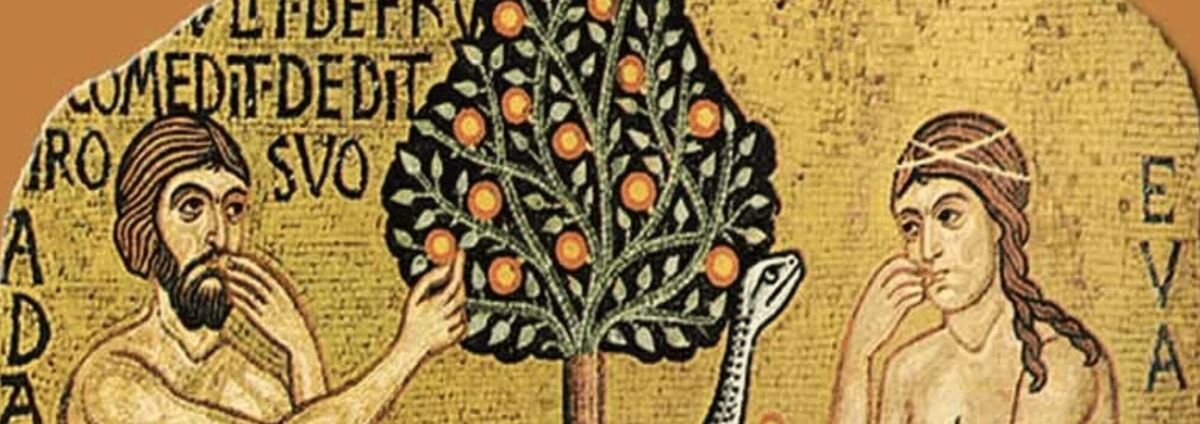
5. This law Adam broke, who wished to appropriate to himself what he had not received, in order to be like the Creator and Maker and to receive divine honours. By his disobedience he brought displeasure upon himself and, being exalted, fell into sin. If he had not violated the commandment and had remained in obedience to the heavenly precepts, he would have preserved for his heirs the privilege of natural and inborn innocence.
(Letter 63 [Maur. 73] to Irenaeus, 4–5)
Peter was clean, but he must wash his feet, for he had sin by succession from the first man, when the serpent overthrew him and persuaded him to sin. His feet were therefore washed, that hereditary sins might be done away, for our own sins are remitted through baptism.
St Mark the Ascetic, monk (4th c. – early 5th c.)
And the holy apostle Peter, having said, “add to your faith virtue,” and the rest, adds, saying: “for he who lacks these things… is blind, having forgotten the cleansing of his former sins” (2 Pet. 1:5, 9). Have you understood from what has been said (that this is said) of cleansing through Baptism, which is accomplished mystically and is found effectually through the fulfilment of the commandments? But if, having been baptized, we have not been freed from the ancestral sin, then it is evident that we cannot perform the works of freedom either. But if we can perform them, then it is evident that we have mystically been freed from the slavery of sin, according to what is written: “For the law of the Spirit of life… has made me free from the law of sin and death” (Rom. 8:2); but through negligence in doing the commandments of Him who cleansed us, we fall under the action of sin.
(On Holy Baptism, 4)
Once, he who was worthy of death according to the law is put to death; but he who lives, lives by faith for the sake of repentance; if not from our own, then from the sin of transgression we have been cleansed through baptism; having been cleansed, we received the commandments; but he who does not fulfil the second has defiled the first, having forgotten the cleansing of his former sins, from which no one is free on any day, even if he never left anything of what was commanded.
(On the Spiritual Law, 1)
5th century
Blessed Jerome of Stridon, monk (c. 347–419)
One thing I will say and so end my discourse, that you ought either to give us a new creed, so that, after baptizing children into the name of the Father, Son, and Holy Spirit, you may baptize them into the kingdom of heaven; or, if you have one baptism both for infants and for persons of mature age, it follows that infants also should be baptized for the remission of sins after the likeness of the transgression of Adam.
(Against the Pelagians, III, 19)
Source: Hieronymus Stridonensis. Dialogus contra Pelagianos III, 19 // PL. T. 23. Col. 519.
Blessed Augustine of Hippo (354–430)
And to this period of the bodily life moreover pertains, what the Pelagians deny, but Christ’s Church confesses, original sin; and according to whether this is by God’s grace loosed, or by God’s judgment not loosed, when infants die, they pass, on the one hand, by the merit of regeneration from evil to good, or on the other, by the merit of their origin from evil to evil. The catholic faith acknowledges this, and even some heretics, without any contradiction, agree to this.
(On the Predestination of the Saints, 24)
If on this account, then, even the infants are, according to the true belief, born in sin, not actual but original, so that we confess they have need of grace for the remission of sins, certainly it must be acknowledged that in the same sense in which they are sinners they are also prevaricators of that law which was given in Paradise, according to the truth of both scriptures, I accounted all the sinners of the earth prevaricators, and Where no law is, there is no prevarication.
And thus, because circumcision was the sign of regeneration, and the infant, on account of the original sin by which God’s covenant was first broken, was not undeservedly to lose his generation unless delivered by regeneration, these divine words are to be understood as if it had been said, Whoever is not born again, that soul shall perish from his people, because he has broken my covenant, since he also has sinned in Adam with all others. For had He said, Because he has broken this my covenant, He would have compelled us to understand by it only this of circumcision; but since He has not expressly said what covenant the infant has broken, we are free to understand Him as speaking of that covenant of which the breach can be ascribed to an infant. Yet if any one contends that it is said of nothing else than circumcision, that in it the infant has broken the covenant of God because he is not circumcised, he must seek some method of explanation by which it may be understood without absurdity (such as this) that he has broken the covenant, because it has been broken in him although not by him. Yet in this case also it is to be observed that the soul of the infant, being guilty of no sin of neglect against itself, would perish unjustly, unless original sin rendered it obnoxious to punishment.
Who then is so righteous and holy a priest as the only Son of God, who had no need to purge His own sins by sacrifice, neither original sins, nor those which are added by human life? And what could be so fitly chosen by men to be offered for them as human flesh?
For this reason we have kept them a little longer, so that they may return to you having received more instructions against the new heretics, the Pelagians, into whose error falls [everyone] who thinks that the grace of God, which alone through our Lord Jesus Christ frees man, is given according to some human merits. Yet he is equally in error who, on the contrary, holds, when the Lord’s Judgment is spoken of, that man (he who can already by reason of his age use the free decision of the will) is not judged according to his deeds. For only those infants who have not been helped by the grace of the Saviour through the washing of regeneration (that is, they were not baptized — note), having no good or evil deeds of their own, are condemned for original sin alone. And all the rest, who already use free decision, add their own sins to original sin, unless they are delivered from the power of darkness by the grace of God and are transferred into the Kingdom of Christ. [So sinners] receive condemnation not only for the original [guilt], but also for the [evil] merits of their own will.
(Letter 215 to Valentinus and the monks at Adrumetum)
Thus all, without one exception, were dead in sins, whether original or voluntary sins, sins of ignorance, or sins committed against knowledge; and for all the dead there died the one only person who lived, that is, who had no sin whatever, in order that they who live by the remission of their sins should live, not to themselves, but to Him who died for all, for our sins, and rose again for our justification, that we, believing in Him who justifies the ungodly, and being justified from ungodliness or quickened from death, may be able to attain to the first resurrection which now is. For in this first resurrection none have a part save those who shall be eternally blessed; but in the second, of which He goes on to speak, all, as we shall learn, have a part, both the blessed and the wretched.
As you and I know, repentance is of three kinds. In the Church of God they are customary and known to those who wish to be attentive to everything. The first, which gives birth to a new man, before in baptism the final saving washing of all former sins takes place, just as in the birth of a child the pains pass for those whose inward parts suffer, and joy follows sorrow. Anyone who watches the movements of his will, when he approaches the sacraments of the faithful, cannot begin a new life unless he repents of the former. From this repentance at baptism only infants are free, because they do not have free choice. For them (infants — note) the faith of those by whom they are brought is profitable for the cleansing and remission of original sin, so that from all the consequences of the vices of others, from whom they are born, they are cleansed just as truly by the open confession of others. Truly, therefore, it is said in the psalm: “Behold, I was brought forth in iniquity, and in sin my mother conceived me” (Ps. 51:5); and likewise it is written in another place that no one is clean before the face of God, even if he had only one day of life on earth (Job 14:4).
(Sermon 11, On the Profit of Repentance)
…to choose a virtuous life, yet not otherwise than with the help of the grace of the Mediator? If a man does not do this, he is Adam not only according to the flesh but also according to the spirit; but living rightly according to the spirit, he will cleanse from the defilement of sin even that which he received from Adam as blameworthy.
But before, with age, he can live according to the spirit, the sacrament of the Mediator is necessary for him, so that what he cannot yet do by his own faith may be accomplished by the faith of those who love him. By this sacrament the penalty of original sin is already remitted in infancy; if a man is not strengthened by this sacrament in infancy, he will not afterwards be able to bridle the lust of the flesh; and even having subdued it, he will be able to receive the reward of eternal life only in the house of Him whom he strives to gain. Therefore he must be baptized while still an infant, so that the soul may not be harmed by fellowship with sinful flesh, sharing which the soul cannot understand anything according to the spirit. This very attachment weighs upon the soul as it departs from the body, unless, while living in the body, the soul is redeemed by the one sacrifice of the Priest and Mediator.
(On Genesis, X, 15)
Thence, after his sin, he was driven into exile, and by his sin the whole race of which he was the root was corrupted in him, and thereby subjected to the penalty of death. And so it happens that all descended from him, and from the woman who had led him into sin, and was condemned at the same time with him,—being the offspring of carnal lust on which the same punishment of disobedience was visited,—were tainted with the original sin, and were by it drawn through divers errors and sufferings into that last and endless punishment which they suffer in common with the fallen angels, their corrupters and masters, and the partakers of their doom. And thus “by one man sin entered into the world, and death by sin; and so death passed upon all men, for that all have sinned.” (Rom. 5:12) By “the world” the apostle, of course, means in this place the whole human race.
Yet even if some married couples surpass [others] in the virtue of such great conjugal chastity that they enter into carnal intercourse with the sole aim of begetting children, and, having once been baptized and regenerated, live in this way, — still, whatever offspring may be born of them through that desire of the flesh which [desire] is not in itself good, but which they use in a good way through the good desire of marriage, [any offspring] turns out to be tainted with original sin (originale peccatum). It can be removed only by regeneration [in baptism]; it undoubtedly accompanies the one born, unless he too is regenerated, just as the foreskin, which is removed only by circumcision, accompanies the son of the circumcised, unless that son is also circumcised.
(Two Newly Discovered Letters to the East)
10. “For I know,” he says, “that in me, that is, in my flesh, nothing good dwells” (Rom. 7:18). Knowing, he agrees with the law; doing, he yields to sin. What if someone asks why he says that in his flesh good does not dwell at all, and therefore [sin dwells]? Why, if not because of the transmission of mortality and the continuity of [sinful] desire? The first is the punishment for original sin, the second the penalty for frequent sin; with the first we are born into this life, and the second we add while living. And these two things, namely, as it were nature and custom, joining together, make desire most powerful and invincible, which he calls sin, and says that the latter dwells in his flesh, that is, possesses a certain dominion and, as it were, kingdom. Hence also the following words of the psalm: “I would rather be abased in the house of the Lord than dwell in the tents of sinners” (Ps. 84:10); that is, he who is abased, wherever he is, does not dwell where [the other] abides. Therefore it is clear that dwelling must be understood here with regard to a certain dominion. And if by grace there is accomplished in us what the apostle says in another place: “that sin may not reign in our mortal body, to obey its lusts” (Rom. 6:12), then it can no longer be said in the proper sense in this case that sin dwells [in us].
(On Various Questions, §10; Ps. 84:10 is quoted in the LXX wording, “I would rather be abased…”, where the NKJV has “doorkeeper…”)
St John of Karpathos, monk (5th c.)
“the sovereign power, which acts not as our feeble efforts, but is such as cannot be expressed by bodily lips, mightily conquering and overcoming both the sinful disposition and the malice of demons, conquering also the inclination of our souls to evil, conquering also all the indecent bodily movements — ‘there came,’ he says, ‘a sound from heaven, as of a rushing mighty wind’ (Acts 2:2), in order forcibly to drive out of us the evil that always forcibly draws us to evil”
<…>
“37… So that, like Sarah, his soul, grown old in barrenness and at last, according to the promise, having borne a son of righteousness, will say: God has made laughter for me, that is, He has granted great joy to her who for so many years remained in sorrow because of her manifold passions; or, according to another translation: God has made youth for me — ‘and my youth was renewed like the eagle’s’ (Ps. 103:5). For having grown old beforehand in sins and dishonourable passions, now I have been born again, and have become young and tender, having before been made coarse by matter, and now I look easily upon worldly things, having received back the simplicity and impartiality proper to my nature, after, through God’s great goodness, my mind became sound, and my flesh became like the flesh of infants, like that of Naaman the Syrian, through my washing in the Jordan of knowledge; now I am of one mind, having by God’s grace been delivered from the serpent’s way of thinking, and from the host of evil thoughts, skilled in many ways in evil and manifold (immersed in sensuality)
<…>
89… Whoever wishes to be called wise and understanding and a friend of God, let him earnestly take care to present his soul to the Lord such as he received it from Him, pure, unwounded, and wholly undefiled. For this he will be crowned in heaven and blessed by the Angels”
(The Philokalia, III)
6th century
St Gregory the Great (the Dialogist), bishop of Rome (c. 540–604)
For this the ancient serpent of paradise, the seducer of the first men, was also cursed, because by cunning and guile he aroused in them the desire for the forbidden fruit and through this bound by original sin all their posterity as well. To him God Himself said: Because thou hast done this, cursed art thou; upon thy breast and belly shalt thou go (Gen. 3:14); that is, as it were: thou shalt have power over men, arousing in them impure thoughts of the mind and the lusts of the belly.
(The Book of Pastoral Rule, III, 19 [Admonition 20])
But the Angel announces the newborn King, the choirs of Angels echo His voice and, rejoicing together, cry out: “Glory to God in the highest, and on earth peace, goodwill toward men.” — For before our Redeemer was born in the flesh, we were at variance with the Angels, from whose glory and purity we stood far off by the guilt of original sin and by daily iniquities. Since for our sins we were removed from God, the Angels too, the citizens of God, rejected us, who had been removed, from their fellowship.
(Forty Homilies on the Gospels, 8)
7th century
St Anastasius of Sinai, monk (early 7th c. – after 701)
But those who wish to live as [people] once lived under the Law fall away from the grace of Christ. For [those who once lived under the Law] were also exceedingly impious, [and therefore] “they sacrificed their sons and their daughters to demons” (Ps. 106:37). And God required nothing of them except piety and justice. But we, redeemed by the Blood of Christ (Rev. 5:9), must show every chastity and love of wisdom, since [after the fall] Adam and Eve became the model and rule for all mankind, [and from that time] it is natural to us, because of our lustfulness and lack of the fear of God, to feel desire for various women.
(Questions and Answers, 37)
Therefore Thou camest from above into this life, in order to make man’s nature, which had been dehumanized by sin, human again and to raise up the body of fallen Adam. Thou art for all men the true building of the tabernacle renewed by incorruption and immortality. Thou art the true Temple, Son and God of David, [father] of Solomon — Thou hast built and raised up the Temple in the highest and heavenly Jerusalem. Thou art the unlying propitiation of the Father for the world’s transgressions; Thou art the true Laver, the Washbasin and Saviour, of which the lawful laver was a type (see Ex. 30:18; 38:8);
(Homily on the Holy Transfiguration of Christ our God)
15th century
St Mark Eugenicus, metropolitan of Ephesus (1392–1444)
IX. Then, if the souls of the saints, before the descent of the Saviour into hell, were held in hell for the reason of original sin alone, but by no means as in fire and punishment, but as it were in a prison and under guard, as the Apostle Peter says in his epistle: “by whom also He went and preached to the spirits in prison” (1 Pet. 3:19), — then why should we not also consider that this same hell will afterwards hold those souls which sinned lightly here, but still see the need of a purifying fire, from which they can be freed thanks to the prayers offered for them?
(First Homily on the Purifying Fire)
19th century
St Ignatius (Brianchaninov), bishop (1807–1867)
The Holy Church sends the departed infants out of this world into the eternal world not with mournful songs but with songs of joy. She acknowledges their blessedness to be certain: her prayers at the burial of infants do not speak of an unknown fate of man after death, as they speak of it touchingly and mournfully at the burial of adults. These prayers both ask of God repose for the departed infant (because no human purity by itself can be worthy of heavenly blessedness: it is a gift of God), and acknowledge that this repose has been given — the departed infant is already called blessed. Infants, in their brief stay on earth, avoid all that deprives of blessed eternity, manage to fulfil all that procures blessed eternity: they are washed from the ancestral sin and are united to Christ by Baptism, are united with Him into one by partaking of His Body and Blood and of the Godhead united with them. Not having had time to defile either the sacred washing or the most blessed union with God, they depart from this vain world and go naturally to where they belong.
(Letters, On Death)
By the Redemption human nature was renewed. The God-Man renewed it by Himself and in Himself. Such human nature, renewed by the Lord, is grafted, so to speak, onto the fallen nature through Baptism. Baptism, without destroying nature, destroys its state of fall; without making nature different, it changes its state, having united human nature to the nature of God (2 Pet. 1:4).
Baptism is at once both mortification and quickening — at once both burial and birth. Into the font of Baptism is immersed, in it is buried and dies the sinful corruption of the fallen nature, and out of the font rises nature renewed; into the font is immersed the son of the old Adam — out of the font comes the son of the New Adam. This is testified by the Lord, who said: “Unless one is born of water and the Spirit, he cannot enter the kingdom of God. That which is born of the flesh is flesh, and that which is born of the Spirit is spirit” (John 3:5–6). From these words it is evident that the Holy Spirit, having received into the font of Baptism the fleshly man, such as man became after the fall, brings out of the font the same man, but now spiritual, having put to death in him the sinful fleshly state and given birth to the spiritual. In Baptism man is forgiven original sin, inherited from the forefathers, and his own sins committed before Baptism. In Baptism man is granted spiritual freedom: he is no longer forced by sin, but by his own will he can choose good or evil. In Baptism Satan, who dwells in every man of fallen nature, is cast out of man; and it is left to the will of the baptized man either to remain a temple of God and be free from Satan, or to remove God from himself and again become a dwelling of Satan (Matt. 12:43–45).
<…>
Having freedom of choice, the baptized man is invited by the Holy Spirit to maintain union with the Redeemer, to maintain in himself the renewed nature, to maintain the spiritual state granted by baptism, to abstain from gratifying the desires of the flesh, that is, from turning aside after the attractions of the fleshly, carnal wisdom. The words of the Apostle have the same meaning: “The first man was of the earth, made of dust; the second Man is the Lord from heaven. As was the man of dust, so also are those who are made of dust; and as is the heavenly Man, so also are those who are heavenly; and as we have borne the image of the man of dust” — for we are all born in original sin and with all the infirmities that have become inherent in our nature as a result of the fall, which were revealed in Adam after his fall — “let us also bear the image of the heavenly Man” through Baptism, which grants us this image, and through the careful observance of the Gospel commandments, which preserve the image in us whole.
(Ascetic Experiences, vol. 2, On the Various States of Human Nature in Relation to Good and Evil)
St Nektarios of Aegina (Kefalas), bishop (1846–1920)
The Church is an organic body; she is visible, she gathers into a single whole all her members, both the saints and the weak. The sick members of the Church never cease to be parts of her body. Those regenerated in the Holy Mysteries and become children of grace can no longer be separated from her, even if they find themselves under the action of church punishment; because for them, who have been freed from original sin, there is no other dwelling place than the Church. In the world there is only one dwelling place for man: paradise; there is the Church, in which is man’s salvation.
<…>
Those who come from the place of sin and through faith and the mysteries enter the place of Christ’s Church become her members forever; it is impossible for them themselves to return to the place of sin after regeneration in baptism and cleansing from original sin. And since there is no other place, those who enter the Church remain in her, even the sinful.
(From the Works of St Nektarios of Aegina)
20th century
St Seraphim (Sobolev), archbishop (1881–1950)
Grace, as Divine energy or power, cannot be divided into small or large parts. Grace is always one and the same, only its actions are different. In the Sacrament of baptism it destroys original sin and all our personal sins, in the Sacrament of the Eucharist it transubstantiates bread and wine into the Body and Blood of Christ, in chrismation it communicates to us in all fullness and perfection all the gifts of the Holy Spirit, and so on. Therefore all seven Sacraments are equally Divine and necessary for salvation.
(On the Question of the Union of the Anglican Church with the Orthodox Church)
St Athanasius (Sakharov), bishop of Kovrov (1887–1962)
And the all-cunning enemy strives to strip the fallen, blinded man, to take from him all his riches, or rather, he urges him to abandon the goods bestowed by God, to forget and despise the means indicated by Christ for drawing near to Heaven, to God. And the blinded man himself goes to meet the enemy. Born in sins, he adds to the wounds of original sin the wounds of his own falls. Just as of old in paradise, man resists God’s will and does not wish to submit to it.
(The Disposition of the Believing Soul according to the Lenten Triodion)
20th century
Dmitry Vladykov, protopresbyter (1863–1955)
According to the teaching of the Orthodox Church, all people, as descending in the flesh from Adam, who sinned and was condemned, are born not only with a sinful corruption of their spiritual and bodily nature, but also guilty before God for their sinful state. “Since in the state of innocence all people were in Adam, as soon as he sinned, all sinned in him and entered into a sinful state. And therefore they are subject not only to sin, but also to punishment for sin… With this sin we are conceived in the mother’s womb and born, as the holy psalmist says (Ps. 51:5). This sin is called ancestral (original)” (Orthodox Confession, Part 1, answer to question 24). The Word of God says: “Adam begot a son in his own likeness, after his image” (Gen. 5:3), that is, in the image of fallen and sinful man. “The imagination of man’s heart is evil from his youth” (Gen. 8:21), that is, from the inherited predisposition of the heart to evil. “Who can bring a clean thing out of an unclean? No one” (Job 14:4), “How then can man be righteous before God? And how can he be pure who is born of a woman?” (Job 25:4, cf. 15:14). “Behold, I was brought forth in iniquity, and in sin my mother conceived me” (Ps. 51:5), that is, I am in a state of sin and iniquity from the moment of conception and birth. “Therefore, just as through one man sin entered the world, and death through sin, and thus death spread to all men, because in him all sinned” (Rom. 5:12). “The heart is deceitful above all things, and desperately wicked” (Jer. 17:9). “We are all by nature children of wrath” (Eph. 2:3; cf. Rom. 7:14–23). “Each one is tempted when he is drawn away by his own desires and enticed” (ἐπιθυμίας — desire, attraction, inclination, passion — James 1:14). “He who is without sin among you, let him throw a stone at her first” (John 8:7). “If we say that we have no sin, we deceive ourselves, and the truth is not in us” (1 John 1:8; cf. Gen. 6:5; 1 Kings 8:46; Ps. 14:2–3, 143:2; Prov. 20:9; Eccl. 7:20, etc.).
(The Orthodox Church and Sectarians, 1.2)
Other important testimonies
Origen (c. 185–253)
Origen misunderstands and teaches wrongly about the sinful defilement that is washed in Baptism. He holds that the very bearing of the flesh is sinful. That by becoming incarnate, through the assumption of the flesh, even the Lord Jesus Christ Himself was defiled. That although Christ washed away this defilement through the sacrifices, infants wash away the same defilement through Baptism. All these thoughts are erroneous. Christ was conceived without blemish, and therefore had no sinful defilement (original sin). The Old Testament sacrifices did not deliver from original sin; that is precisely why not the shadow of grace is given, but the real grace in Baptism. It is in Baptism that man is washed from original sin.
In spite of all this, it will be appropriate to cite Origen’s opinion here. First, he records the fact of infant baptism in antiquity. Second, he points out that infants are delivered from defilement in Baptism, although he understands the defilement itself wrongly.
Every soul clothed in a human body has its own “defilement.” But you should know that Jesus was defiled of His own will, for He took a human body for our salvation. Listen to the prophet Zechariah, who says: “Now Jesus was clothed with filthy garments” (Zech. 3:3). By these words he refutes the statements of those who assert that our Lord had not a human body, but a heavenly or spiritual one.
<…>
Therefore it was necessary for our Lord and Saviour, who “was clothed with filthy garments” and took an earthly body, to offer the sacrifices prescribed by the law in order to wash away the defilement. Often a question arises among the brethren, and here I will turn to it again. Infants are baptized “for the forgiveness of sins.” What sins? When did they sin? And what other explanation of the baptismal washing can be applied to children, except the one we spoke of above? “Who can bring a clean thing out of an unclean? No one” (Job 14:4). In the sacrament of baptism the defilement of birth is washed away, and therefore infants are baptized, for “unless one is born of water and the Spirit, he cannot enter the kingdom of God” (John 3:5).
(Homily 14 on Luke, 5; Zech. 3:3 is quoted according to the LXX, which reads “Jesus”; the Hebrew text has “Joshua”)
Origen indicates that something in the Baptism of infants is nevertheless forgiven:
If you wish to know what other saints think about the day of birth, listen to what David says: “Behold, I was brought forth in iniquity, and in sin my mother conceived me” (Ps. 51:5), showing by this that every soul born in the flesh is defiled by the impurity of “iniquity and sin”; and therefore we can repeat the words cited above: “Who can bring a clean thing out of an unclean? No one, even if his days are but one” (Job 14:4–5). To this it may be added that since the baptism of the Church is given for the remission of sins, according to church ordinances infants are also baptized; and if there were nothing in them that needed to be forgiven and remitted, the grace of baptism would seem superfluous.
(Homily VIII on Leviticus, 3)