
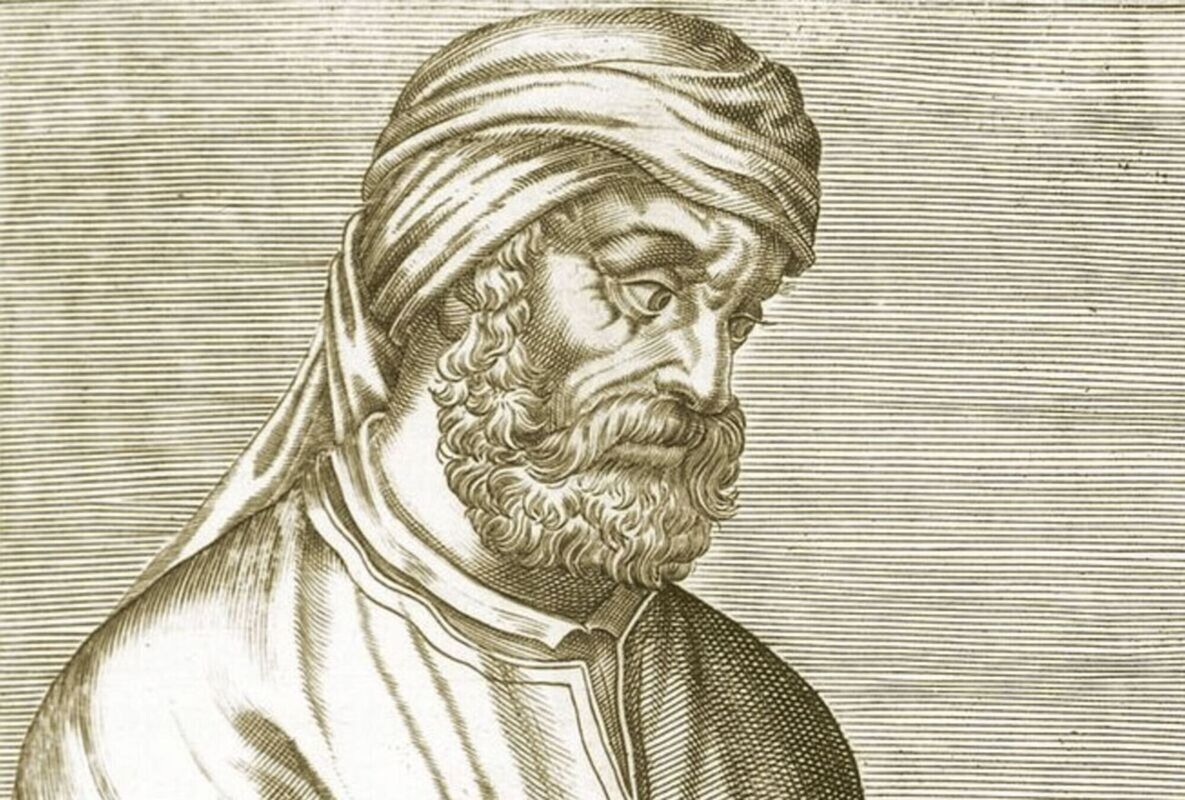
Tertullian wrote in Latin. The works of Tertullian in Latin are found in the following section: Tertullianus. It is worth bearing in mind that Tertullian wrote some of his works after falling into the heresy of Montanism (see the periods of Tertullian's life above).
Biography
On the Path to Christ
Tertullian (full name: Quintus Septimius Florens Tertullian) was born in Carthage, into the family of a Roman officer, a centurion, sometime between 150 and 170 AD. In his youth and early adulthood, he received a complete secular education. From a number of early sources, including his own writings, it follows that he was well-versed in jurisprudence; was familiar with Greek and Latin poets and philosophers; was knowledgeable about medicine; and knew the Greek language.
Despite all his erudition, in his youth he led an immoral life, common for the dissolute pagan environment in which he grew up, was raised, and came of age.
Tertullian spent most of his life in Carthage. As is evident from his works, he admired the history of this city and its heroes. For a short time, Tertullian lived in Rome: in all likelihood, he practiced law there.
It is believed that his conversion to Christianity occurred around 190 AD. The circumstances under which he decided to change his worldview, and who led him to Christ, are not known with certainty.
Having received Baptism, Tertullian entered into marriage with a Christian girl and lived with her for many years.
During this same period, he was deemed worthy of ordination as a presbyter. Tertullian approached his priestly duties responsibly, as befitting a good Christian pastor.
Not limiting his activity to the care of his own flock, he made every effort to spread the faith among the pagans, preached extensively, and engaged in literary work. The works he created addressed both questions of doctrine and questions of morality and ethics.
Apologetic Activity
Tertullian's time of service was a time of the most severe trials for the Church. Christians were persecuted, hated, humiliated, subjected to beatings, tortured, tormented, and killed.
And Tertullian, sparing no energy, fearing neither informers, nor judges, nor tormentors and executioners, defended Christianity so decisively that it remains a matter of wonder that he, throughout his entire life, never once found himself in a prison or torture chamber.
And this despite the fact that he did not hide from persecution, but, as if challenging it, addressed his persecutors in the harshest, roughest, and sometimes offensive words. Thus, he called the persecutors of the Church fierce ignoramuses, defilers of holy things; he mocked pagan cults and mysteries, branded idols and graven images with shame; he threatened them with the Judgment of God's Truth, the cup of God's Wrath.
At the same time, his apologetic works were filled with clear theological and logical argumentation.
During times of persecution, it often happened that Christians were not killed immediately after being exposed as belonging to the Church, but were subjected to terrible beatings and tortures, with the aim of forcing them to publicly renounce Christ, offer sacrifices to pagan gods, and defile themselves with sacrificial blood.
Categorically objecting to such violence, Tertullian explained to the torturers that if pagan gods actually existed, they would be pleased not by feigned, but by voluntary sacrifices, unless, of course, their gods were litigious.
Furthermore, as a means of defense, he often used principles from the field of law (this showed his good legal training).
Appealing to common sense, Tertullian noted that criminals are tortured not so that they will deny involvement in crimes, but so that they will give truthful confessions, rather confessing their crimes. Christians, on the contrary, are tortured with the aim that they will refuse to call themselves Christians: that is, refuse to acknowledge themselves as criminals and violators of the law. In this, he saw absurdity.
To the accusations that Christians violated moral norms and hated authority, including the emperor, Tertullian opposed arguments that refuted the arguments of the accusing side, explaining and showing that it was not Christians, but the pagans themselves who led depraved lives and incited hatred in society; Christians, however, abide in love and prayer.
Besides defending Christianity from pagans, Tertullian also defended it from attacks by Jewish fanatics.
Struggle Against False Teachings
Tertullian's merits in the struggle against heresies are difficult to overestimate. In particular, he exposed and refuted such well-known heresies of his time as the heresies of Marcion and Hermogenes.
The former, not understanding the meaning of Old Testament events nor the inner connection of the Testaments, came to the conclusion that there were two gods: an evil one, described in the Books of the Old Testament, and a good one—the Father of Jesus Christ.
Step by step, exposing Marcion's errors, Tertullian showed what God's wrath and God's pedagogy consist of, explaining that God is One and Unique, that He is not the Author of evil, and that His punishments are not a manifestation of malice. Using extensive, coherent arguments, resorting to the Scriptures, Tertullian proved that God's Wrath falls upon the lawless not without reason and not without good providential purposes.
Hermogenes stood on the ground of dualism and blasphemed God, denying creation out of nothing. He taught that the world was created from matter co-eternal with God, for if it were not so, God would not be the eternal Lord, since He would not have had an object of lordship co-eternal with Himself.
Tertullian objected, and successfully, that if Hermogenes were correct, God would not be absolute but limited, and His ability to create would depend not only on His will and perfections, but also on the existence of pre-existing matter. In this case, it would turn out that to realize His creative potential, God would be in need of matter.
Straying into Montanism
The zeal, impetuosity, directness, and decisiveness of the ardent fighter within him could hardly reconcile themselves with the human weakness surrounding him. Towards the end of his life, he increasingly compared the existing order in the Church and the behavior of its members with his own idealized notions, and alas, found more and more discrepancies between them.
Gradually, he began to experience dissatisfaction with the lifestyle of a significant portion of the clergy and laity, and began to distance himself from the Church. Accustomed to speaking freely, he began to speak out even against the bishops.
In this state of mind, Tertullian encountered the Montanist sect, which had spread by that time. The approximate date of Tertullian's break with the Church is given as 213 AD.
Montanus, a former pagan priest, having converted to Christianity, did not live long as an obedient son of the Church. Declaring himself a prophet of God, he found many followers, formed and led a community. Representatives of this heretical sect were distinguished by excessive "asceticism," a particular ecstatic disposition, and a proclivity for mysticism and miracles.
Montanism very quickly spread throughout Asia Minor, and then reached the Western regions.
The Montanists accused the Church of departing from apostolic traditions, of growing cold in faith, and of lacking prophetic charisma. Having imbibed the ideas and rebellious spirit of the heretics, Tertullian began to struggle even more actively against the Church's foundations.
For example, he began to express a negative attitude towards second marriage, and then towards marriage in general. Understanding that marriage (with rare exceptions) does not occur without physical relations, he began to speak of marriage as a tolerated form of fornication (and this despite the fact that the Sacrament of marriage was blessed by the Lord Himself). Even in his attitude towards childbearing, a certain disdain began to be perceived.
In the end, Tertullian became disillusioned with Montanism as well, after which he stood at the head of his own religious movement.
After 220 AD, Tertullian's trail is lost. With a great degree of convention, the time of his death is fixed to this year.
Creative Legacy
Tertullian left behind a large number of works.
Some of them, such as: Apologeticus, To the Nations, To Scapula, Against the Jews, and others, have an apologetic orientation.
Others – Against Marcion in five books, Against Hermogenes, Against Praxeas, On Baptism, On the Testimony of the Soul, On Prescription Against Heretics, Against the Valentinians – have a dogmatic-polemical orientation.
To the third group of his works, of a moral-ascetic nature, belong: On Repentance, On Prayer, On Chastity, On Patience, To His Wife, To the Martyrs, On the Apparel of Women, etc.